The Small Bedroom Wind-Down Corner That Finally Helped Me End the Day Slower
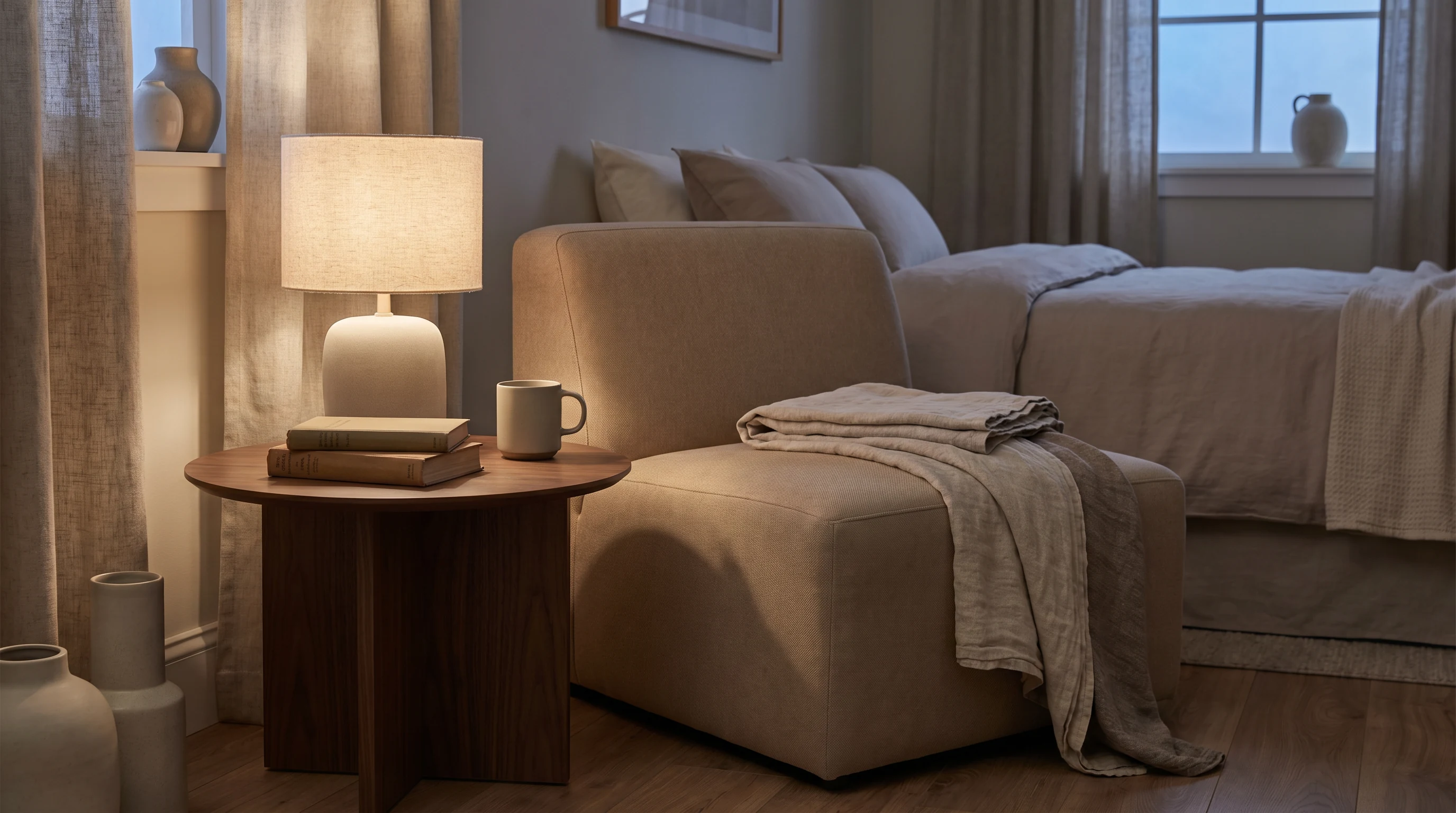
I Did Not Need a New Bedroom. I Needed a Better Last Ten Minutes.
For a long time, I treated my bedroom like a room that only mattered once I was already tired. I would drift in at the end of the day, drop my phone somewhere near the bed, leave a sweater on the chair, and tell myself that sleep would sort everything out. Technically, the room worked. The bed was fine. The storage was fine. Nothing was especially wrong. But the space did very little to help me slow down.
That difference matters more than we tend to admit. A bedroom can be tidy and still feel restless. It can be pretty in daylight and oddly unsympathetic at night. Mine had fallen into that category. It looked acceptable in photos, yet the last part of the day always felt abrupt, as if I were shutting down rather than settling in.
The fix turned out not to be a makeover in the dramatic sense. I did not repaint the walls. I did not buy a new bed frame. I did not suddenly become the sort of person who owns a perfectly curated set of matching loungewear. I simply gave one underused corner a clearer job: help the room shift from daytime overflow to evening calm.
The Corner Started with One Honest Question
The question was not, “How can I make this bedroom look more expensive?” It was, “What actually helps me feel finished with the day?” The answer was embarrassingly simple. I needed somewhere to sit for ten minutes without bringing the whole day into bed with me. Somewhere to read a few pages, fold tomorrow’s clothes, switch on softer light, and let my mind stop racing before I tried to sleep.
Once I knew that, the corner almost arranged itself. It needed a chair that felt welcoming rather than decorative, a lamp low enough to soften the room, one small surface for a book and a glass of water, and textures that made the space feel warmer after dark. That was it. Not a fantasy reading nook. Not a styled vignette. Just a small zone with a clear purpose.
The Chair Became the Anchor, Not the Accessory
The first useful decision was choosing a compact upholstered chair instead of treating the corner like storage overflow. Before that, the area had collected things with no real home: an extra tote, a stack of magazines I was pretending to organize, and a throw blanket that never looked intentional. Once a chair moved in, the corner stopped being leftover space.
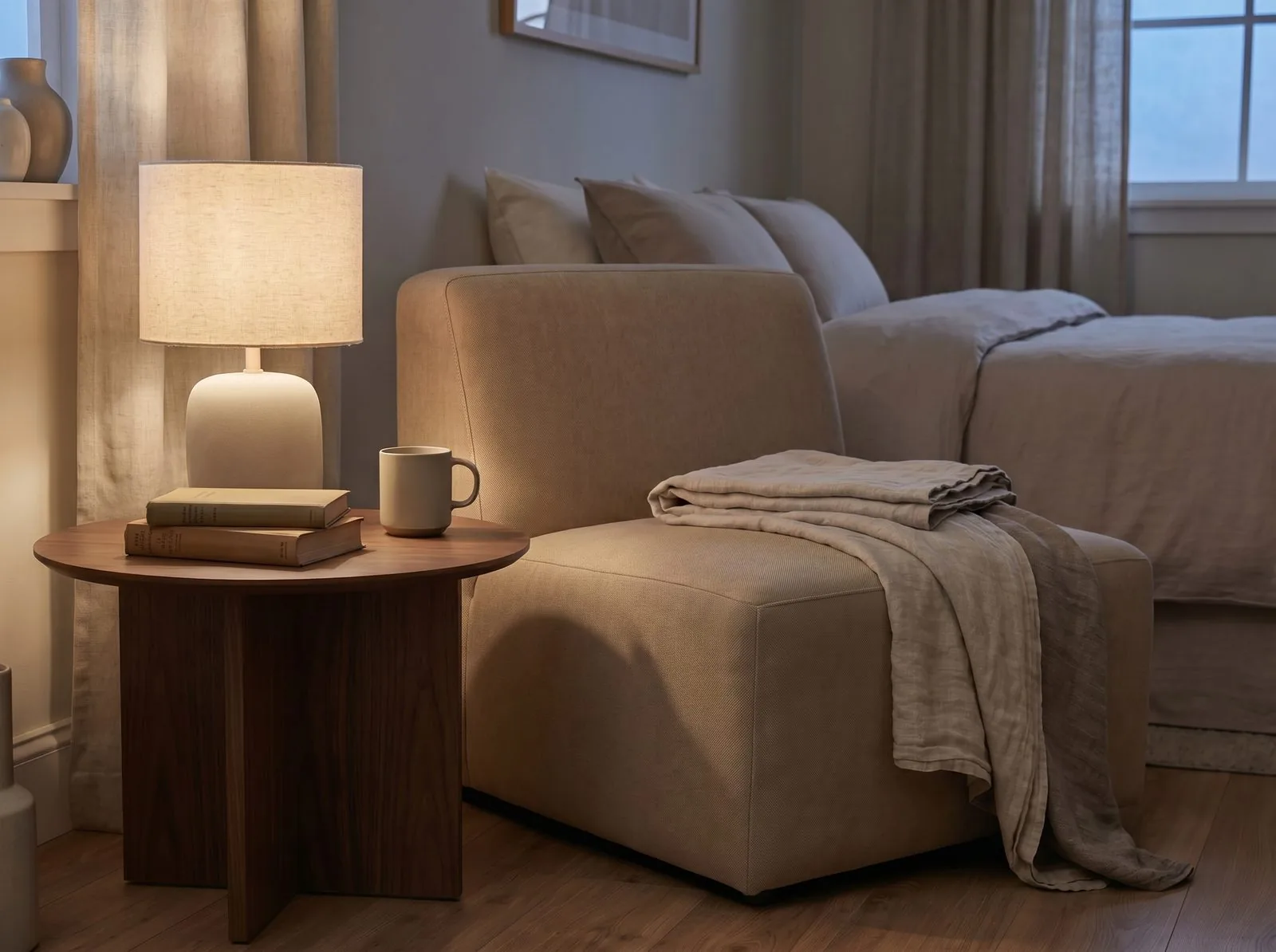
What made the chair work was not design bravado. It was proportion. The seat was deep enough to feel restful, but not so oversized that it swallowed the room. I added a small lumbar pillow and one linen throw, and suddenly the corner felt like a place to land rather than a place to park objects. That distinction changed my evening routine more than I expected. If a seat feels comfortable at first glance, you use it. If it looks too precious or too cramped, you hang tomorrow’s clothes on it and move on.
Light Did Most of the Emotional Work
If I had to name the real turning point, it was the lighting. Overhead light has a way of flattening every bedroom into the same practical box. It is useful when you are changing sheets or looking for an earring on the floor. It is terrible at telling your body that the day is over.
So I stopped relying on the ceiling fixture and gave the corner a warmer pool of light instead. A fabric-shaded lamp beside the chair made the room feel lower, softer, and less alert. Then I adjusted the nightstand setup so the glow could carry across the room rather than leaving the bed in a bright-or-dark all-or-nothing situation.
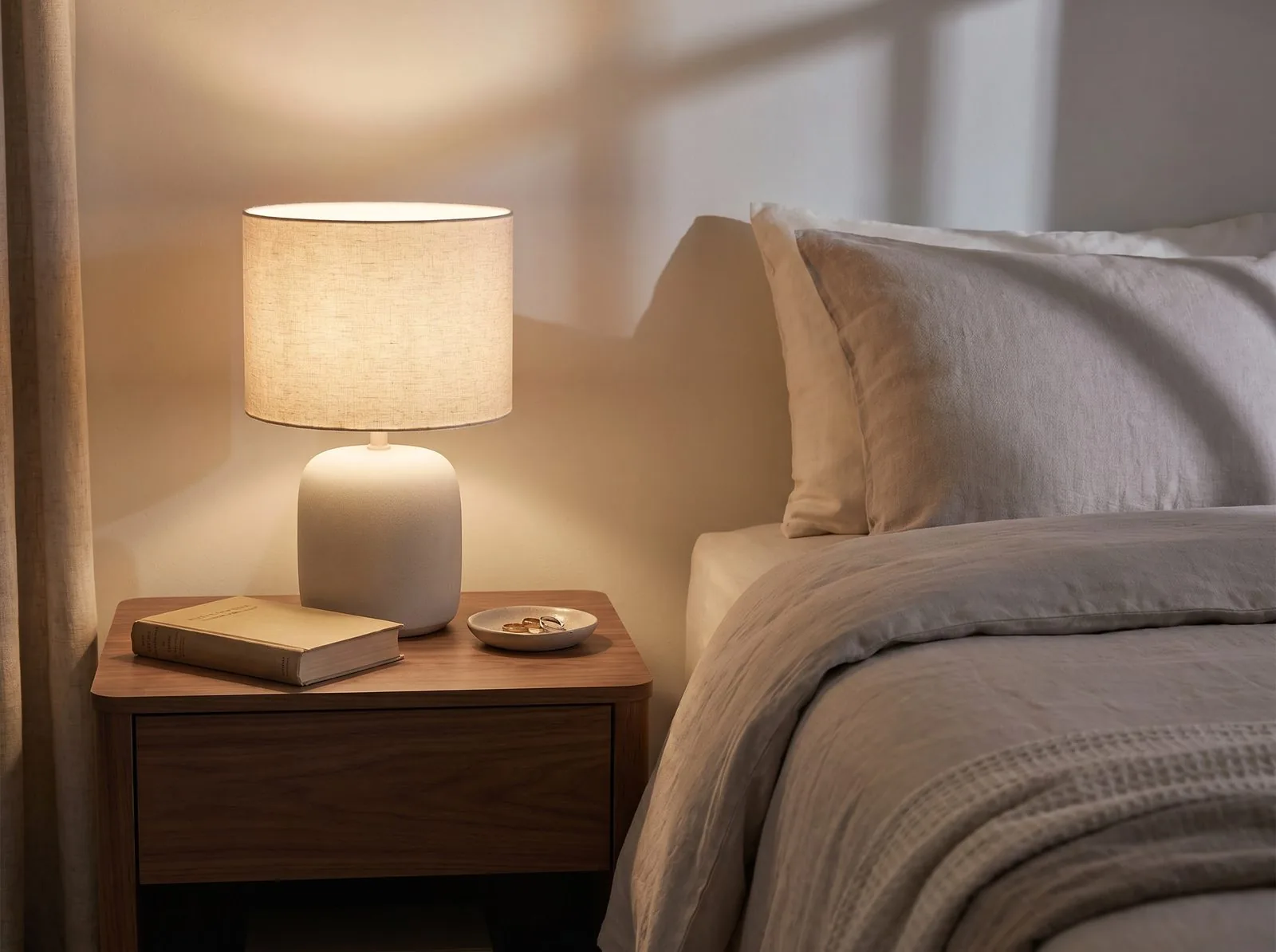
That single change made the bedroom feel more humane. The room no longer announced itself the same way at 10 p.m. as it did at 10 a.m. It shifted tone. And that tonal shift is often what separates a room that merely functions from one that gently guides behavior.
Texture Quieted the Space Without Adding Clutter
The third layer was texture, which is where many bedrooms either come alive or fall flat. I did not add much, but what I added had weight and softness. A washed-linen throw instead of a shiny synthetic blanket. A small rug with a low, tactile pile underfoot. A paper-covered book stack rather than glossy odds and ends. None of these pieces called attention to themselves, yet together they made the corner feel settled.
This is something I keep coming back to in small rooms: restfulness rarely comes from adding more objects. It usually comes from choosing surfaces and materials that absorb a little visual noise. Bedrooms benefit from things that wrinkle softly, diffuse light, and feel better at night than they do at noon.
What Changed Was Small, but the Mood Shift Was Immediate
The corner did not add square footage, and it did not solve every bad habit I have. But it altered the rhythm of the room in a way that felt immediate.
| Before | After |
|---|---|
| The corner collected stray clothes and bags | The corner became a predictable place to sit and slow down |
| Overhead light kept the room feeling alert | Layered lamp light made the room feel gentler after dark |
| Books and small items drifted around the bed | A defined chair-side surface gave them a place to land |
| The bedroom felt like a room I collapsed into | The bedroom started to feel like a room that received me |
That last difference is hard to photograph, but easy to feel. The room became less transactional. Instead of entering the bedroom only at the point of exhaustion, I began entering it a little earlier, while I still had enough energy to enjoy it.
A Better Evening Corner Depends on Friction, Not Perfection
The most useful lesson from this reset was that an evening routine does not fail because we lack discipline. More often, it fails because the room asks too much of us at the wrong moment. If you want to read for ten minutes before bed, there needs to be light in the right place and a seat that does not require rearranging half the room. If you want to leave your phone alone, there has to be somewhere else for your hands to go. If you want the bedroom to feel calmer, the visual tone has to change before your mood does.
That is why I like modest room adjustments more than dramatic ones. A dramatic change may look impressive, but a modest one often does more for everyday life. This corner works because it lowered the activation energy of winding down. The book is already there. The light is already soft. The blanket is already within reach. I do not have to become a more disciplined person to use it. I just have to sit down.
The Room Feels More Finished Because the Habit Has Somewhere to Live
People often think a room feels finished when every surface is styled. I think it feels finished when your real habits finally have a home. In my bedroom, that habit was the transition between being busy and being at rest. Once the room made space for that transition, it stopped feeling like an afterthought.
A good wind-down corner does not need much. It needs believable comfort, lower light, and fewer stray decisions at the end of the day. It needs to suggest, very quietly, that you can put the day down now.
That is what changed in my bedroom. Not the square footage. Not the architecture. Just one corner, given a better job. And somehow that was enough to make the whole room exhale.
You might also like
The 10-Minute Evening Reset That Keeps My Apartment from Falling Apart
A home does not stay tidy because someone loves cleaning. It stays manageable because a short evening reset keeps tomorrow's mess from arriving early.

Linen Closet Organization Ideas That Stay Useful After Laundry Day
A linen closet stays organized when the shelves match real laundry habits, not when every towel is folded for a photo.
Winter Home Decor That Makes a Room Feel Warmer
Winter home decor does not need to become holiday decor. The right textiles, light, branches, and deeper tones can make a room feel warmer all season.