A Linen Apron, a Cutting Board, and Three Other Things That Made Cooking Alone Feel Better
The Shift from Chores to Rituals
Cooking for one is historically framed as an act of utility. You need calories, you have ingredients, and you combine them with minimal fuss. For a long time, my solitary meals were a blur of standing over the sink, eating something hastily assembled from the fridge. The turning point wasn’t a sudden passion for complex recipes, but a deliberate change in the objects I interacted with.
Replacing mass-produced, purely functional tools with items that felt good to hold changed the atmosphere of the kitchen. It became less about the output and more about the process. Here are five things that made the difference.
1. A Heavyweight Linen Apron
The simple act of tying an apron strings signals a transition. It’s a physical boundary between the workday and the evening. I swapped a stiff, synthetic apron for a washed linen version from Rough Linen. Linen has a satisfying drape and absorbs spills without feeling clammy. It requires no precious care—the more it’s washed, the softer it gets. Putting it on feels like stepping into a uniform dedicated solely to feeding myself.
2. An End-Grain Walnut Cutting Board
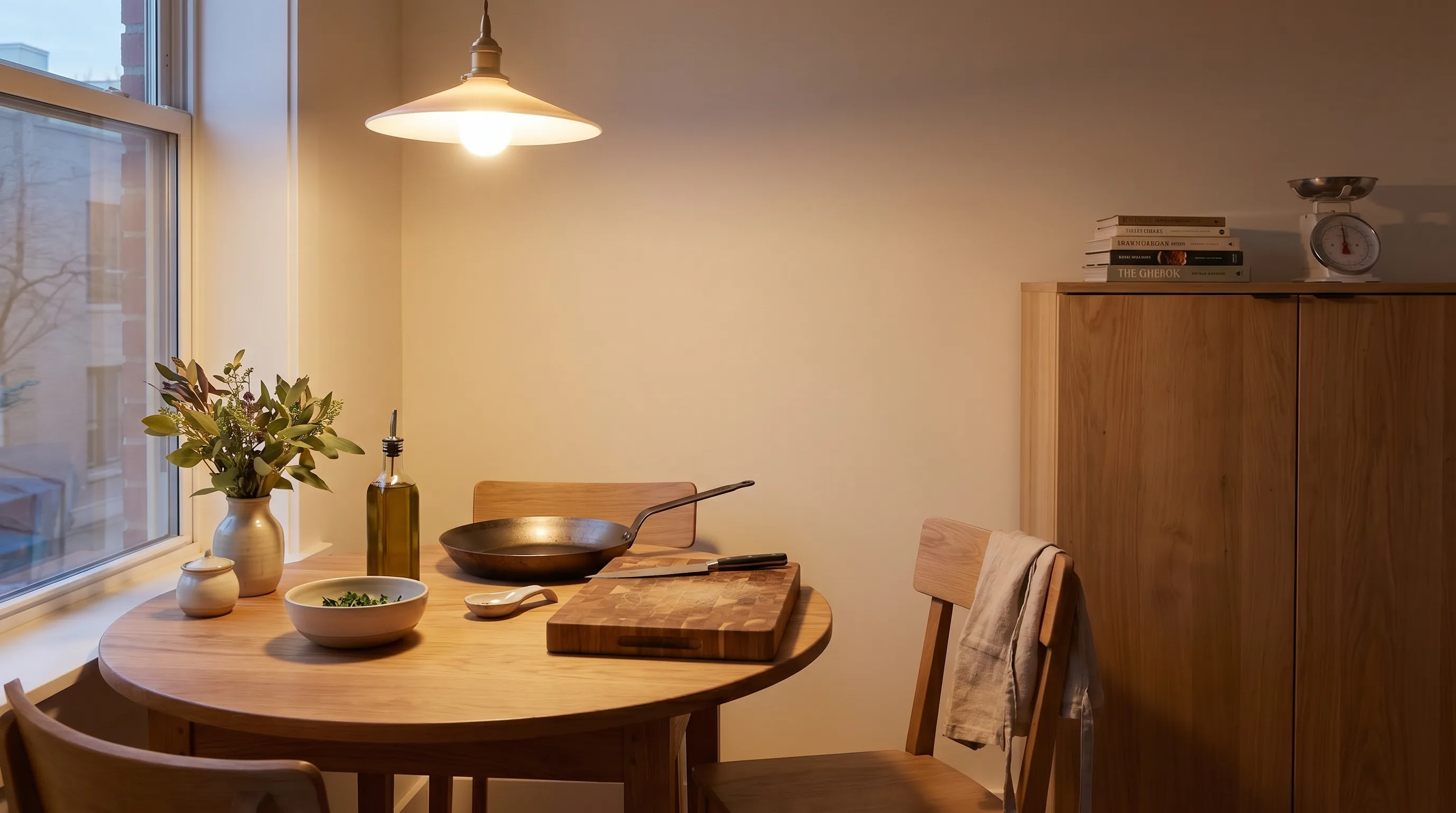
Most of the physical work in cooking happens on the cutting board. A thin plastic mat sliding around on the counter makes chopping feel precarious and loud. Investing in a thick, end-grain walnut board changed the acoustics and the tactile feedback of prepping vegetables. End-grain wood is gentler on knife edges and has a self-healing quality that hides knife marks. The sheer weight of it—often over ten pounds—anchors the workspace. It demands to be left out, becoming a permanent fixture rather than something shoved into a cabinet.
3. A Carbon Steel Skillet
Non-stick pans are convenient, but they lack personality. A carbon steel skillet, much like cast iron but lighter and more responsive to heat changes, requires a relationship. It needs to be seasoned, carefully washed without harsh soaps, and thoroughly dried. This maintenance isn’t a burden; it’s a small act of care. Watching the surface slowly darken and become naturally non-stick over months of use provides a quiet sense of satisfaction. It’s the pan I reach for when frying a single egg or searing a piece of fish, knowing it responds exactly to the heat I apply.
4. A Dedicated Tasting Spoon
This sounds absurdly specific, but having a spoon dedicated solely to tasting as you cook forces you to slow down. Instead of using the wooden spoon you’re stirring with—which is usually too large and covered in sauce—a small, long-handled metal or carved wooden tasting spoon allows for precise adjustments. It encourages the habit of checking seasoning at every stage, turning the cooking process into a continuous conversation with the food rather than a blind wait for the final result.
5. A Low-Wattage Counter Lamp
Overhead kitchen lighting is notoriously harsh, designed for operating-room visibility rather than atmosphere. Turning off the main lights and relying on a small, warm-toned lamp on the counter completely alters the mood. It creates a pool of light over the cutting board or stove, shrinking the room down to just the immediate task. The shadows soften, the hum of the refrigerator seems less intrusive, and the kitchen feels less like a workspace and more like a retreat.
These items didn’t make me a better chef, but they made the kitchen a place I actually wanted to be at the end of a long day.
You might also like
Building a Morning Ritual: Candles, Tea Sets, and the Art of Slow Living
Transform your frantic mornings into a peaceful sanctuary with our guide to building a morning ritual, featuring curated recommendations for candles and tea sets.

Master of Malt Review: A Smarter Way to Stock a Home Bar for Dinner Guests
Master of Malt is most useful when you shop by the role a drink needs to play at home. We look at how its gin, rum, whisky, tequila and tasting-set ranges can help you host without overfilling the drinks shelf.

SPLITS59 Review: Activewear for Home Workouts That Carries Into the Rest of the Day
SPLITS59 is easiest to judge by the kind of movement you repeat, rather than by one all-purpose matching set. We compare its light Airweight, more supportive Rigor and relaxed layers for readers who want home-workout clothes to work with the rest of a realistic day.