English Cottage Without the Clutter: How to Borrow the Warmth, Not the Fuss
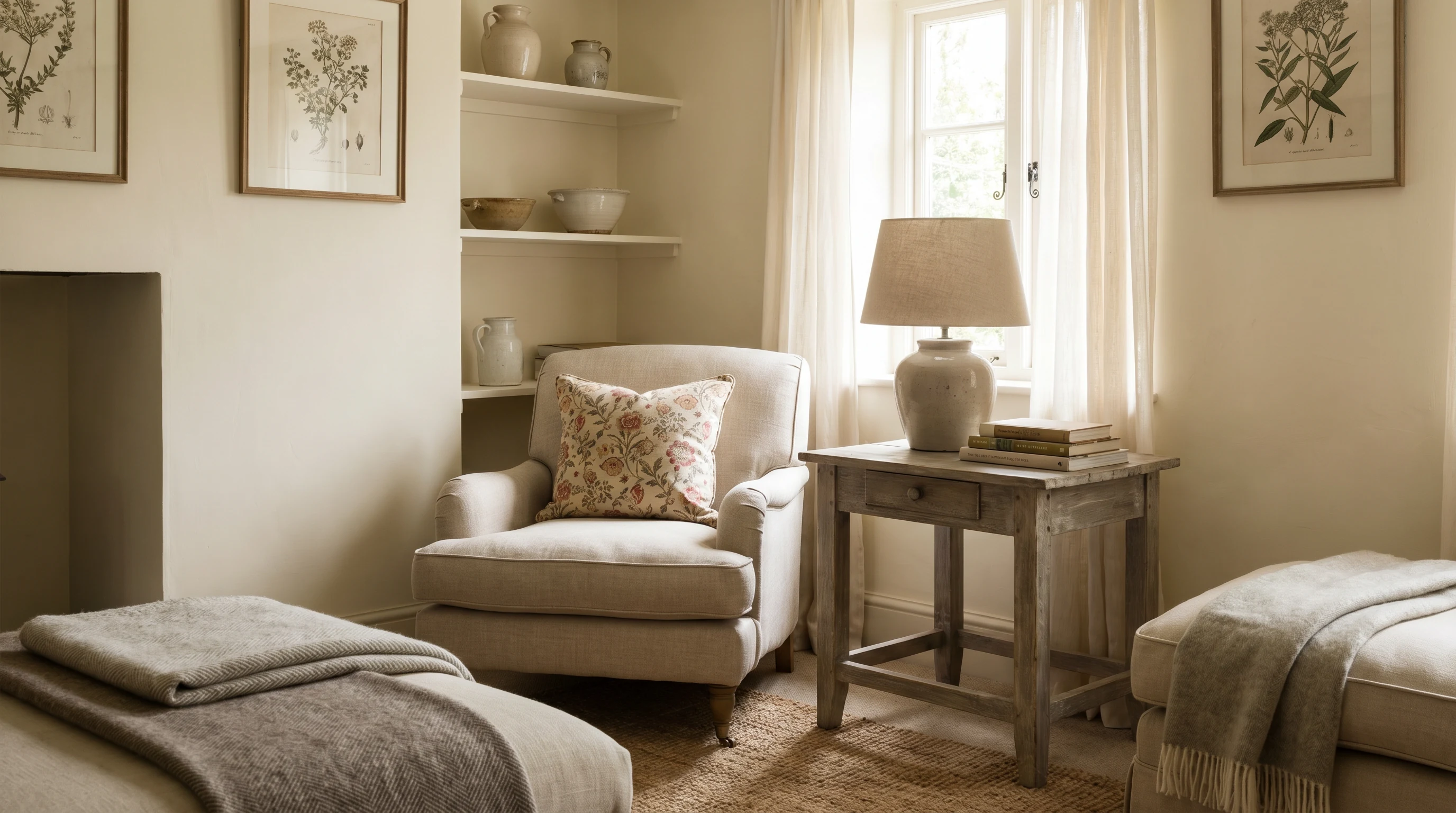
What People Love About Cottage Rooms Is Usually Not the Stuff
When people say they want an English cottage look, I rarely think they mean they want every shelf crowded with teacups and every chair dressed in a different floral. What they usually want is the feeling underneath all that: warmth, softness, a little age, and the sense that the room has been lived in with affection instead of arranged for a photograph.
That is why cottage style can be so appealing and so easy to overdo. The ingredients are generous. Pattern, wood, books, lamps, framed art, old ceramics, gathered fabrics. None of those are wrong. But once they all arrive at full volume, the room can stop feeling welcoming and start feeling narrated.
The version I like most borrows the warmth, not the fuss.
Start with Quiet Walls and Let the Personality Gather Slowly
One of the biggest mistakes people make with cottage-inspired rooms is assuming every surface needs immediate charm. In reality, the charm lands better when the larger elements stay calm.
Soft white walls, muted paint, or a gentle neutral backdrop give you room to introduce pattern and age without turning the space into a theme. Cottage rooms feel most convincing when they seem to have evolved. A restrained backdrop allows that illusion.
Use Floral and Stripe Like Conversation, Not Monologue
Pattern is essential to the cottage mood, but it works best when there is some restraint in the mix. A floral cushion on a plain sofa. A striped skirted table beside a chair in quiet linen. A small print on a lampshade rather than matching florals on curtains, seat cushions, and bedding all at once.
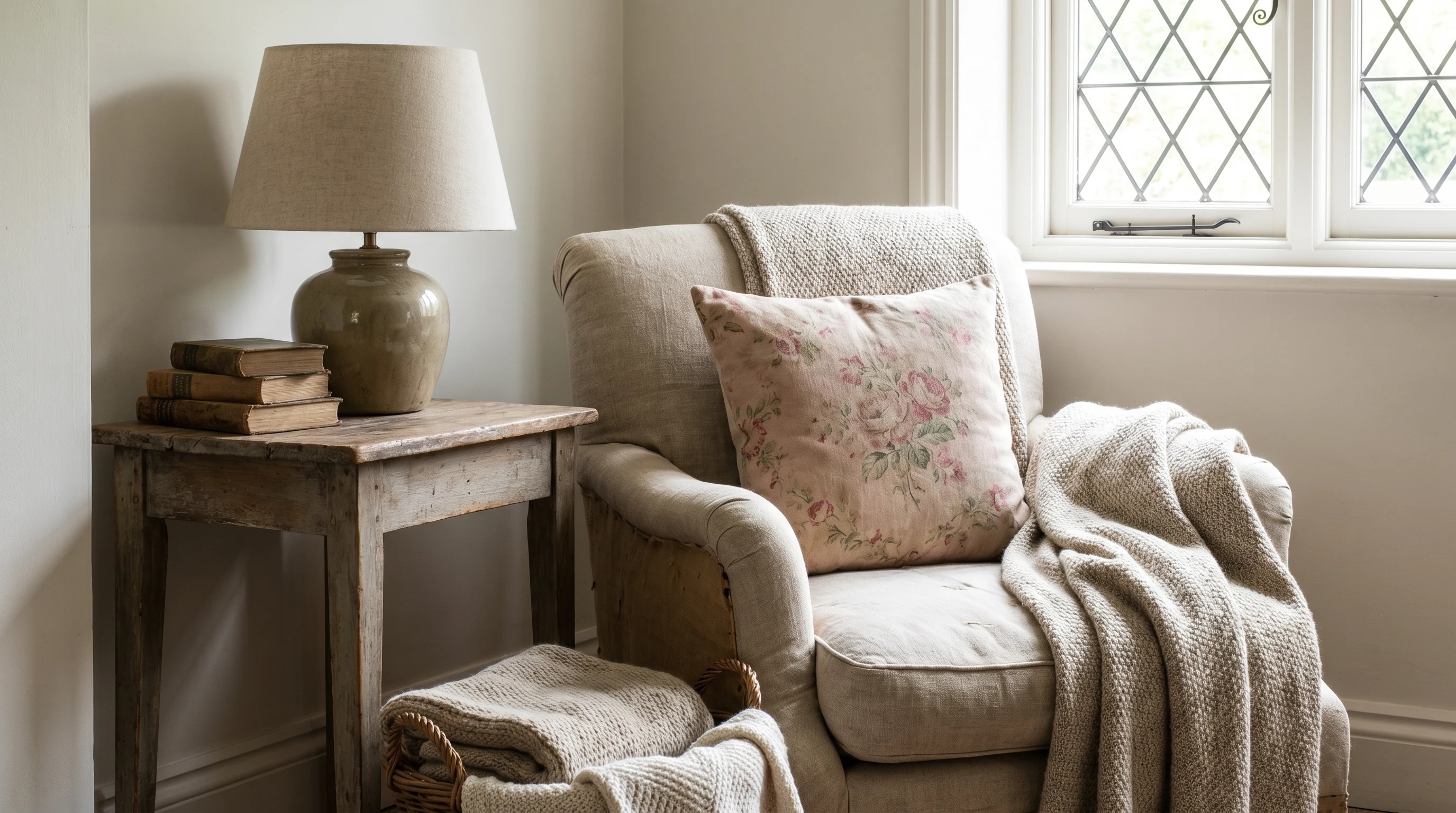
I think of pattern in these rooms the way I think of seasoning in cooking. You want enough to notice, not so much that you cannot taste anything else.
Wood Should Feel Worn In, Not Perfectly Coordinated
The warmth in English cottage interiors often comes from wood with a little history in it. That does not mean every piece needs to be antique, and it certainly does not mean everything should match. In fact, matching wood is often what makes a cottage-inspired room feel staged.
A darker side table beside a lighter dining chair. A painted cabinet next to a natural oak floor. A stool with scuffed edges holding a stack of books. These variations help the room feel collected over time.
Open Shelves Need Breathing Room Too
There is a persistent fantasy that cottage style requires charming shelves full of charming objects. Sometimes it does. More often it requires editing.
The best cottage shelves leave pockets of emptiness between the good things: a stack of plates, two transferware bowls, one framed painting, a ceramic jug, a little negative space. What makes a shelf feel charming is not quantity. It is rhythm.
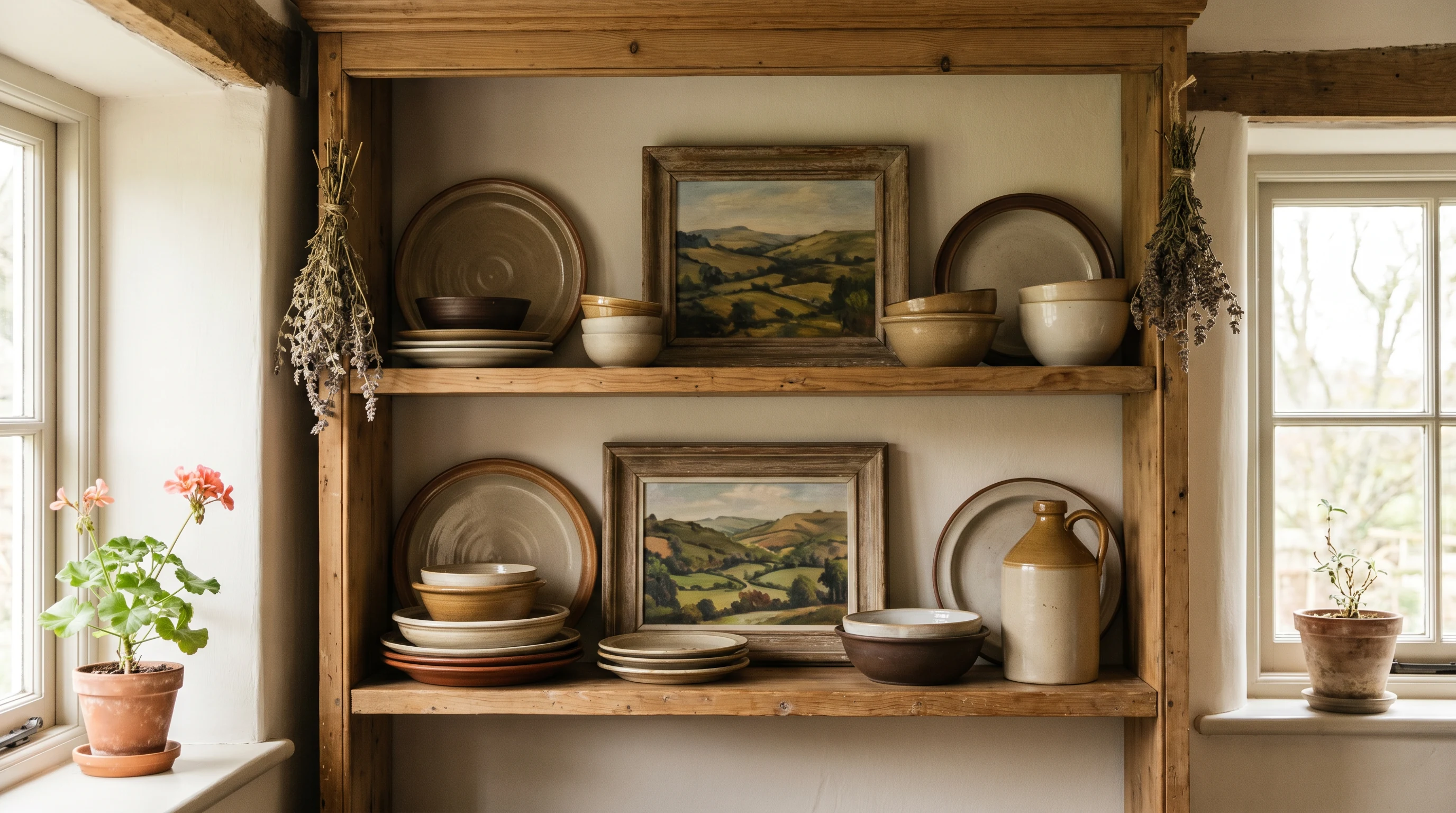
If everything is sentimental, nothing gets to feel special.
Light Matters More Than Most Cottage Mood Boards Admit
Cottage style is often discussed as if it were mainly about pattern and furniture. But the feeling people are chasing is usually built by light. Lamps with fabric shades. Wall lights that glow instead of glare. A room that gets warmer as the afternoon fades.
This is one reason I prefer borrowing cottage cues into contemporary homes rather than trying to reproduce a whole country-house fantasy. Soft lighting does an enormous amount of the atmospheric work, even in a simple apartment with ordinary architecture.
What to Keep and What to Dial Back
| If you want this feeling | Focus on this | Dial back this |
|---|---|---|
| Warmth | Wood, lamps, layered textiles | Bright overhead light |
| Soft charm | One or two modest patterns | Too many competing florals |
| Lived-in character | Older frames, books, ceramics | Perfectly matched new decor |
| Comfort | Cushions, throws, gathered fabric | Decorative clutter with no role |
That table is the entire argument, really. Cottage style succeeds when comfort and age feel believable. It falters when charm becomes inventory.
A Cottage Room Still Needs Editing
I think this is the part people resist because editing sounds modern and cottage style sounds forgiving. But the two are not enemies. Editing is what keeps a warm room from becoming a crowded one.
You can have books and flowers and lamps and framed landscapes and still make the room feel easy on the eye. The trick is letting each choice earn its space. One good basket is better than three average ones. One floral print you genuinely love is better than an entire room trying to prove the point.
Borrow the Atmosphere, Not the Costume
That may be the cleanest way to approach English cottage style in a real home, especially a smaller or newer one. Borrow the atmosphere. Borrow the mix of softness, age, and quiet domestic comfort. Borrow the sense that someone lives here on purpose.
You do not need every signifier. You need the room to feel warmer, looser, and a little less over-managed. A floral cushion. A lamp with a shade that glows in the evening. A wooden table that looks better because it is not perfect. Shelves with enough restraint that the pottery gets to breathe.
That is usually enough. More than enough, really. Once those elements are in place, the room starts to carry the cottage feeling without having to declare it too loudly. And in my experience, that is when the style becomes most convincing.
You might also like
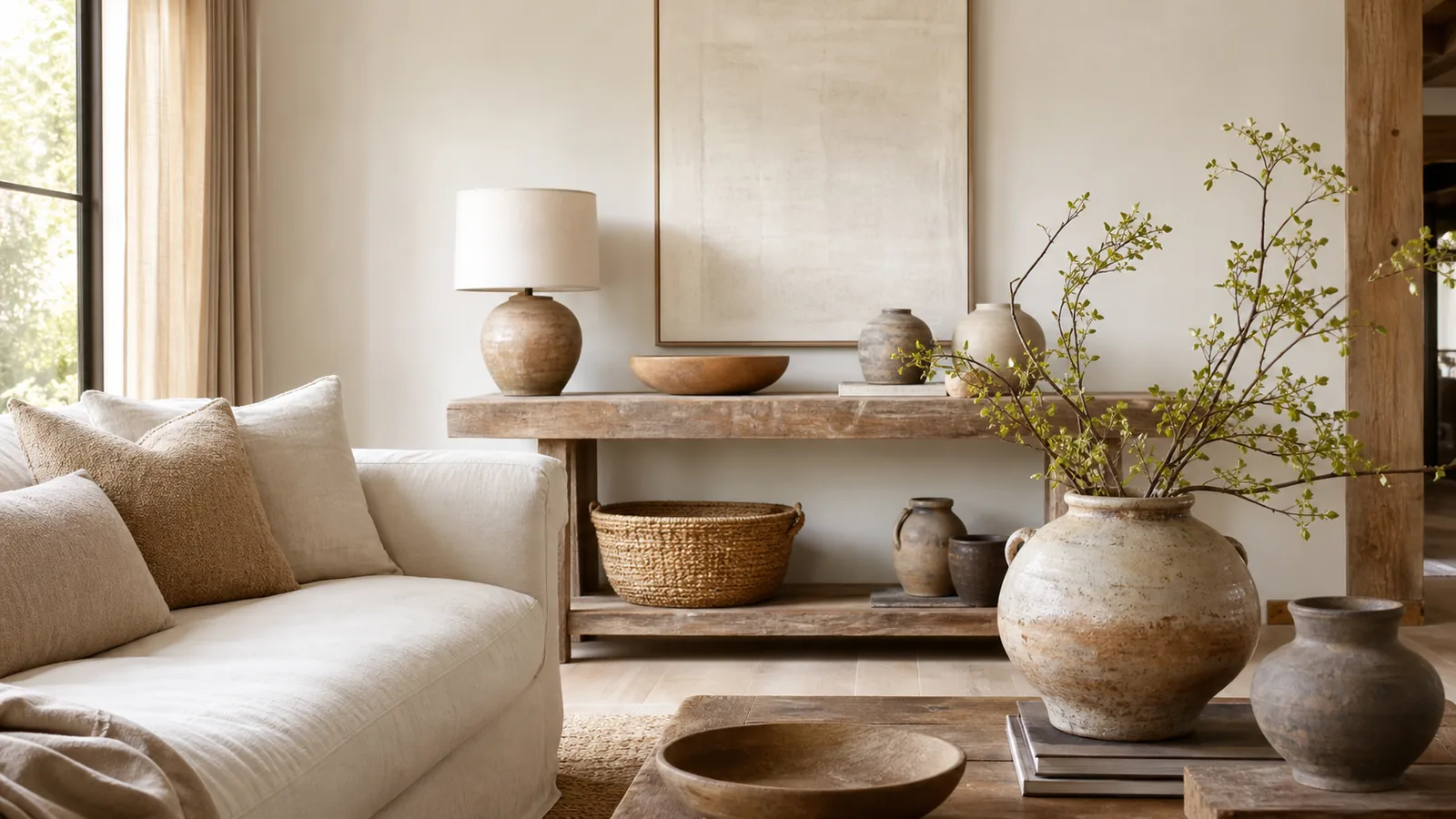
Rustic Home Decorations That Add Warmth Without Making a Room Feel Heavy
Rustic home decorations work best when they add texture, usefulness, and age without filling every surface or darkening the whole room.
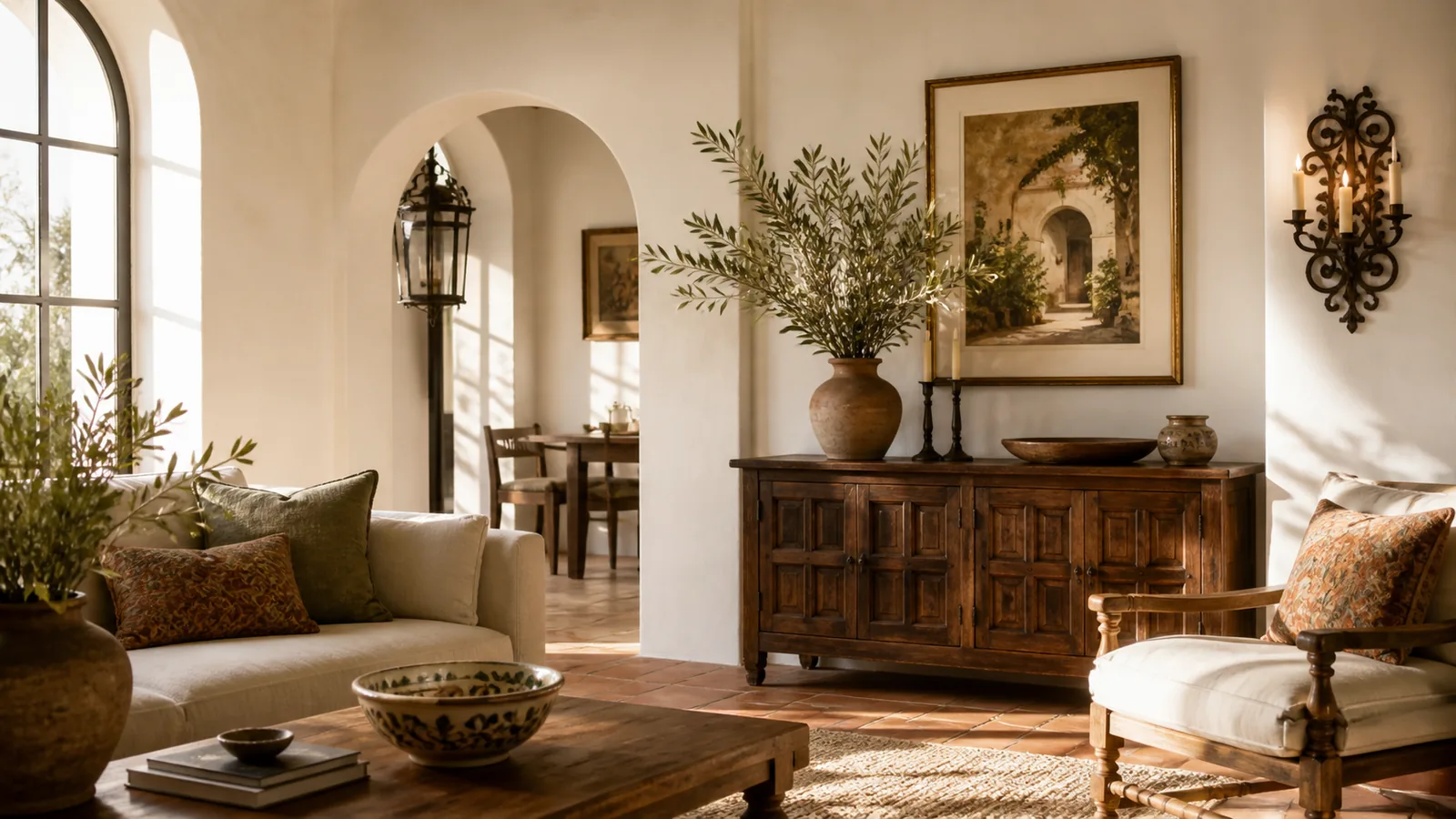
Spanish Style Home Decor With Warmth, Plaster, and Iron
Spanish style home decor feels strongest when it starts with warm materials, softened walls, dark iron, terracotta, and furniture that has weight without clutter.
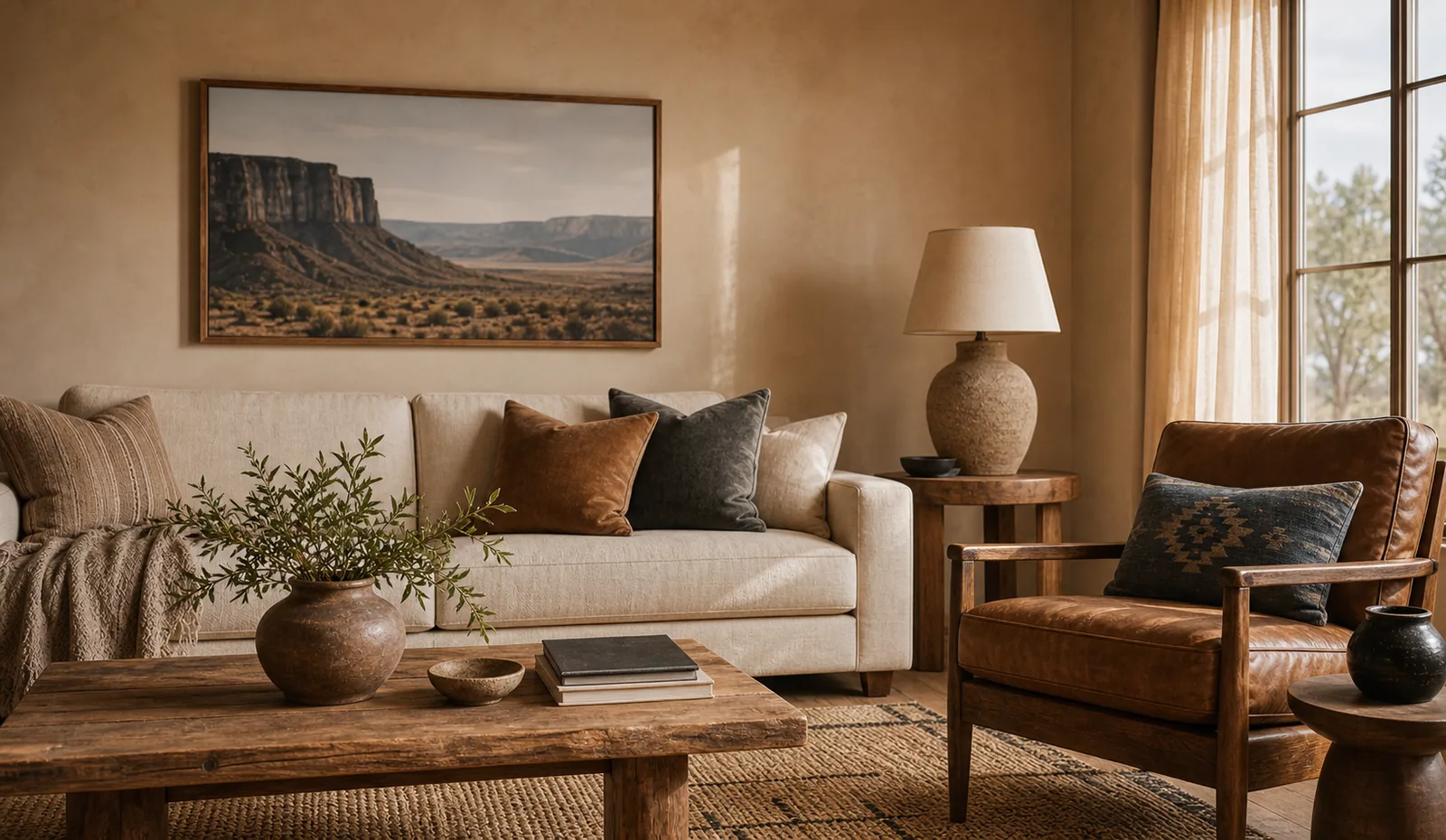
Western Home Decor That Feels Warm, Not Costume-Themed
Western home decor is strongest when it borrows warmth, leather, woven texture, and landscape colors instead of turning the room into a set.