The Kitchen Counter Reset That Finally Made My Small Rental Easier to Cook In
My Counter Was Technically Clear, but Never Actually Ready
For a while, I kept telling myself my kitchen problem was storage. That felt like the adult answer. Maybe I needed prettier canisters, a better shelf, one of those tidy drawer systems that makes everything look as if it belongs to someone who meal-preps on Sunday and never loses a bag clip.
The truth was less flattering. My kitchen counter was not crowded because I owned too much. It was crowded because the same stretch of surface was being asked to do everything at once. It held the coffee things, the chopping board, whatever groceries had just come in, the dish soap I kept forgetting to put away, and a rotating cast of mail, receipts, and half-read notes. It was clear often enough to look fine in a photograph. It was rarely clear in the exact way that made cooking feel easy.
That difference matters. In a small rental kitchen, the counter is not just a surface. It is the room’s working mood. If it feels scrambled, everything else does too.
I Stopped Asking What Looked Good and Asked What Needed to Happen Fast
The reset only got useful when I stopped styling it and started timing it. What did I need to reach quickly when I made coffee before work? Where did I keep landing groceries when I came home? Why was I always wiping crumbs into the same dead corner and then pretending that corner did not exist?
Once I paid attention to the rhythm instead of the aesthetics, the layout changed almost on its own. The coffee things moved together. Oils and salt went closer to the stove. The fruit bowl stopped living in the only prep zone with decent light. A tray took over the awkward middle space where random objects used to drift in and linger.
This was not a dramatic before-and-after. It was more like hearing a room finally stop interrupting itself.
The Coffee Zone Needed Edges, Not More Personality
The first thing I fixed was the coffee setup, mostly because it had become the counter’s permanent squatter. The grinder, kettle, mugs, filters, and beans were all things I used daily, which meant they were allowed to stay out. But they had been spreading sideways in a way that made the whole counter feel unofficial.
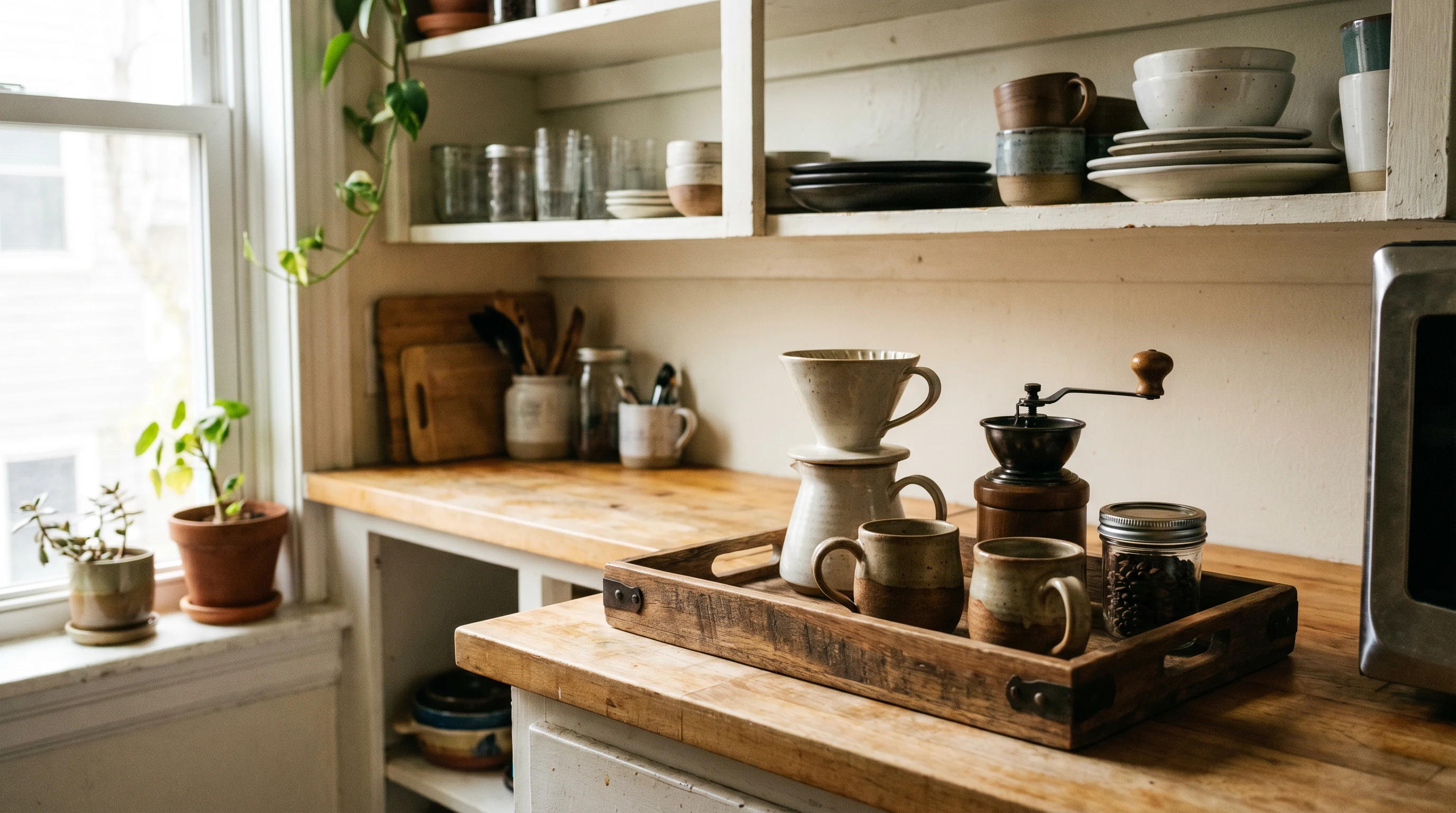
What helped was giving the coffee area a visible boundary. I used a low tray wide enough for the kettle and canister, then kept mugs on the shelf above rather than scattered nearby. Suddenly the setup felt intentional instead of halfway unpacked. It also made cleaning easier. I could lift one thing, wipe underneath, and put it back without starting a chain reaction.
I think people underestimate how calming edges can be in a kitchen. They do not just organize objects. They tell your brain that the clutter has already stopped here.
Prep Space Became More Useful Once I Defended It
The second change was almost embarrassingly basic: I protected one section of counter for actual cooking and stopped letting decorative or miscellaneous things migrate into it. Not forever, just as a default.
That meant moving the bowl of lemons somewhere else. It meant the olive oil bottle no longer lived three inches from where I chopped vegetables. It meant the paper towels went closer to the sink instead of taking up the brightest patch of workspace in the room.
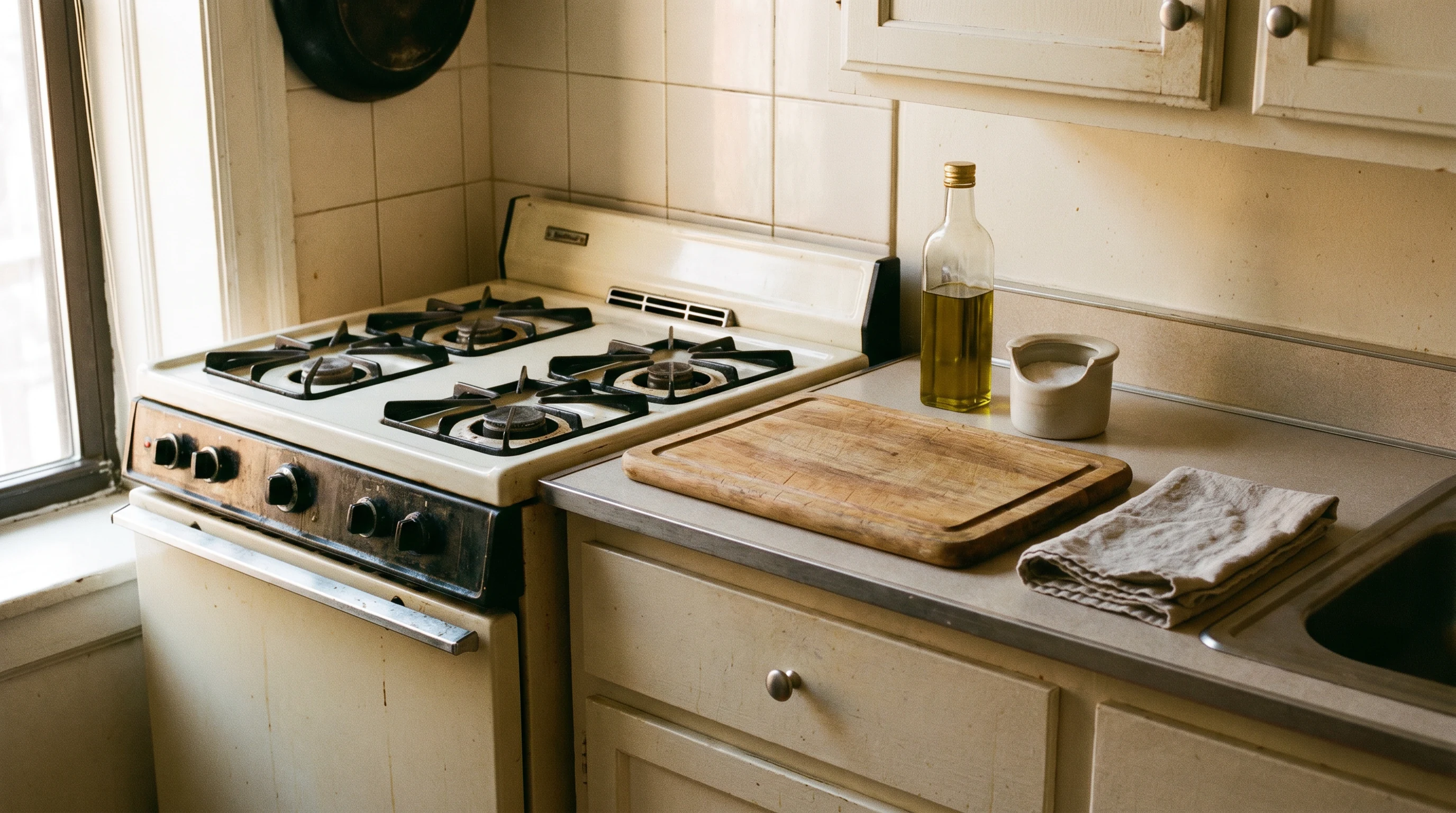
I also left one heavy cutting board leaning against the backsplash instead of storing it away. This sounds small, but it changed how often I cooked. When the board was easy to grab and the counter beneath it was already clear, making dinner felt like a continuation of the evening instead of the beginning of a chore.
Open Shelving Only Worked After the Counter Did
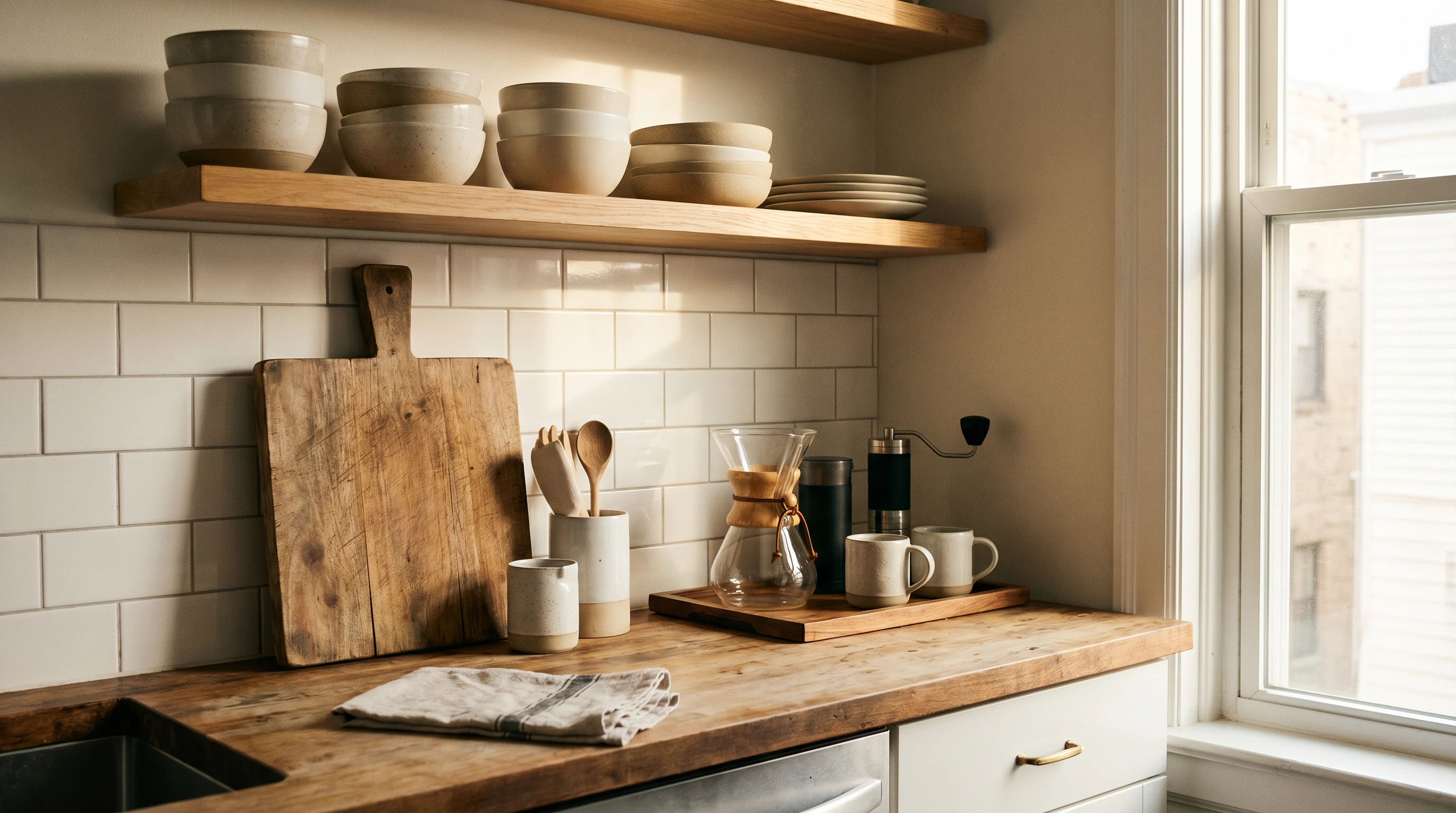
For a long time I blamed the open shelf above the counter for making the kitchen look busy. But the shelf was not really the issue. The counter was. Once the surface below it calmed down, the shelf stopped reading as visual noise and started reading as support.
I edited it hard. Everyday bowls, two stacks of plates, glassware I actually use, and a small crock for wooden spoons. That was enough. The point was not to create a styled display. The point was to let the things I reached for most often live above the work area without turning the wall into a second junk drawer.
What Changed in Practice
| Before | After |
|---|---|
| Coffee tools spread across the counter | One bounded coffee zone that cleans up quickly |
| Decorative items drifted into prep space | One section stayed reliably open for chopping and plating |
| Frequently used items had no clear home | Shelf and tray storage matched everyday habits |
| Cooking felt like setup before it felt like dinner | The kitchen was ready sooner, with less friction |
None of this made the kitchen larger. It simply made the room stop arguing with itself.
The Best Small-Kitchen Fixes Usually Feel Slightly Obvious in Hindsight
That may be why people put them off. We expect improvement to arrive with a new cart, a bigger cabinet, or at least a shopping trip with a label maker. Sometimes it does. But some of the most satisfying kitchen resets come from making the existing surfaces more truthful.
My counter needed to admit what kind of kitchen it was: small, hardworking, and visible from the living room. Once I accepted that, I stopped trying to make it look empty all the time and started trying to make it look ready.
That is the version of tidy I trust most now. Not spotless. Not styled within an inch of its life. Just ready enough that cooking on a Tuesday does not require a negotiation first.
A Rental Kitchen Feels Better When Its Defaults Improve
I still do a quick wipe at night. I still end up with groceries on the counter for ten minutes longer than planned. Real life keeps happening. But the defaults are better now. The coffee corner stays contained. The prep spot is easier to reclaim. The shelf supports the work instead of stealing attention from it.
And that, more than any makeover language, is what made the difference. My kitchen did not become aspirational. It became easier to use, which turned out to be far more comforting.
If your small rental kitchen feels perpetually half-busy, I would start there. Not with another storage product. With the question of which square foot of counter keeps getting interrupted, and what the room would feel like if it finally got to do one job well.
You might also like
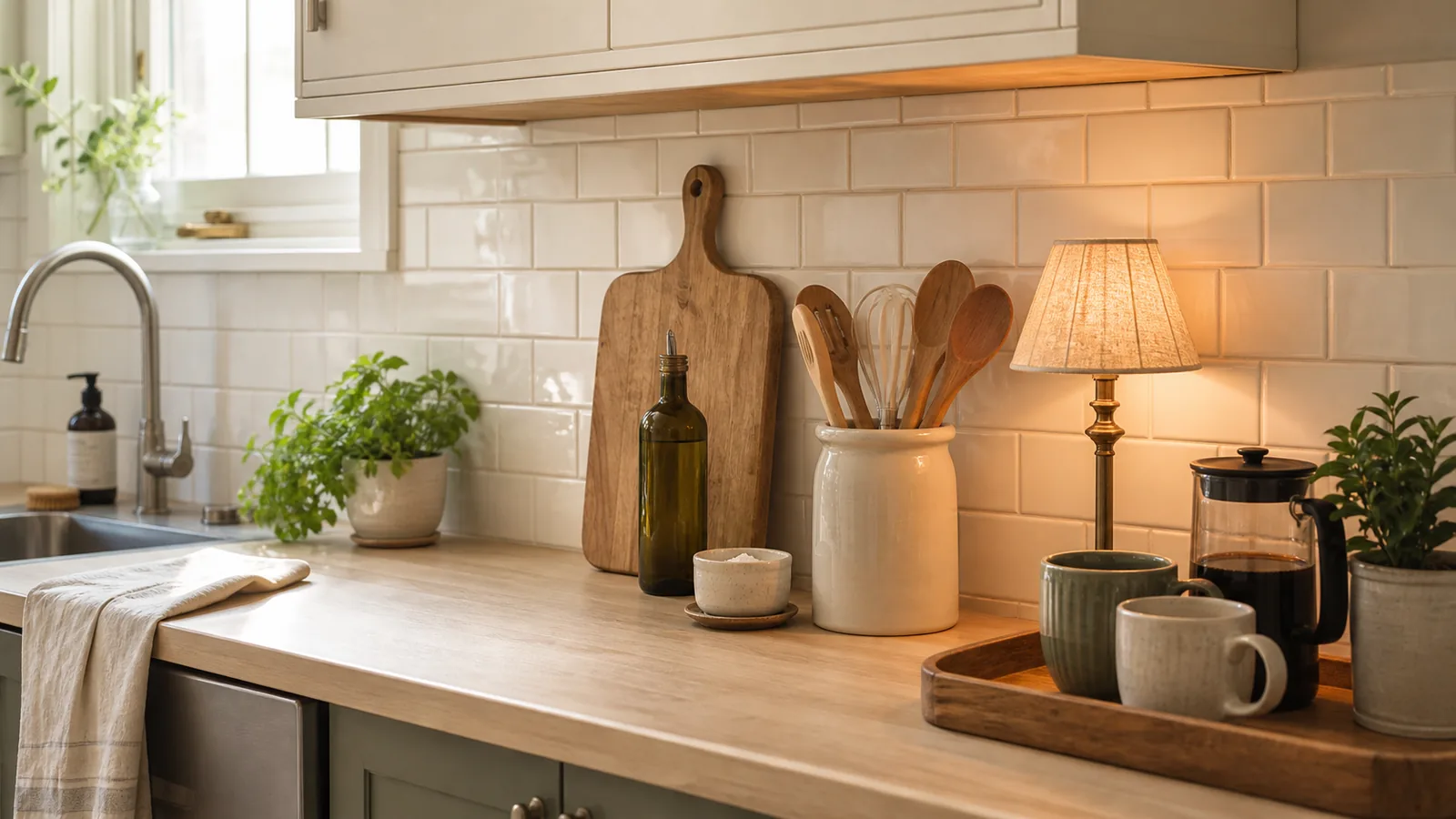
Kitchen Counter Decor Ideas That Stay Useful
Kitchen counter decor works best when it supports cooking, cleaning, coffee, and light instead of stealing the prep space you need every day.
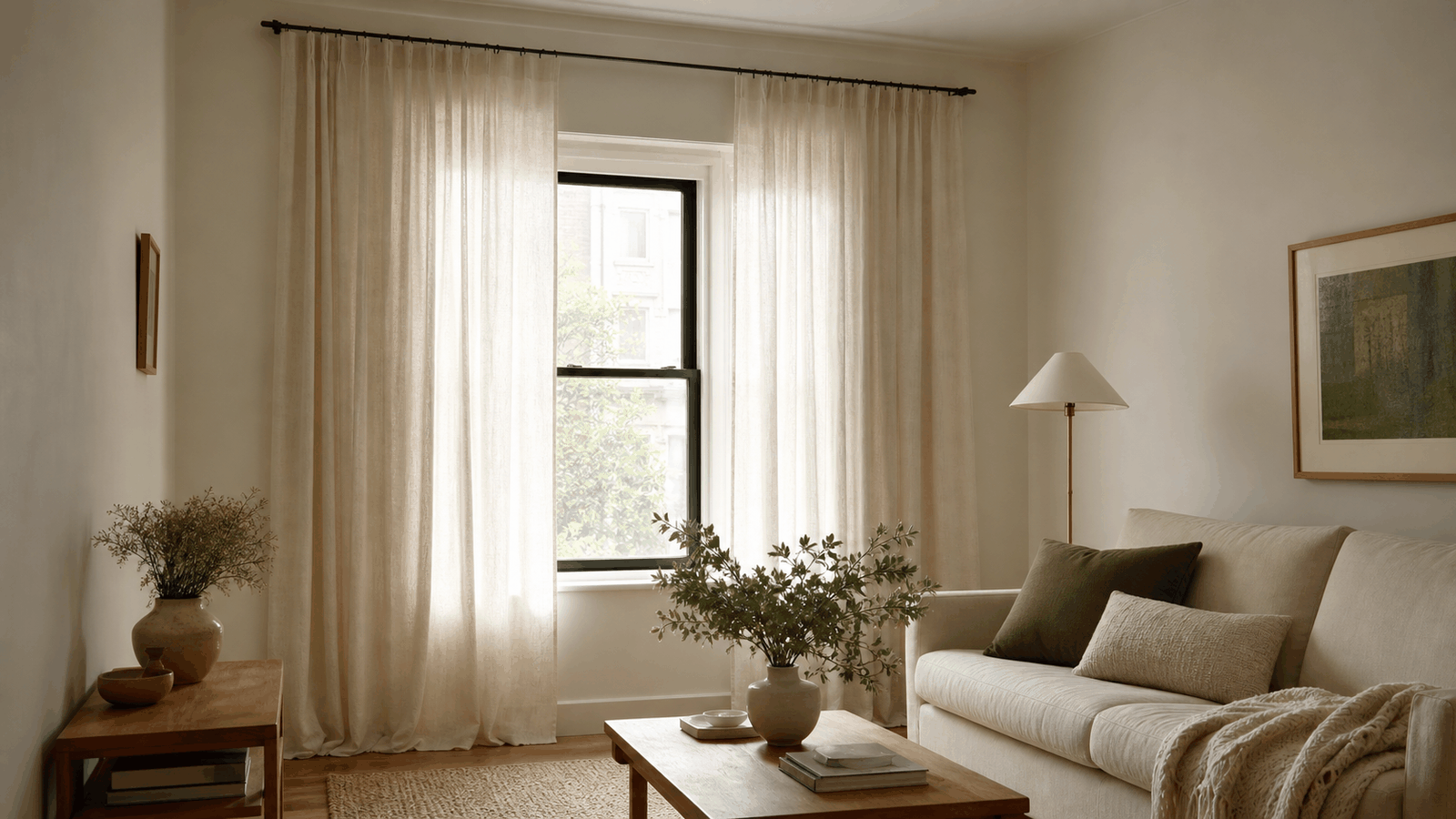
Curtain Ideas That Make a Rental Living Room Feel Taller
Rental living rooms often feel shorter because the curtain rod, fabric, and wall around the window are doing less work than they could.
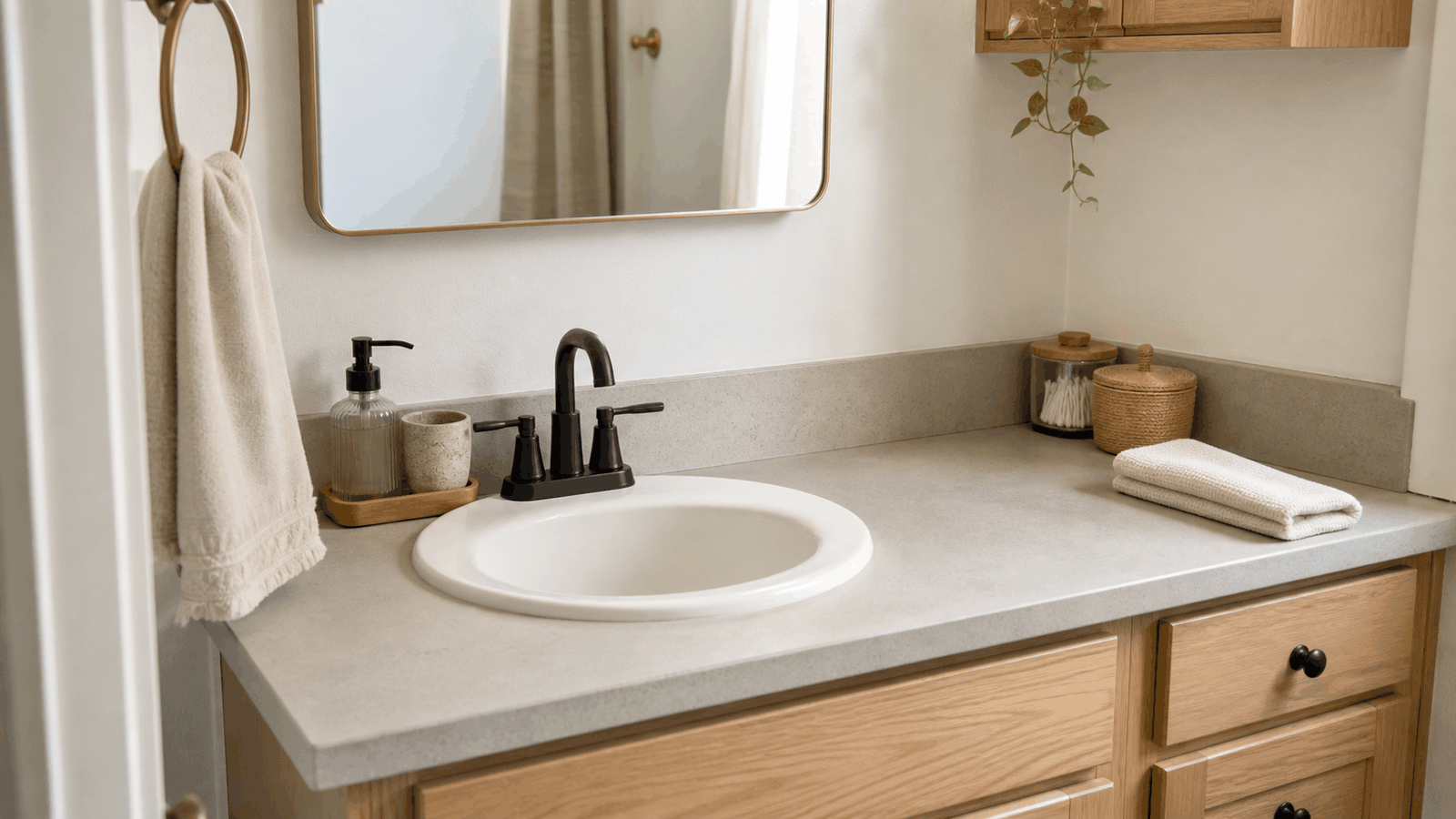
Small Bathroom Counter Organization Ideas That Still Leave Room to Get Ready
A small bathroom counter works better when the daily routine has a clear landing zone and everything else stops competing with the sink.