The Nightstand Essentials I Kept After Realizing Most Bedside Clutter Was Optional
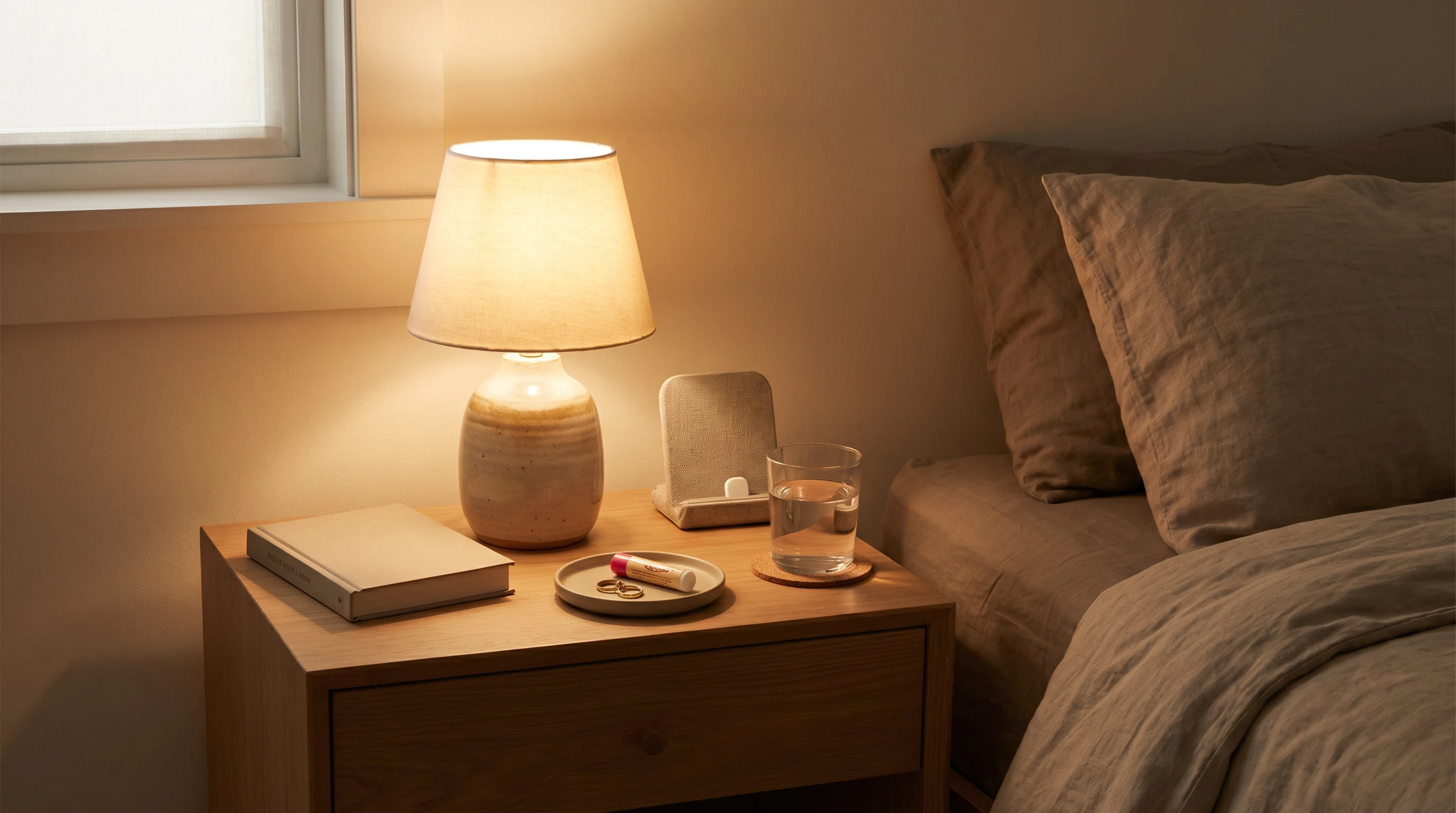
I used to treat my nightstand like a tiny storage unit with emotional branding. If an object was associated with sleep, comfort, hydration, reading, charging, or the fantasy of becoming more organized, I assumed it belonged there. The result was predictable: two half-read books, three lip balms, a water glass without a coaster, receipts, chargers, hand cream, a candle I never lit, and just enough surface left to feel annoyed every time I reached for the lamp.
Eventually I stopped trying to style around the clutter and asked a more useful question: what actually deserves to live within arm’s reach at the end of the day?
These are the essentials I kept.
1. A lamp with the right kind of light
A nightstand lamp earns its place when it does one thing well: make the room feel softer without forcing you to wake the entire bedroom just to read a few pages.
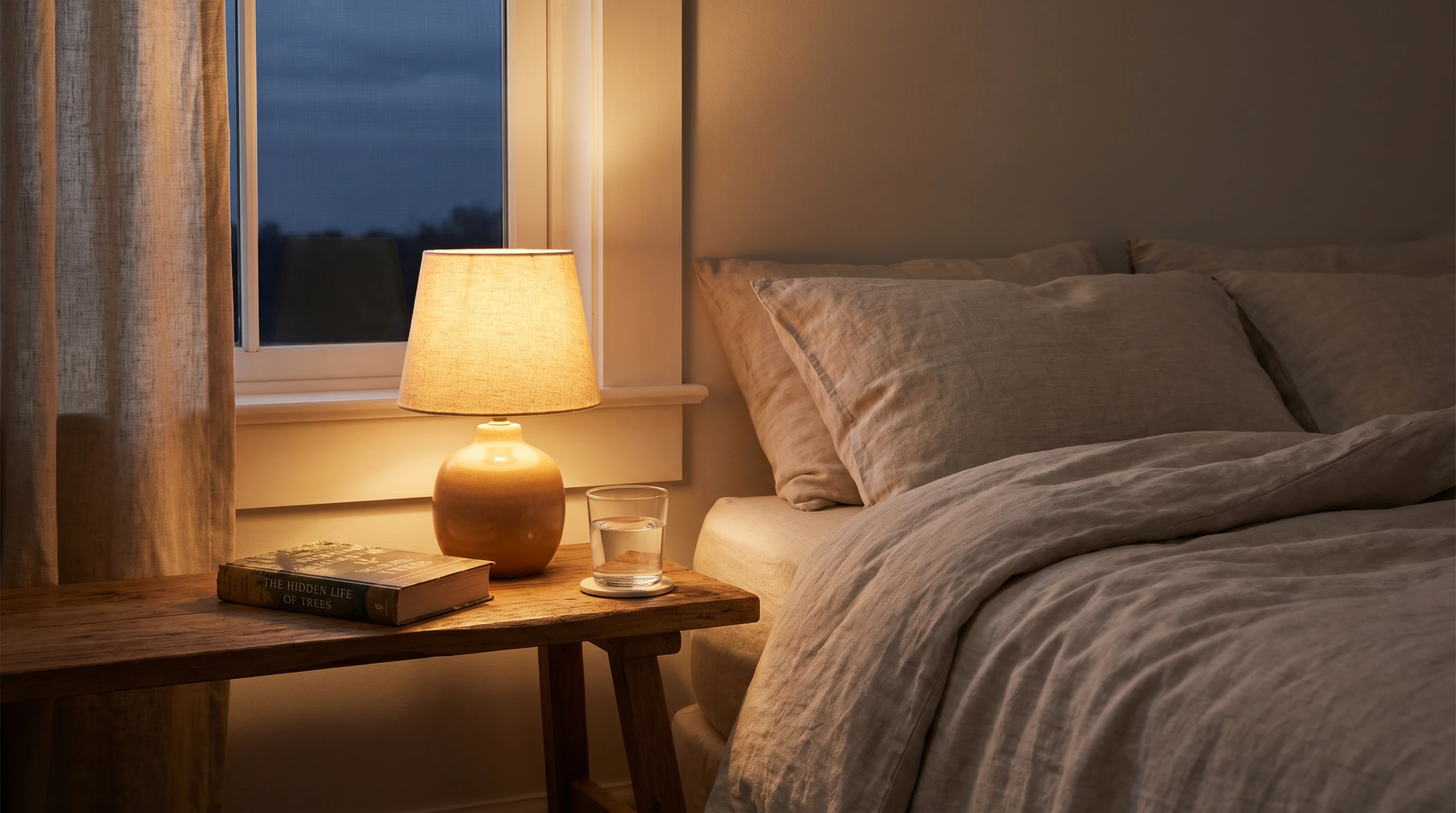
I prefer a lamp with a shaded glow rather than a bare bulb or anything too sculptural. Bedside lighting should help the room lower its voice. If a lamp is beautiful but throws harsh light across the pillow, it is decor first and a nightstand essential second.
2. One tray for the small, loose things
The nightstand gets messy fastest when the smallest objects lose their edges. A tray solves that better than most organizing gadgets. It holds the watch, the lip balm, the ring you take off at night, maybe the hand cream if you actually use it.
It also keeps the surface from feeling like a collection of unrelated errands. A tray tells those objects where to stop.
3. A charging setup that does not crawl across the tabletop
Cords are often what make a nightstand look tired. Even when the surface is technically tidy, one snaking cable can make it feel temporary.
That is why I finally switched to a more contained charging setup. Whether that means a dock, a cable clip, or simply running the cord out of sight, the point is the same: the phone can charge without becoming the main visual event.
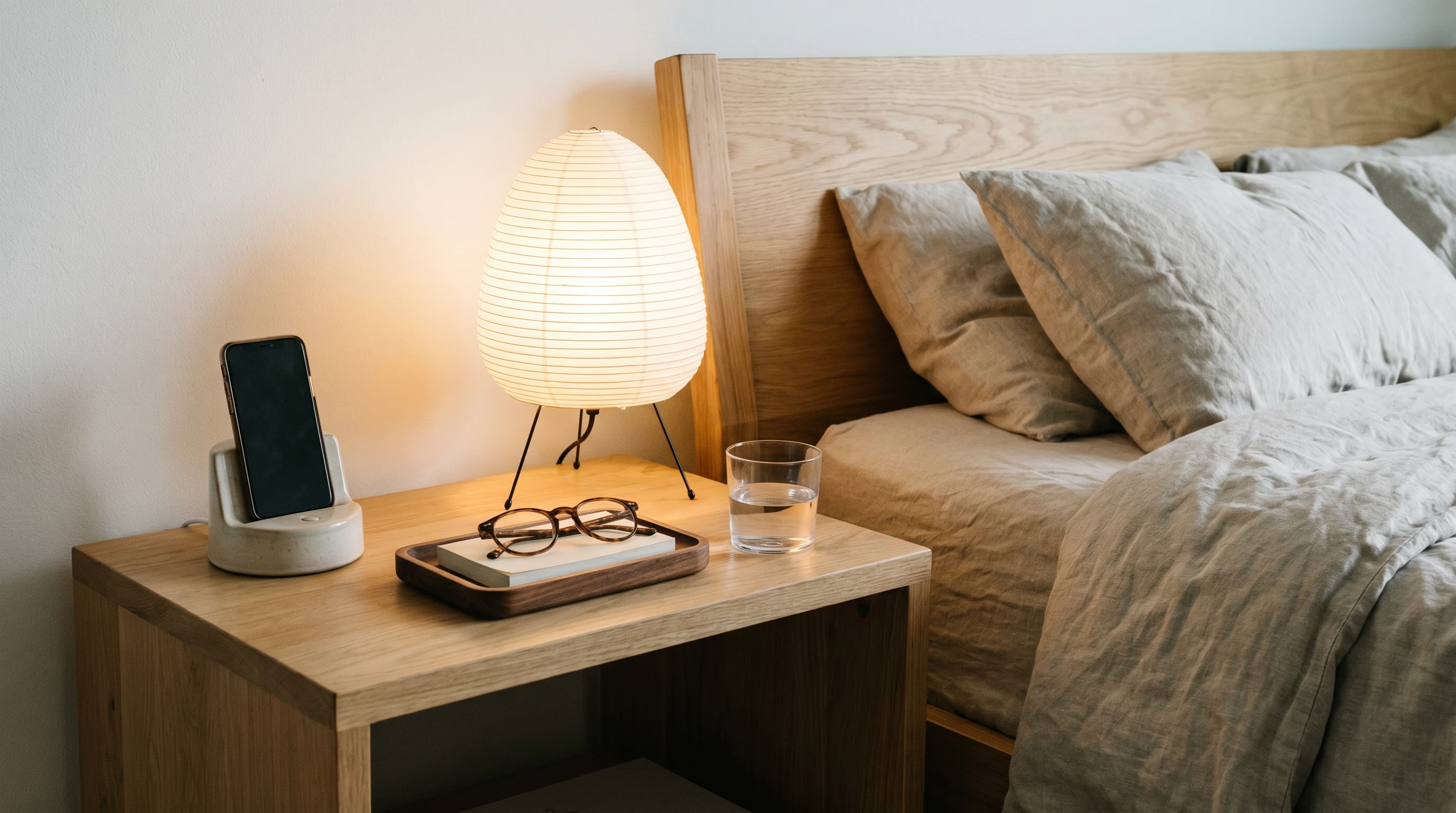
The calmer the charging situation, the easier it is to keep the rest of the table in proportion.
4. A glass or carafe that acknowledges real life
I am not committed enough to bedtime aesthetics to pretend I do not want water nearby. So instead of trying to eliminate the habit, I just made it look less accidental. One dedicated glass or a small bedside carafe is enough.
This is one of those details that works better when it is slightly ritualized. If the water has a place, it stops looking like something you forgot to clear away.
5. A book limit, not a book pile
Reading before bed is lovely in theory and still lovely in practice, but the nightstand does not need to become a branch library. I now keep one current book and, at most, one notebook.
The rule matters because paper multiplies quietly. One extra book becomes a stack. A stack becomes a landing zone for receipts and earbuds. Suddenly the nightstand is back to being a holding pen for the unfinished day.
6. A drawer insert, if the table has a drawer at all
This is less glamorous than buying a nicer lamp, but it may be more effective. If your nightstand has a drawer, a simple divider keeps the hidden clutter from turning into the same problem behind a closed front.
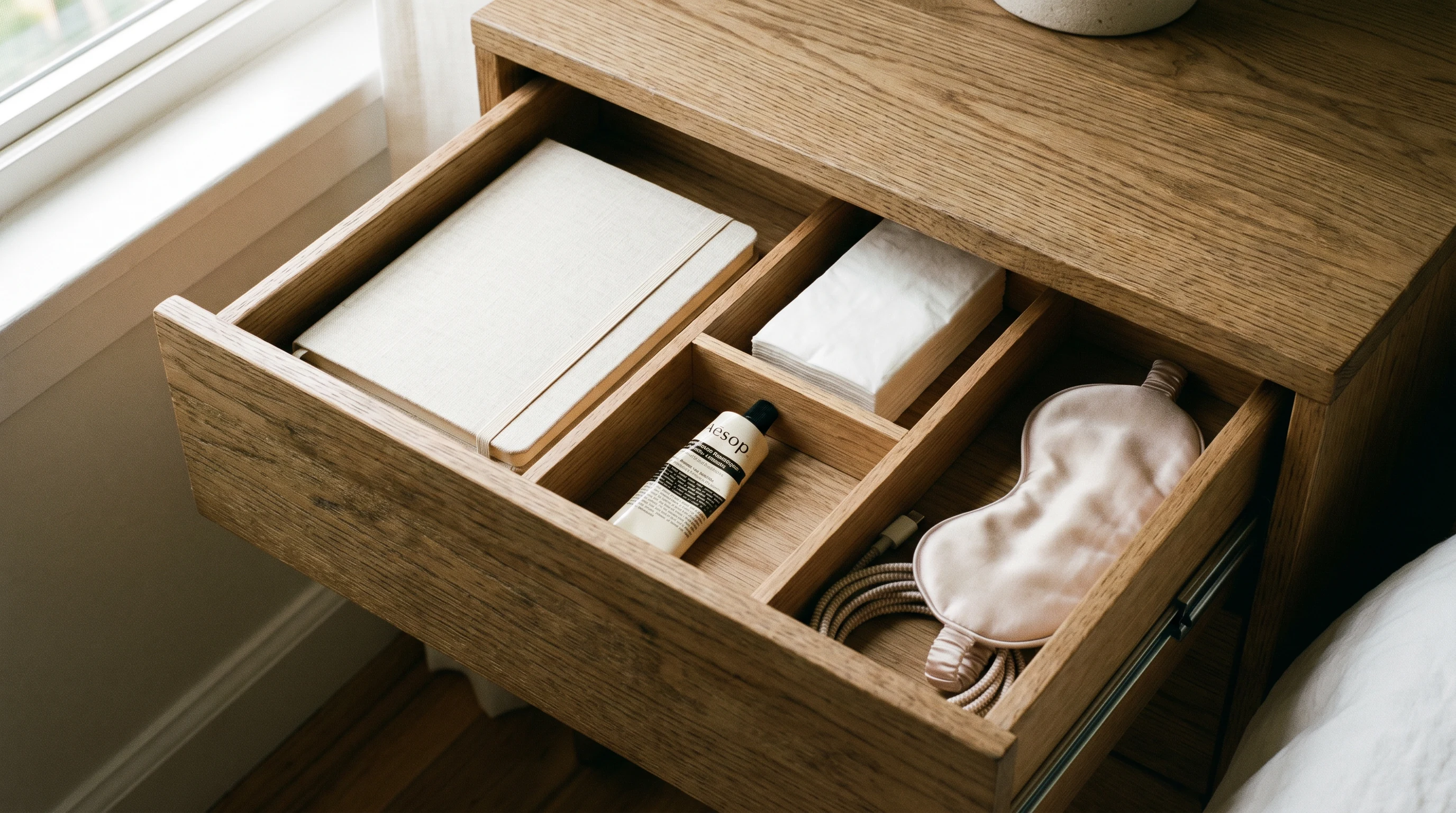
I use mine for the things I want nearby but not visible: tissues, spare charger, hand cream, sleep mask. Nothing dramatic. Just enough structure that the drawer still opens like part of the room, not a confession.
What I stopped keeping beside the bed
| I used to keep this | Why it left |
|---|---|
| Random receipts and notes | They belonged to the day, not the bedside |
| More than two books | It made the table feel crowded and indecisive |
| Decorative objects with no job | They took space from the things I actually used |
| Loose charging cables | They made the whole setup feel messier than it was |
What remains is not minimalism for its own sake. It is just the version of the nightstand that makes bedtime feel easier.
A Better Nightstand Is Mostly About Editing the Mood
The objects beside the bed do not only take up physical space. They affect the emotional tone of the room. A crowded nightstand makes the end of the day feel unfinished. A calmer one suggests, very quietly, that you can stop keeping track of everything now.
That is why I no longer try to make the tabletop hold every category of comfort. It only needs the few things that support the actual last half hour of the evening: softer light, a place for the small valuables, water, one book, and a charging setup that does not turn the room into a tech station.
Once I cut it back to that, the whole bedside area looked better, but more importantly, it felt less noisy. And that is usually the standard I trust most in a bedroom. Not whether the surface is styled. Whether it helps the room let go of the day.
You might also like
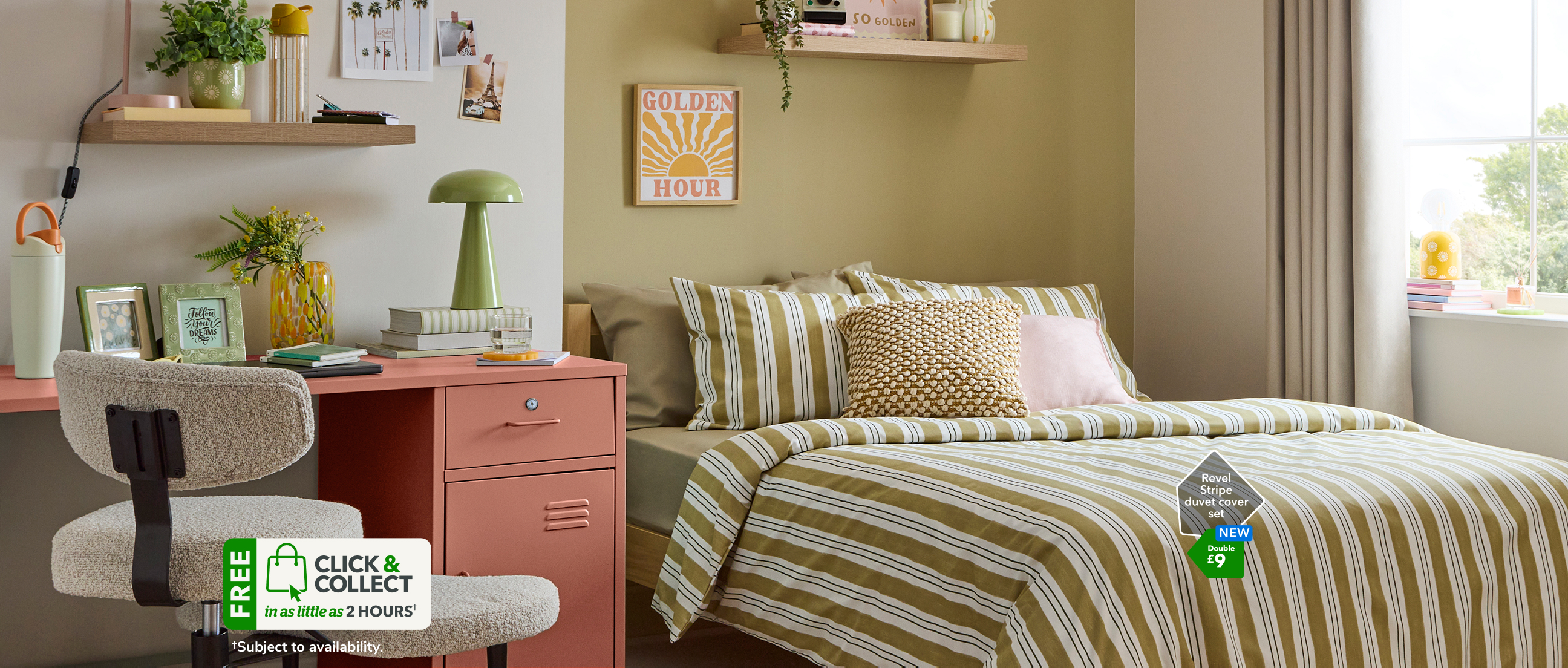
Dunelm Review: A Practical Way to Refresh Every Room Without Losing the Plot
Dunelm is at its most useful when you shop by the job a room needs to do. We look at the retailer's mix of furniture, bedding, kitchen helpers and small finishing pieces, then set out a calmer way to build a useful shortlist.
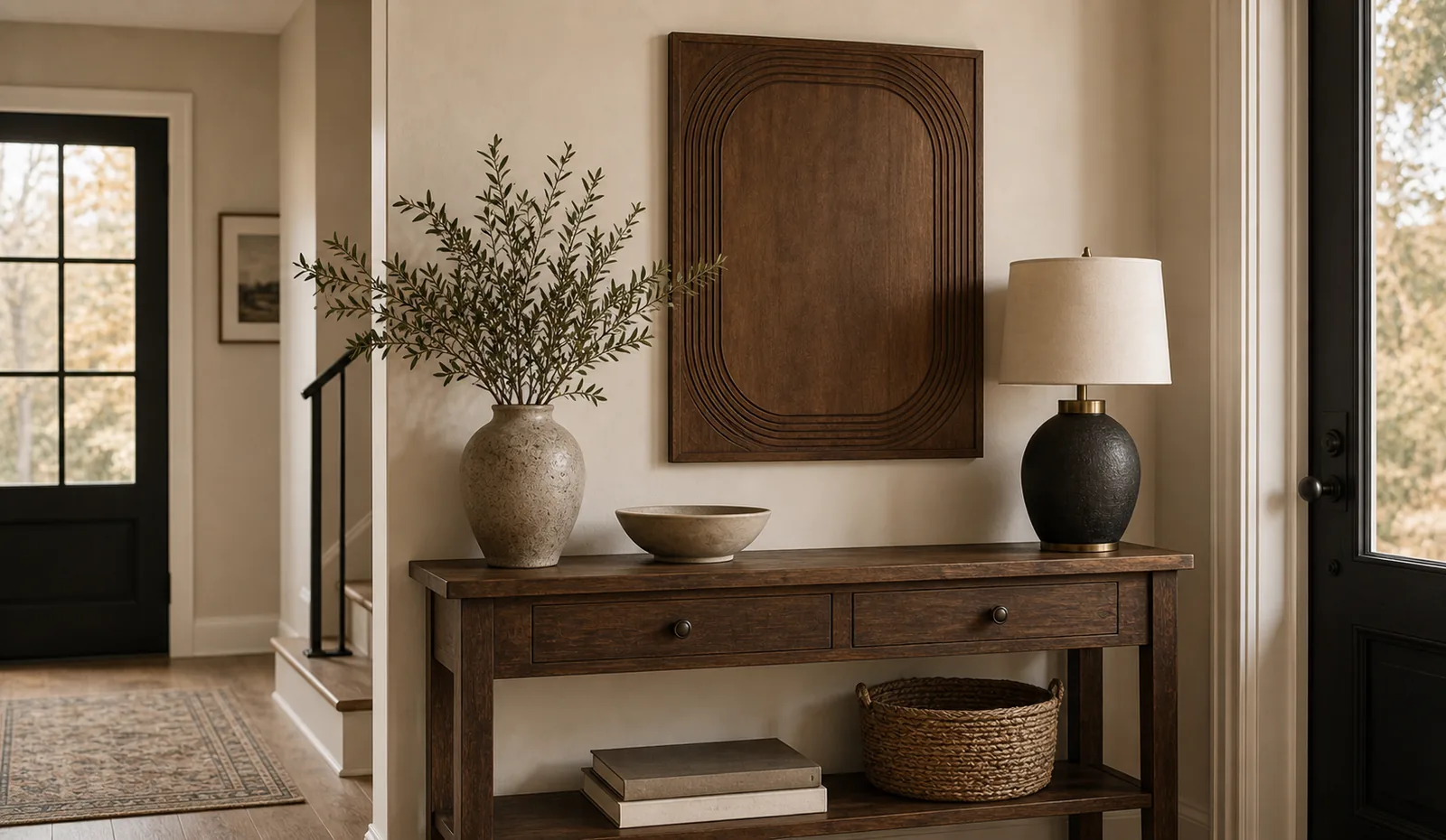
Home Decor Signs That Look Intentional Instead of Filler
Home decor signs work when they feel graphic, integrated, and purposeful. Otherwise they read like leftover filler on a wall.
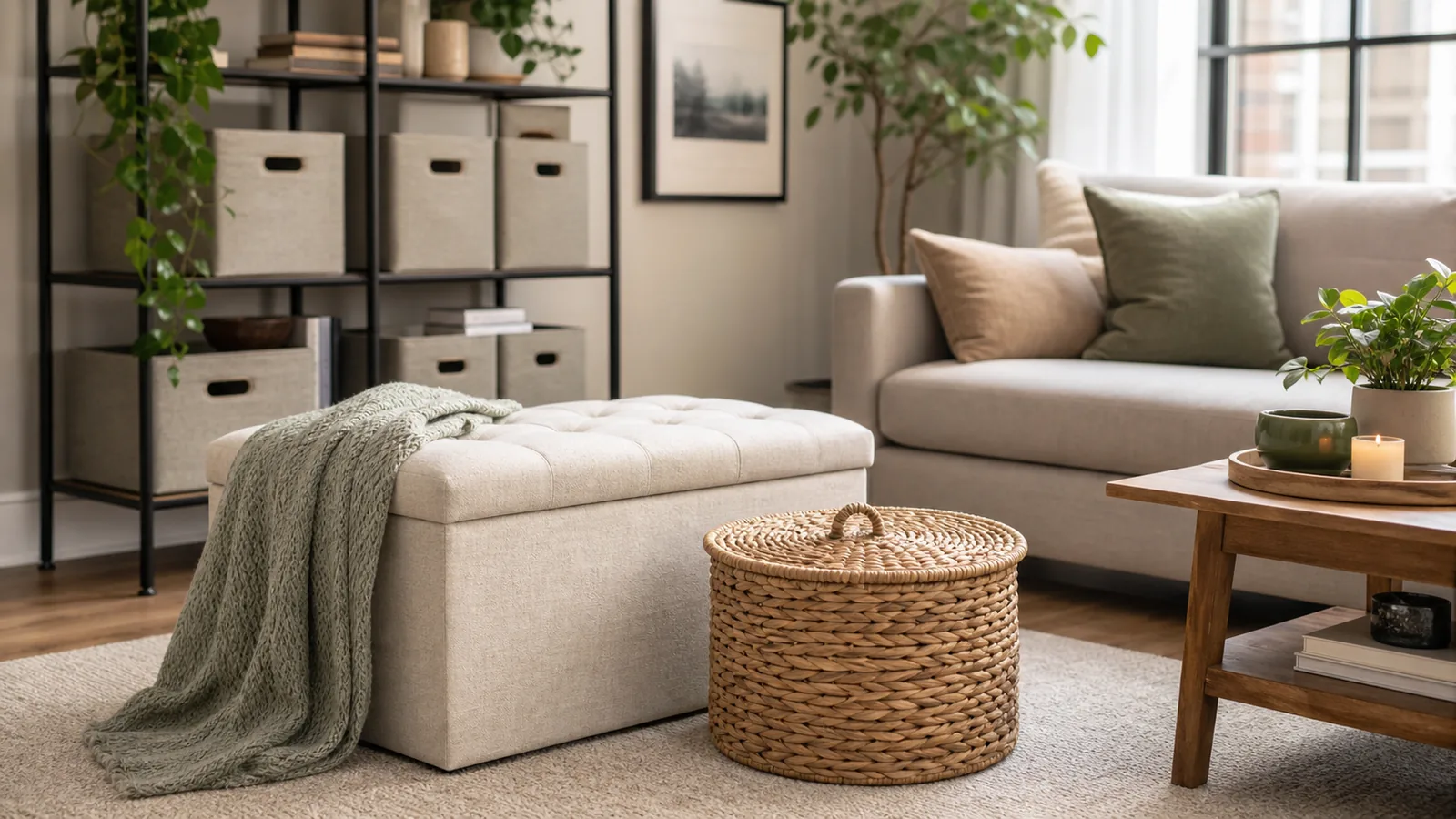
5 Soft Storage Pieces That Earn Their Space in a Small Home
Storage does not have to look like office furniture. These softer pieces keep everyday mess contained while still feeling like part of the room.