The Closet Office That Disappears When the Workday Ends
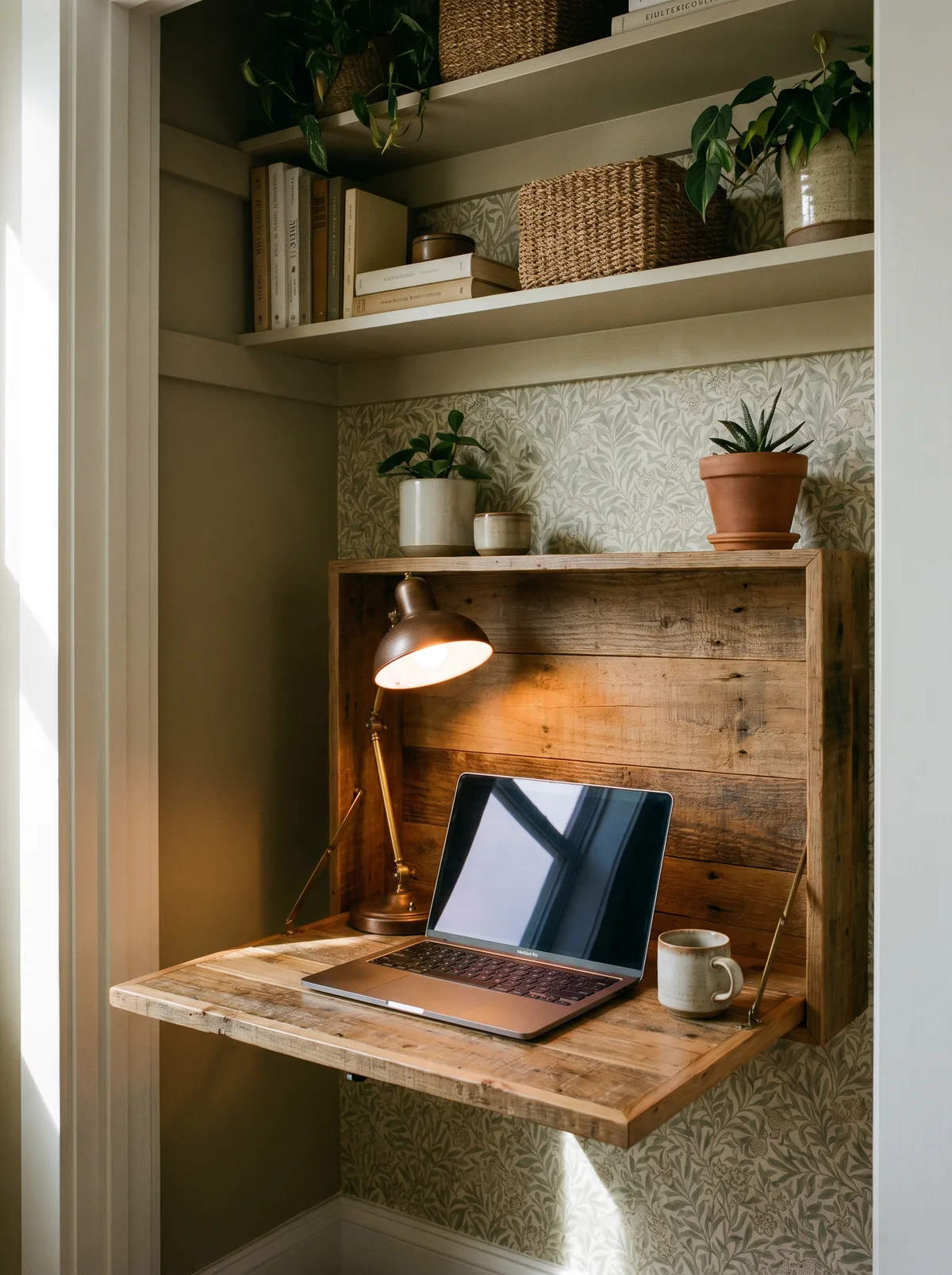
When the dining table is your desk, you never really leave the office. When your bedroom is your office, you never really go to sleep. The boundary between work and rest dissolves.
I needed a workspace that could disappear. The solution was the secondary closet in the guest room—a space barely wide enough for a desk, but deep enough to hide one.
The Disappearing Desk
A standard desk felt too heavy and made the closet feel like a cave.
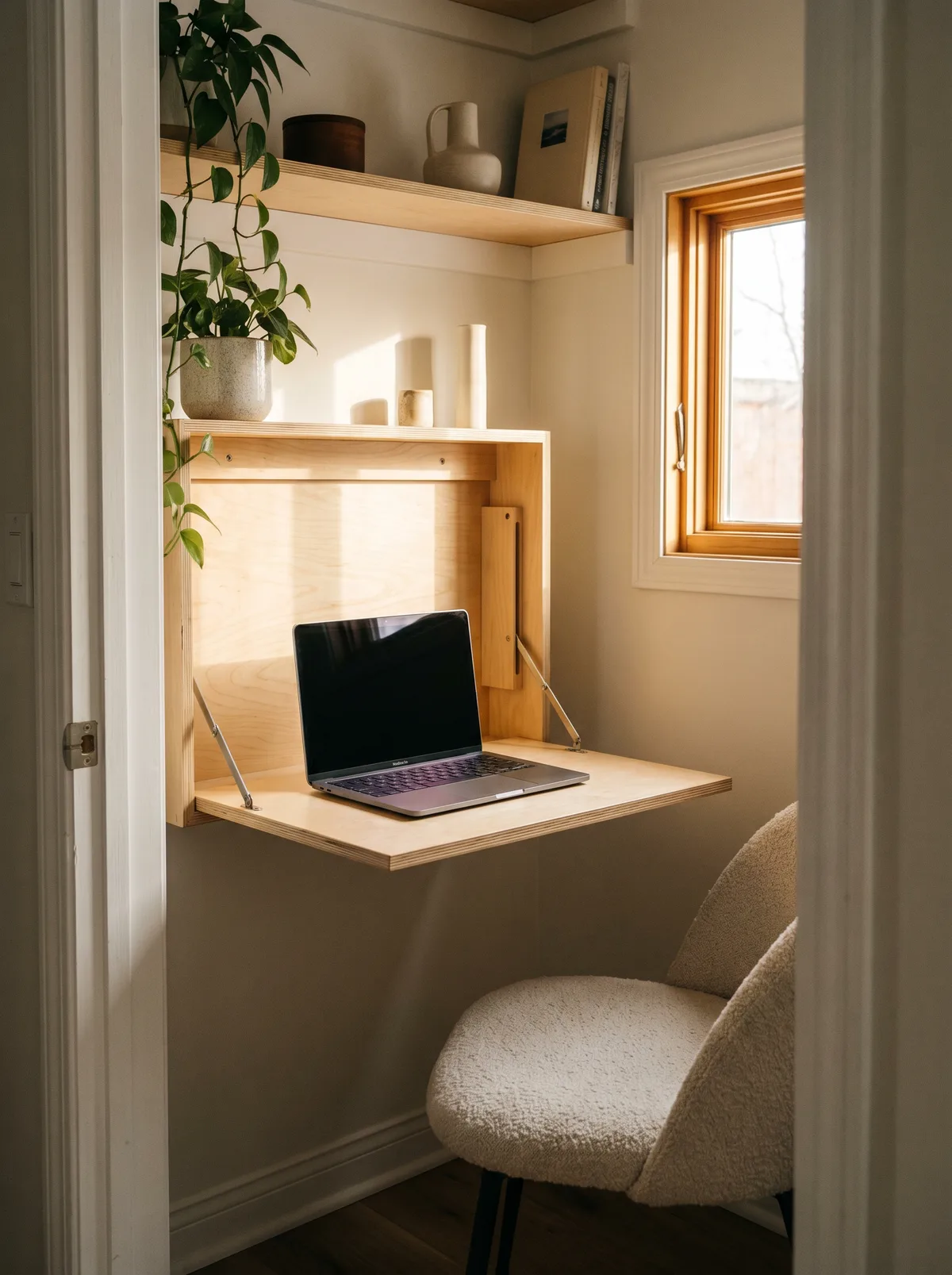
I installed a Compact Wall-Mounted Fold-Down Desk. When open, it is sturdy enough for a laptop and monitor. When closed, it folds flat against the wall, freeing up the closet floor completely.
Defining the Zone
To make the closet feel like a deliberate office rather than a storage space, it needed its own identity.
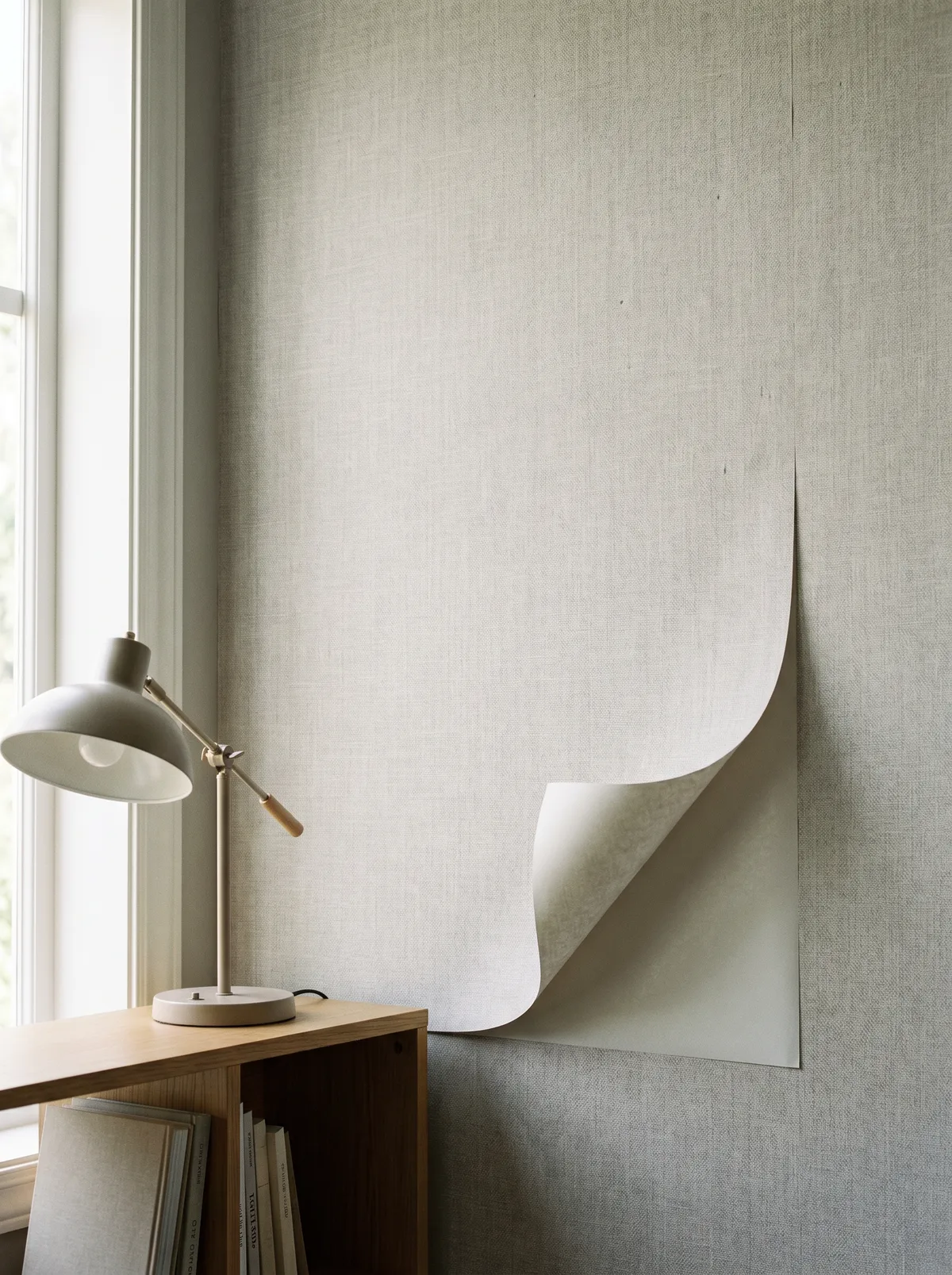
I lined the back wall with a subtle, textured Peel-and-Stick Wallpaper Panel. This visual boundary signals to my brain that this specific two-foot-wide area is for focus.
At 5 PM, I fold the desk up, turn off the task lamp, and close the closet doors. The office ceases to exist, and the room becomes a place of rest again.
You might also like
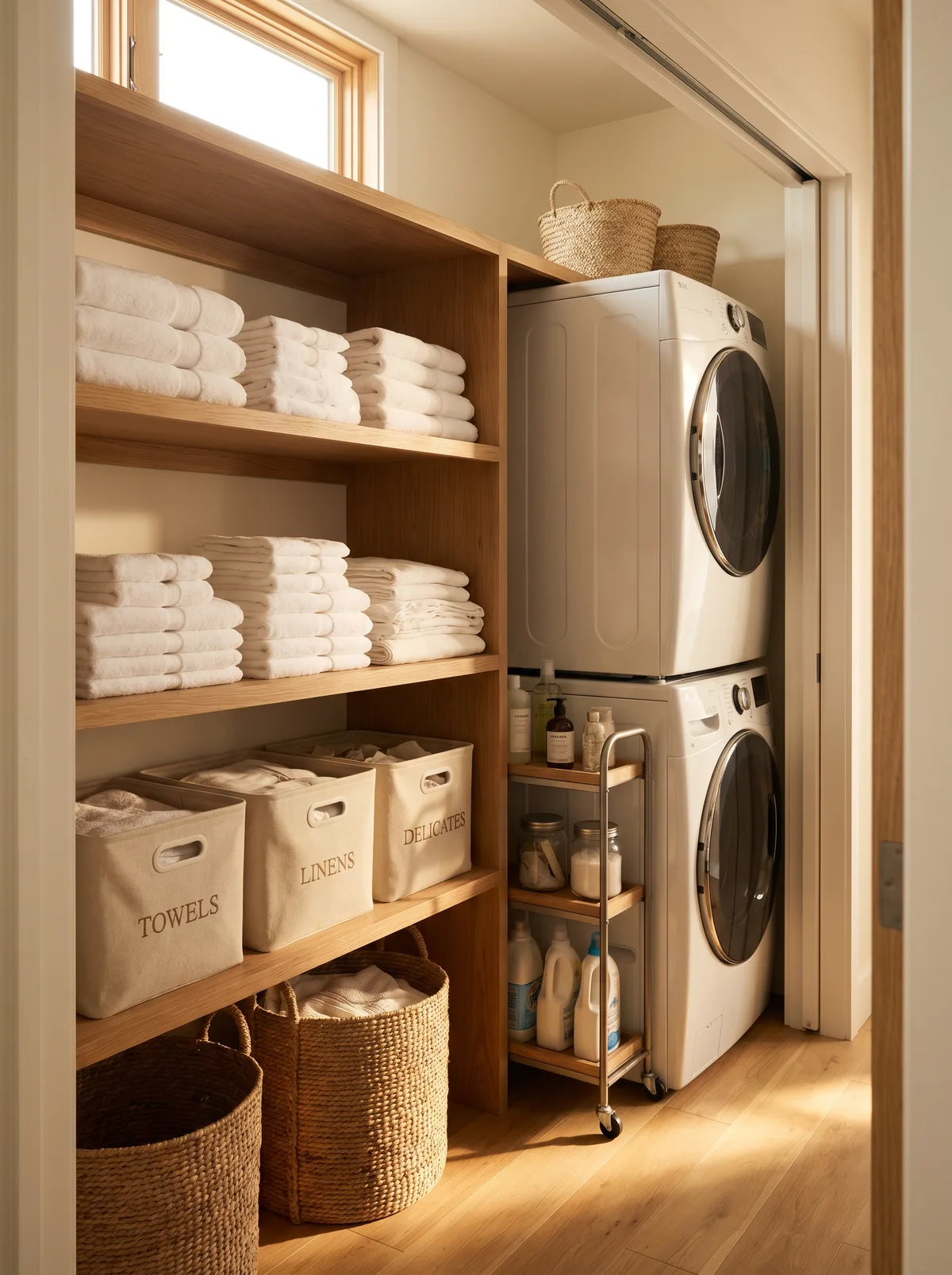
The Laundry Closet Makeover That Turned a Chaotic Shelf Into a Hidden System
Laundry closets are notorious for becoming dumping grounds. Here is how a few specific organizers turned a messy utility space into a calm, functional system.
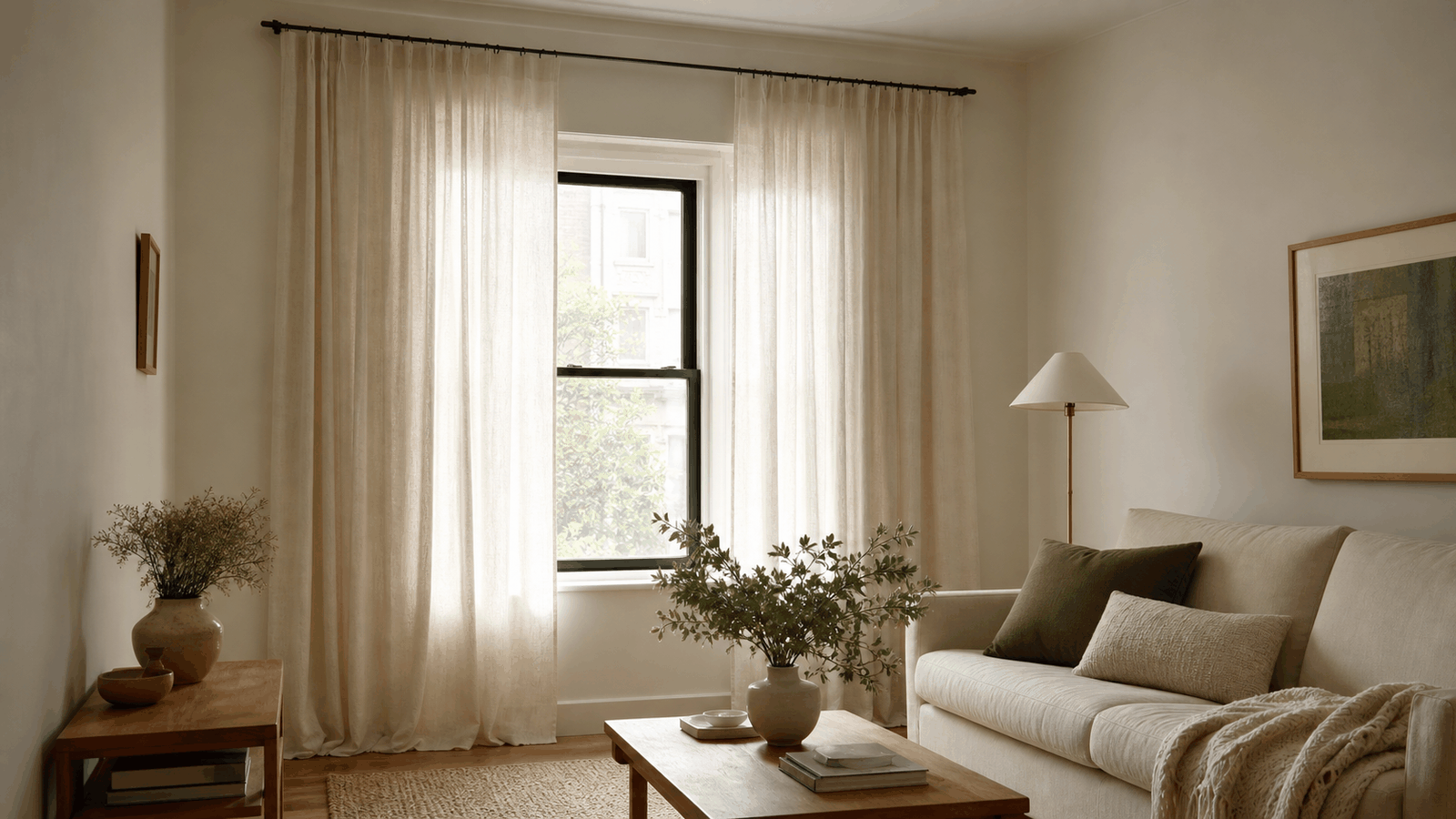
Curtain Ideas That Make a Rental Living Room Feel Taller
Rental living rooms often feel shorter because the curtain rod, fabric, and wall around the window are doing less work than they could.
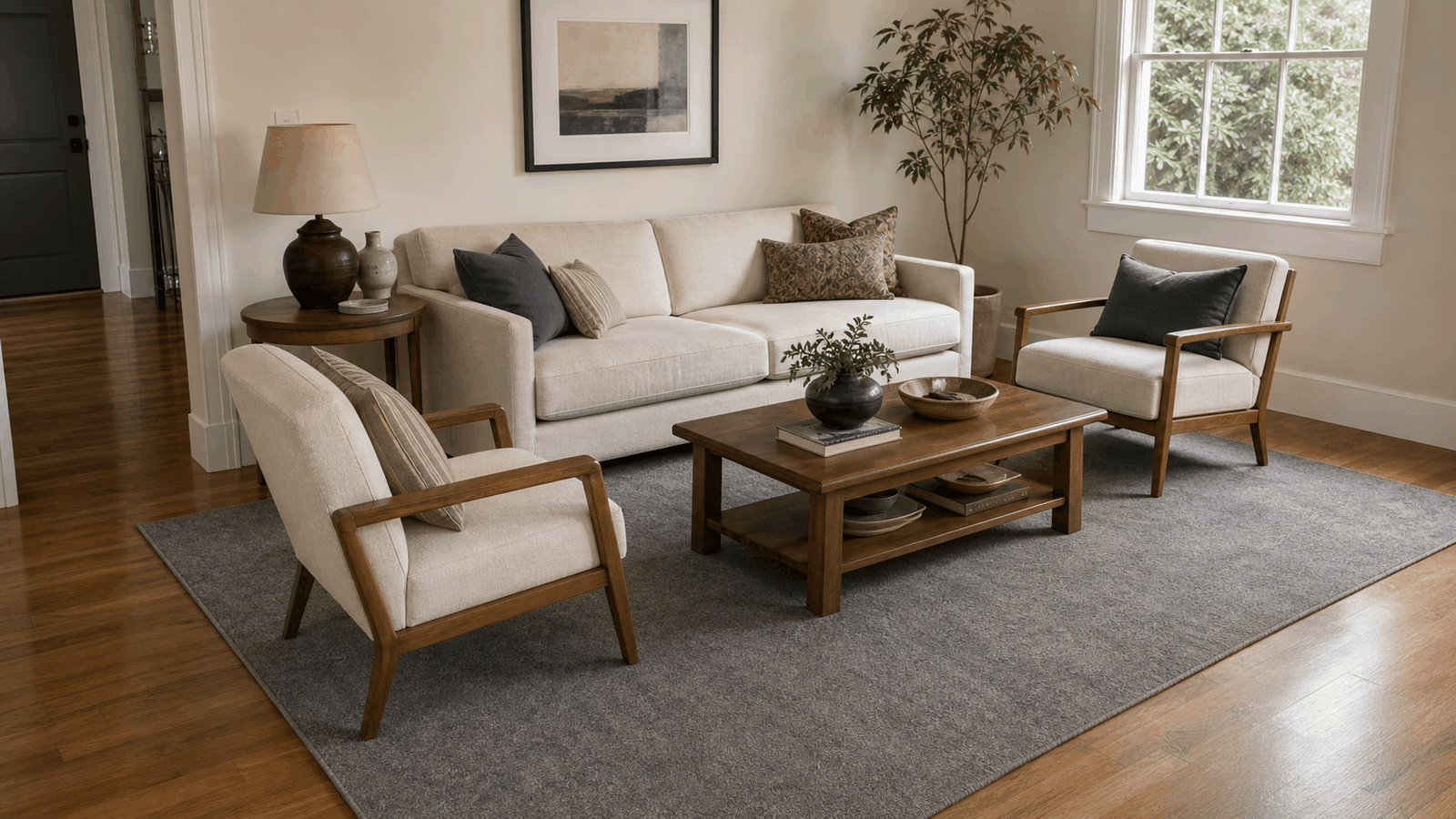
Living Room Rug Size Mistakes That Make the Room Feel Smaller
A rug can make a living room feel grounded or oddly cramped. The difference is usually scale, placement, and whether the furniture actually belongs to it.