Living Room Rug Size Mistakes That Make the Room Feel Smaller
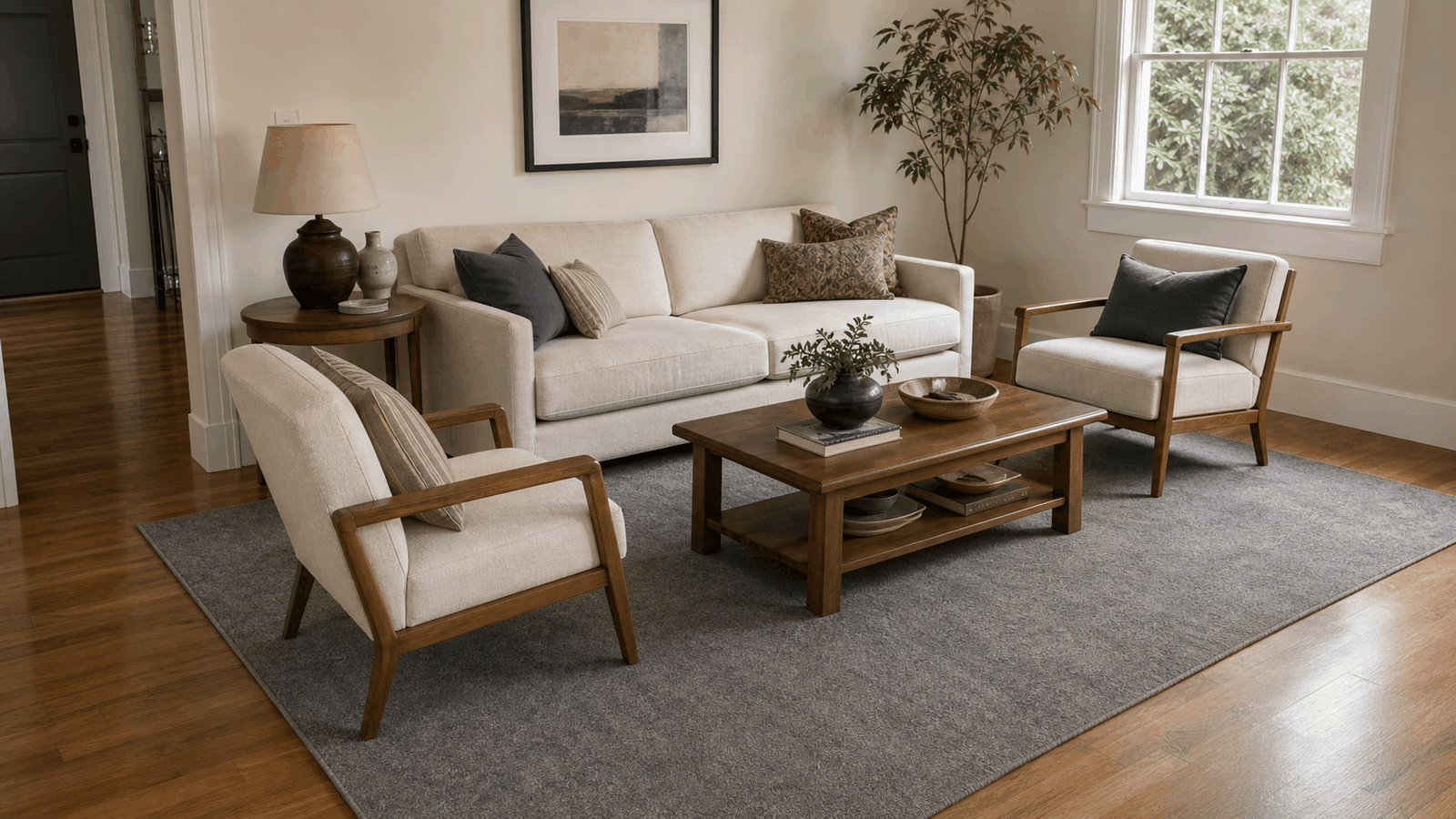
The Rug Was Technically Pretty. It Was Also Too Small.
A rug can be the nicest thing in a living room and still make the room feel wrong. This usually happens when the rug is treated like a decorative patch instead of part of the layout.
The room starts to feel smaller when the sofa floats off the rug, the chairs sit on their own little islands, or the coffee table is the only piece connected to the center. The eye sees fragments instead of one clear seating area.
Rug size is not just about covering floor. It is about telling the furniture where it belongs.
Mistake One: Buying for the Coffee Table
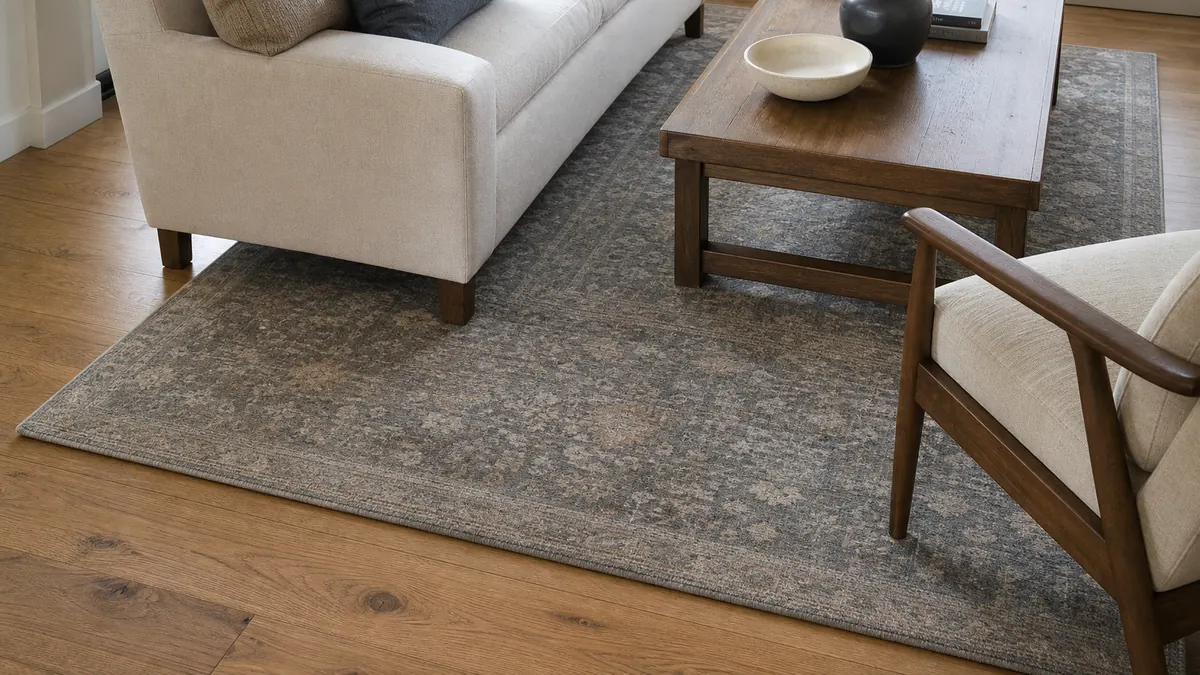
The most common mistake is choosing a rug that only fits under the coffee table. It may look fine when the room is empty, but once the sofa and chairs are in place, the rug reads like a small mat in the middle of the floor.
A living room rug usually needs to connect at least the front legs of the main seating pieces. That small overlap tells the eye the furniture is part of one conversation.
If the rug can only hold the coffee table, it is probably too small for the seating area.
Mistake Two: Leaving a Thin Border Around Everything
Some rooms look smaller because the rug almost reaches the furniture, but not quite. A narrow strip of exposed floor between the rug and sofa can make the layout feel hesitant.
Either commit to a rug large enough to connect the furniture, or use a smaller rug intentionally under a specific zone. The awkward middle size is usually the problem.
This is where measuring helps. Tape the rug size on the floor before ordering. If the tape line keeps missing the furniture by a few inches, size up or change the layout.
Mistake Three: Ignoring the Walkway
Bigger is not always better. A large rug that blocks a door swing, curls into a walkway, or forces people to step partly on and partly off it can make the room feel busy.
The rug should support circulation, not interrupt it. In a small living room, that may mean choosing a flatter weave, a slightly narrower rug, or a placement that leaves the main walkway fully clear.
The best rug size lets people move through the room without thinking about the edge.
Mistake Four: Centering the Rug on the Room Instead of the Seating
Rooms are not always symmetrical. A fireplace, TV wall, window, hallway opening, or off-center sofa can pull the seating area away from the exact middle of the room.
If the rug is centered on the room but the furniture is not, everything feels slightly disconnected. Center the rug on the seating group instead. The rug should explain how the room is used.
This is especially important in open-plan spaces, where the rug may be the only thing separating the living area from the dining or kitchen zone.
Mistake Five: Choosing a Pattern That Shrinks the Floor
Scale matters in pattern, too. A tiny busy pattern can make a small room feel more crowded, especially when the furniture already has many legs, baskets, side tables, or open shelving nearby.
A larger, softer pattern often feels calmer because it lets the floor read as one surface. Low-contrast stripes, faded motifs, quiet checks, or textured solids can add movement without making the room look chopped up.
The rug should add depth, not visual static.
Mistake Six: Forgetting About Furniture Legs
Rug placement changes when furniture has exposed legs. A sofa with slim legs may look fine with only the front legs on the rug. A skirted sofa, low lounge chair, or bulky recliner may need more rug underneath to feel grounded.
The same is true for coffee tables. A glass table keeps the rug visible. A solid storage ottoman covers more of it. A small round table needs less visual space than a heavy rectangular one.
Rug size is always in conversation with the furniture sitting on it.
When a Smaller Rug Still Works
A smaller rug can work when it has a clear purpose. It might define a reading corner, sit under a pair of chairs, or layer over a larger natural-fiber rug for texture.
The difference is intention. A small rug that anchors one zone looks deliberate. A small rug pretending to anchor the entire living room usually looks stranded.
If the room needs a large rug but the budget does not allow it yet, a simple larger base layer can be better than forcing one small decorative rug to do too much.
The Rug Should Make the Room Easier to Read
A good living room rug does not have to be expensive or dramatic. It just has to make the seating area feel connected, leave the walkway clear, and give the floor a calm structure.
When the rug is the right size, the room usually feels larger before anything else changes.
You might also like
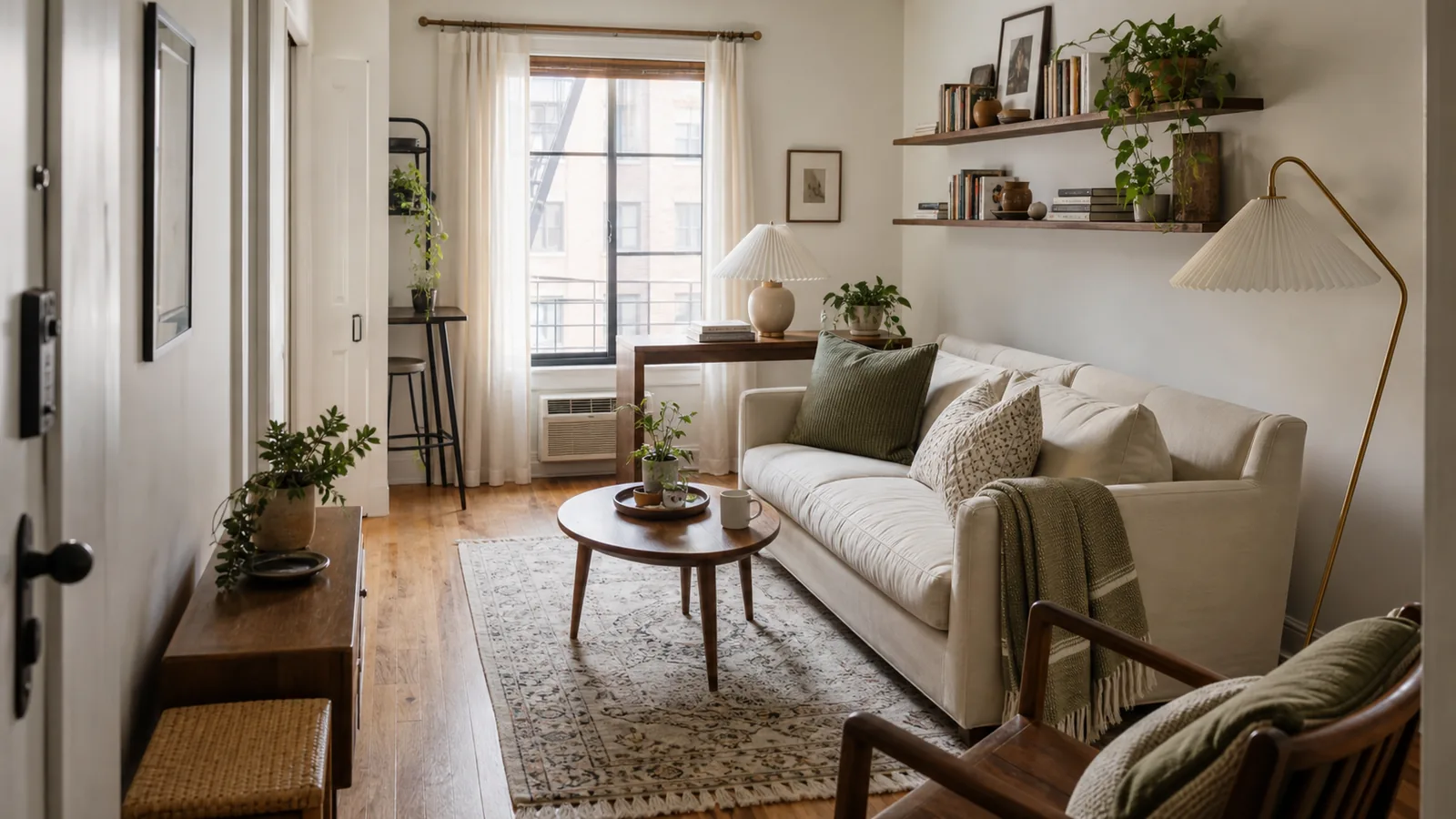
Small Living Room Layout Ideas That Actually Work
Small living room layout ideas work best when they protect walkways, choose fewer better-scaled pieces, and give every seat a real surface and light source.
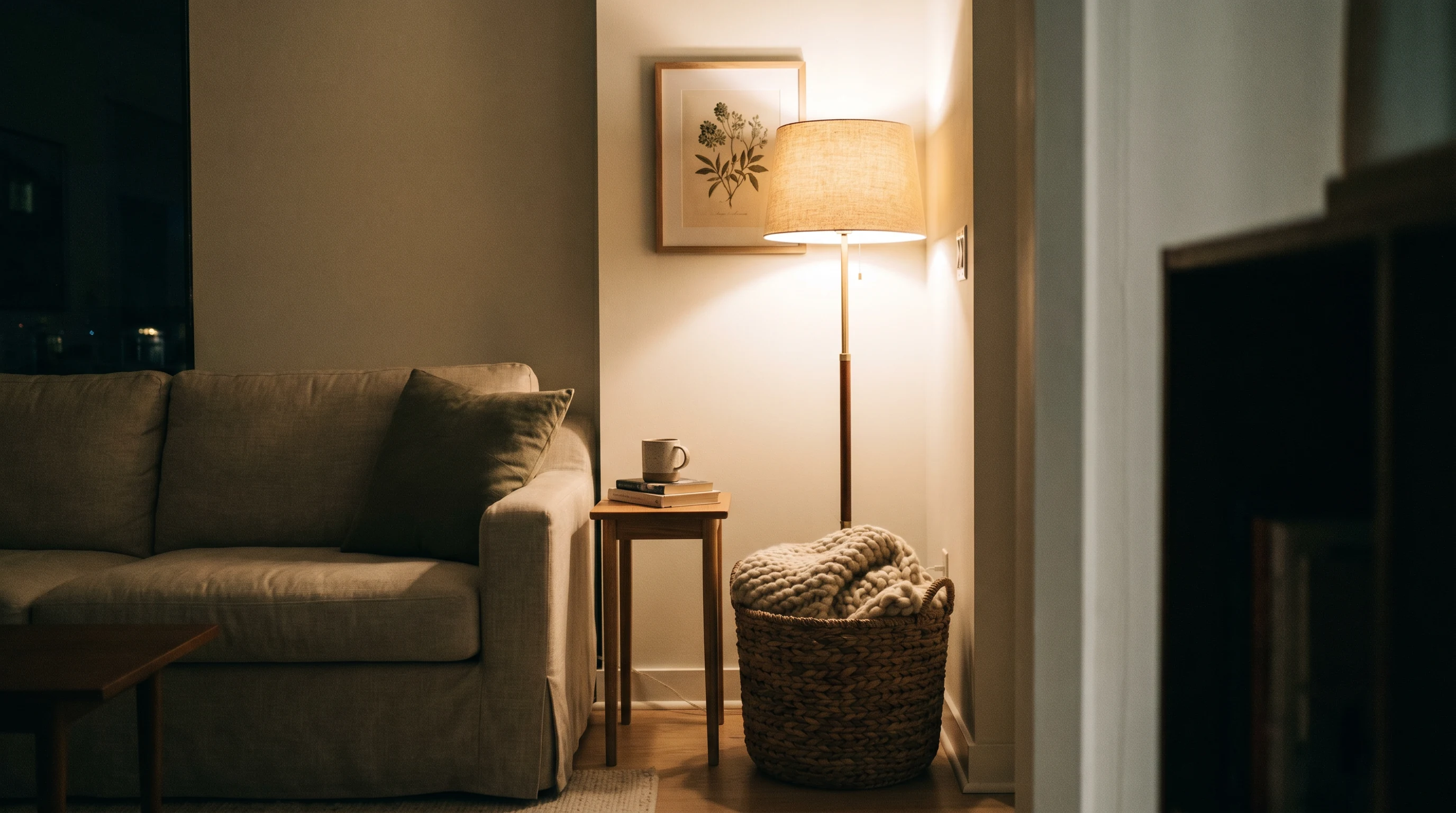
The Awkward Living Room Wall I Stopped Ignoring and Finally Turned Into Something Useful
Every small living room seems to have one wall that never quite knows what it is doing. Here is how a narrow, overlooked stretch beside my sofa became a useful corner instead of a daily annoyance.
Curtain Ideas That Make a Rental Living Room Feel Taller
Rental living rooms often feel shorter because the curtain rod, fabric, and wall around the window are doing less work than they could.