I Stopped Fighting My Narrow Hallway and Turned It Into a Drop Zone That Actually Works
The Reality of a 36-Inch Clearance
For three years, I treated my front hallway like a problem to be solved with discipline. If I just remembered to carry my shoes to the bedroom closet, if I just stopped dropping mail on the radiator, if I just trained myself to hang my coat immediately—then the entryway wouldn’t look like a chaotic staging ground.
Discipline failed. The hallway won.
When you have exactly 36 inches of width to work with, standard entryway furniture is not an option. A typical console table leaves you shimmying sideways to get to the living room. A traditional coat tree becomes a precarious hazard that threatens to tip over every time you grab a jacket. I needed a drop zone that acknowledged human behavior (we drop things the second we walk in) without blocking the physical path.
Going Vertical: The Shaker Peg Rail
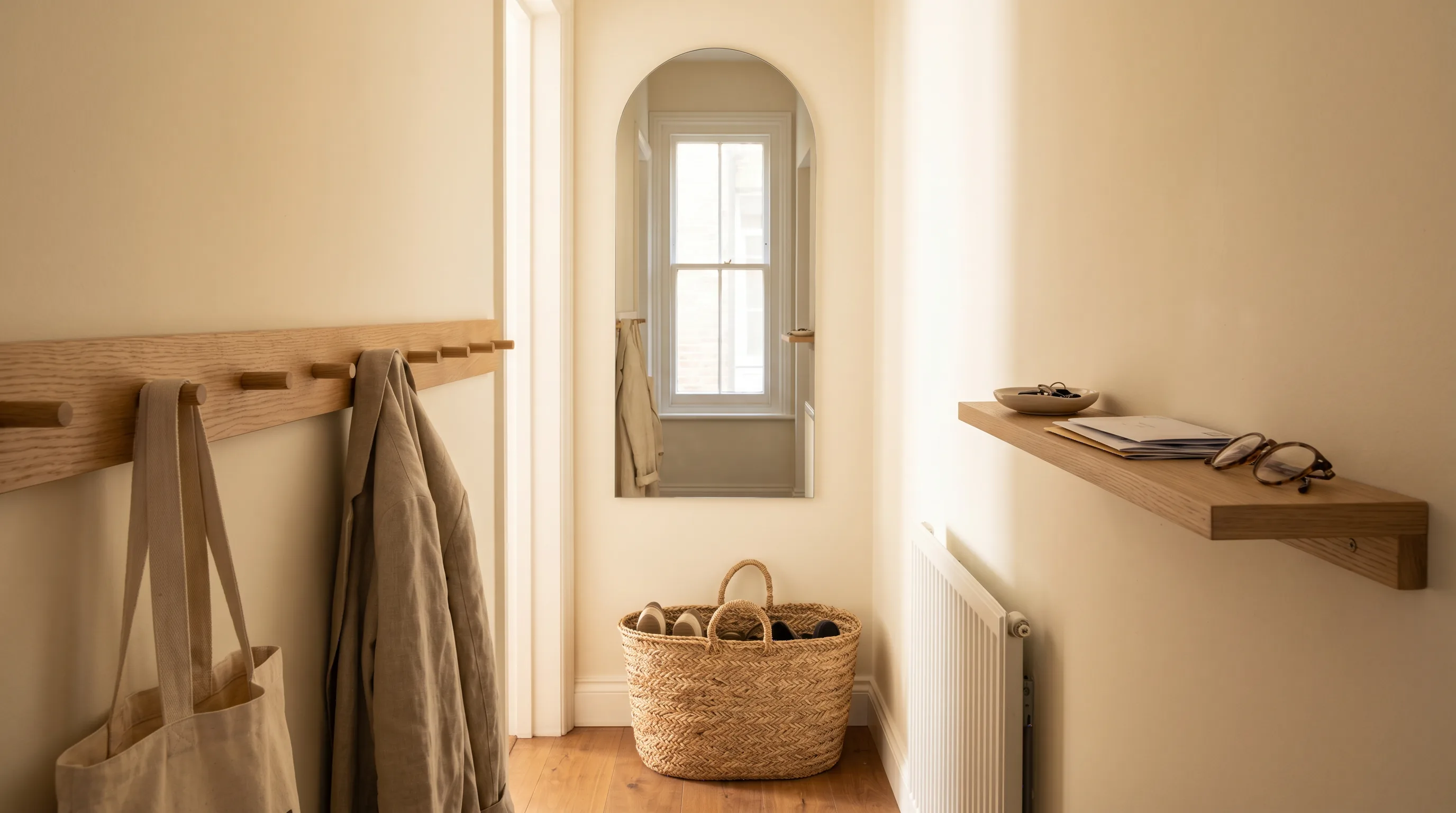
The breakthrough came when I stopped looking for furniture and started looking at the walls. I installed a continuous 6-foot run of solid oak Shaker peg rail, mounted exactly 60 inches from the floor.
This single decision changed everything. Unlike individual hooks which quickly look cluttered, a continuous rail provides visual rhythm. It’s an architectural element first, storage second. I sourced a beautiful unlacquered oak rail from a small millwork shop, but even the standard options from big box stores work if you paint them to match the wall color.
The rule for the peg rail is strict: only in-season coats, the dog’s leash, and one canvas tote bag. Everything else must go to the main closet.
The 6-Inch Deep Console Hack
Coats were solved, but keys, mail, and sunglasses still needed a landing pad. I searched for months for a console table narrow enough for the space. They don’t exist. Anything shallower than 10 inches is practically a myth in the retail furniture world.
The solution was a floating radiator shelf. I found a steel shelf designed to sit above old cast-iron radiators that measures exactly 6 inches deep. Mounted directly to the wall with heavy-duty brackets, it provides just enough surface area for a ceramic catch-all bowl and a small stack of outgoing mail. Because it floats, the floor underneath remains entirely clear, maintaining the visual width of the hallway.
Managing the Shoe Situation
Shoes are the ultimate enemy of the narrow hallway. A pile of sneakers instantly makes the space feel cramped and messy.
Since I couldn’t fit a traditional shoe cabinet, I compromised. I placed a single, beautiful woven rush basket directly under the floating shelf. It holds exactly two pairs of shoes—my daily boots and my partner’s sneakers. The basket conceals the visual noise of laces and soles, and its textured material adds warmth to the otherwise utilitarian space.
When the basket is full, it’s the physical cue that someone needs to take a pair of shoes to the bedroom closet. It’s a system that works with our natural laziness rather than fighting it.
Lighting and Mirrors
To counteract the tunnel effect, I hung a tall, frameless arched mirror opposite the doorway. It bounces the limited natural light around the space and creates an illusion of width.
Finally, I swapped the harsh overhead builder-grade flush mount for a semi-flush fixture with a linen shade. The softer, diffused light makes the narrow dimensions feel intentional and cozy rather than claustrophobic.
The hallway is still exactly 36 inches wide. But by giving every daily item a specific, shallow home, it no longer feels like an obstacle course. It’s finally a proper entry.
Pieces That Help This Setup Hold
If you want to build the same kind of hallway system without crowding the walkway, these are the pieces that tend to solve the problem fastest:
- Shop Shaker peg rails on Amazon
- Browse slim floating shelves on Amazon
- Shop arched full-length mirrors on Amazon
The point is not to buy an entire entryway set. It is to choose one wall-mounted storage piece, one shallow landing surface, and one light-reflecting element that keeps the hallway from feeling like a tunnel.
You might also like

Curtain Ideas That Make a Rental Living Room Feel Taller
Rental living rooms often feel shorter because the curtain rod, fabric, and wall around the window are doing less work than they could.

Living Room Rug Size Mistakes That Make the Room Feel Smaller
A rug can make a living room feel grounded or oddly cramped. The difference is usually scale, placement, and whether the furniture actually belongs to it.
Small Bathroom Counter Organization Ideas That Still Leave Room to Get Ready
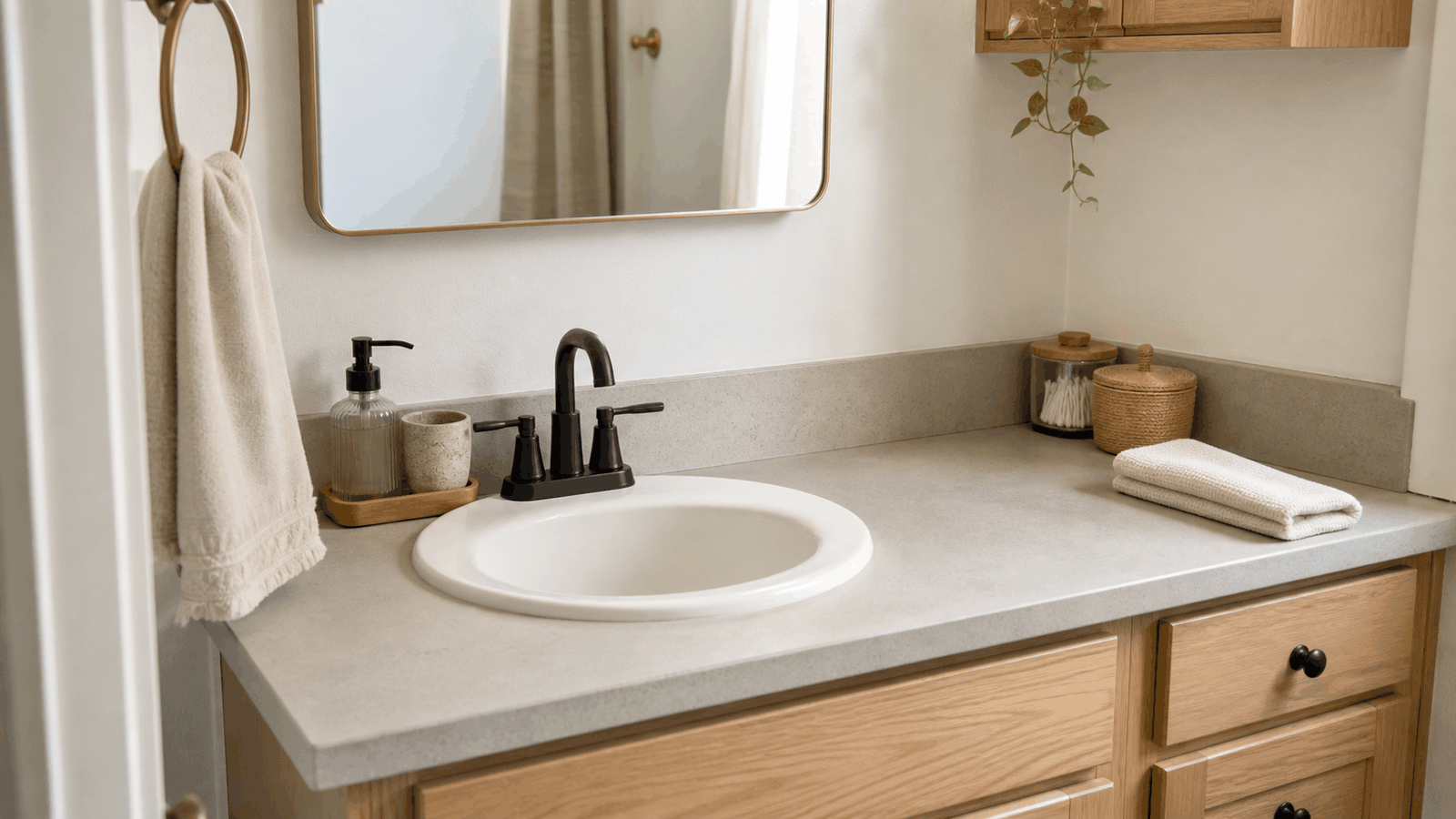
A small bathroom counter works better when the daily routine has a clear landing zone and everything else stops competing with the sink.