How I Reworked a Shared Bedroom So It Felt Calmer at Both Ends of the Day
The Chaos of the Shared Bedroom
For a long time, the shared bedroom in our house operated on a simple, stressful principle: whoever woke up first woke up everyone else. Between the tangle of charging cables, the inevitable pile of discarded clothes on the only available chair, and the jarring glare of the overhead light, mornings felt frantic. Nights weren’t much better, often defined by the negotiation of reading lights and competing sleep schedules.
The problem wasn’t a lack of square footage. It was a lack of defined boundaries. A shared room needs to function as two distinct sanctuaries that happen to occupy the same footprint. When I finally decided to rethink the layout, the goal was straightforward: establish visual zoning that supports a quieter wind-down routine and a frictionless morning exit.
Establishing Visual Boundaries
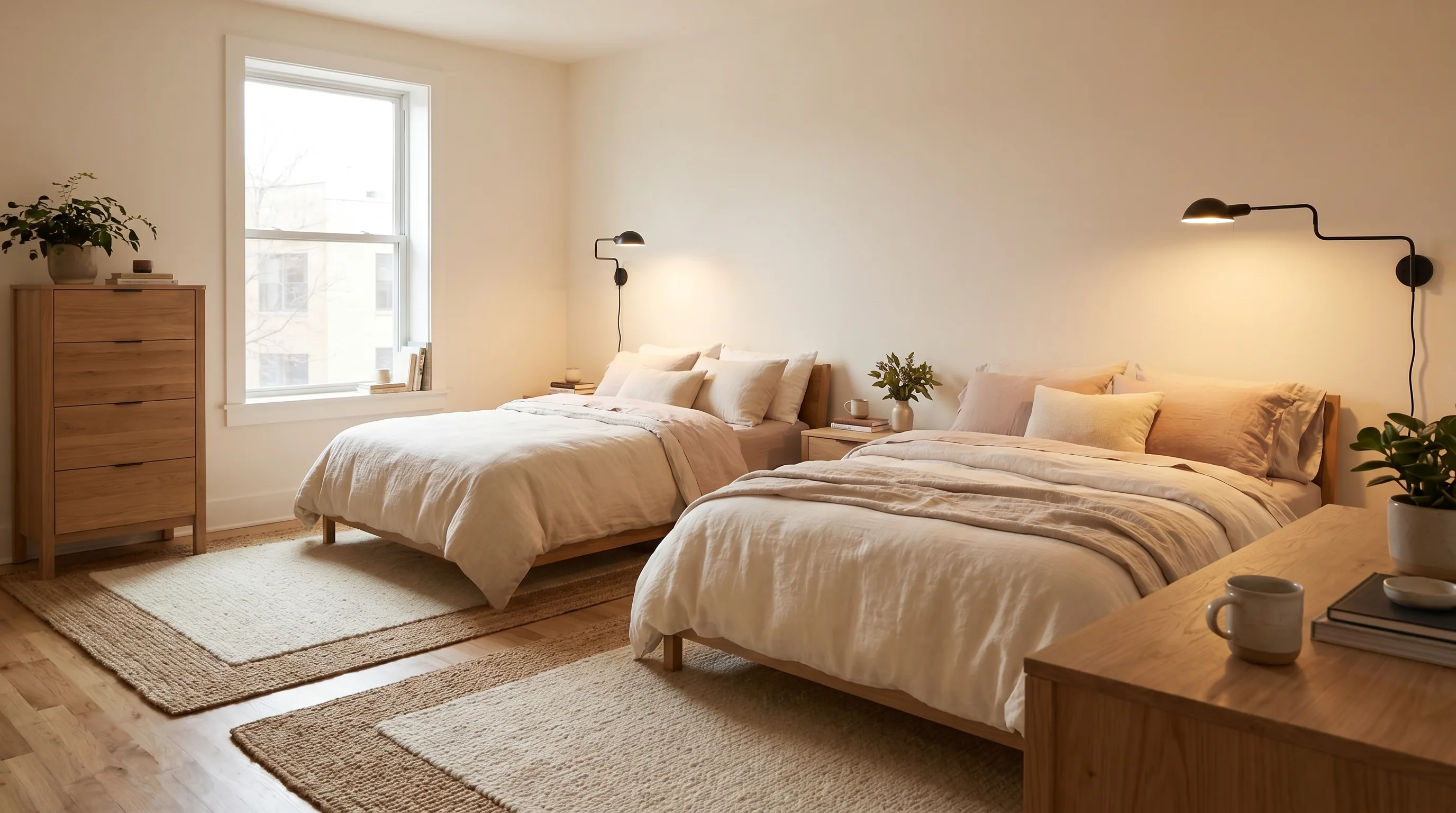
The most significant change came from rethinking the placement of the beds. Pushing them against opposite walls rather than leaving them parallel in the center of the room immediately created two distinct zones.
To reinforce this separation without building a physical wall, I relied on rugs and lighting.
- Grounding the space: A thick wool area rug under each bed anchors the individual zones. It provides a soft landing in the morning and subtly signals where one person’s territory ends and the other’s begins.
- Directional lighting: Replacing the central ceiling fixture with low-profile, directional sconces was crucial. I chose matte black swing-arm lamps that focus light downward. This allows one person to read or work in bed without illuminating the entire room.
The Frictionless Morning Exit
Mornings are usually when a shared bedroom fails its occupants. The noise of opening drawers and the rustling of hangers can easily disrupt a sleeping partner.
The solution was to pull the daily dressing routine out of the deepest part of the room and move it closer to the door. I installed a narrow, wall-mounted valet stand just inside the entrance. It holds tomorrow’s outfit, a pair of shoes, and essential accessories.
| Morning Setup | Previous Method | Current Method |
|---|---|---|
| Clothing Selection | Digging through dressers in the dark | Pre-staged on the valet stand |
| Lighting | Overhead glare | Small, motion-sensor baseboard light |
| Noise Level | High (doors, drawers) | Minimal (grab and go) |
For the heavier storage, we switched from a shared, wide dresser to two tall, narrow chests of drawers placed on opposite ends of the room. This physical distance minimizes the overlap during morning routines.
A Quieter Wind-Down Routine
Nights require a different kind of quiet. The visual clutter of the day needs to be hidden away to signal to the brain that it is time to rest.
I introduced a strict “closed storage only” rule for the bedside tables. The open shelving units we previously used were magnets for half-read books, empty water glasses, and tangled cords. Replacing them with simple, two-drawer nightstands immediately reduced the visual noise.
For those who need to keep devices nearby, a dedicated charging drawer is a worthwhile investment. Routing the cables through the back of the nightstand keeps the surface clear and the glowing screens out of sight.
A shared bedroom will never offer the complete isolation of a private suite, but it doesn’t have to be a battleground of competing schedules. By establishing clear visual zones and streamlining the routines that cause the most friction, the room finally feels like a place to rest, rather than just a place to sleep.
A Few Pieces That Quiet the Room Down
The changes that mattered most were not decorative. They were practical, repeatable choices that reduced friction every morning and night:
- Matte black swing-arm sconces on Amazon
- Motion-sensor night lights on Amazon
- Tall narrow dressers on Amazon
If two people are sharing one room, it helps when lighting, storage, and dressing routines stop colliding with each other.
You might also like
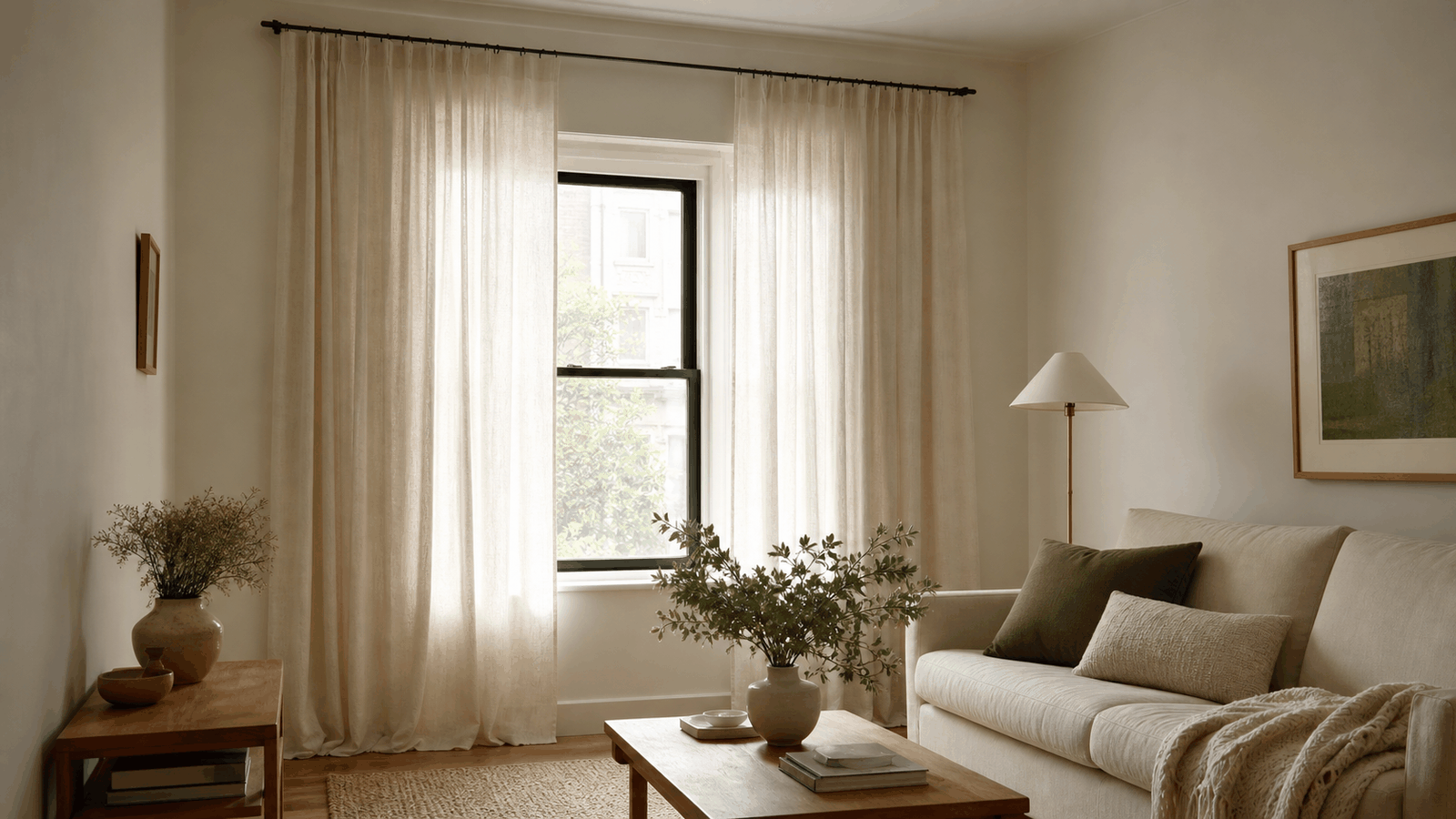
Curtain Ideas That Make a Rental Living Room Feel Taller
Rental living rooms often feel shorter because the curtain rod, fabric, and wall around the window are doing less work than they could.
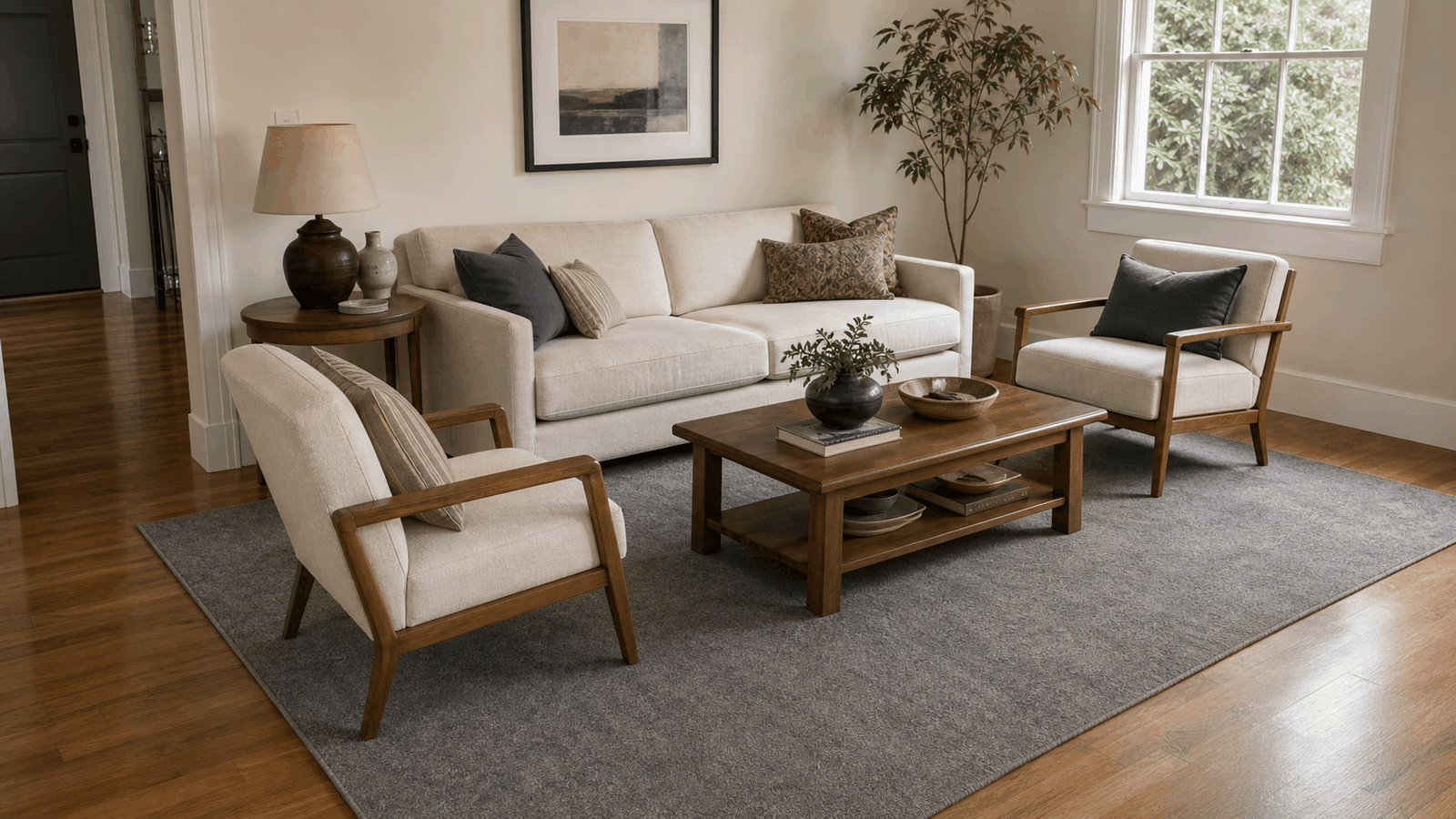
Living Room Rug Size Mistakes That Make the Room Feel Smaller
A rug can make a living room feel grounded or oddly cramped. The difference is usually scale, placement, and whether the furniture actually belongs to it.
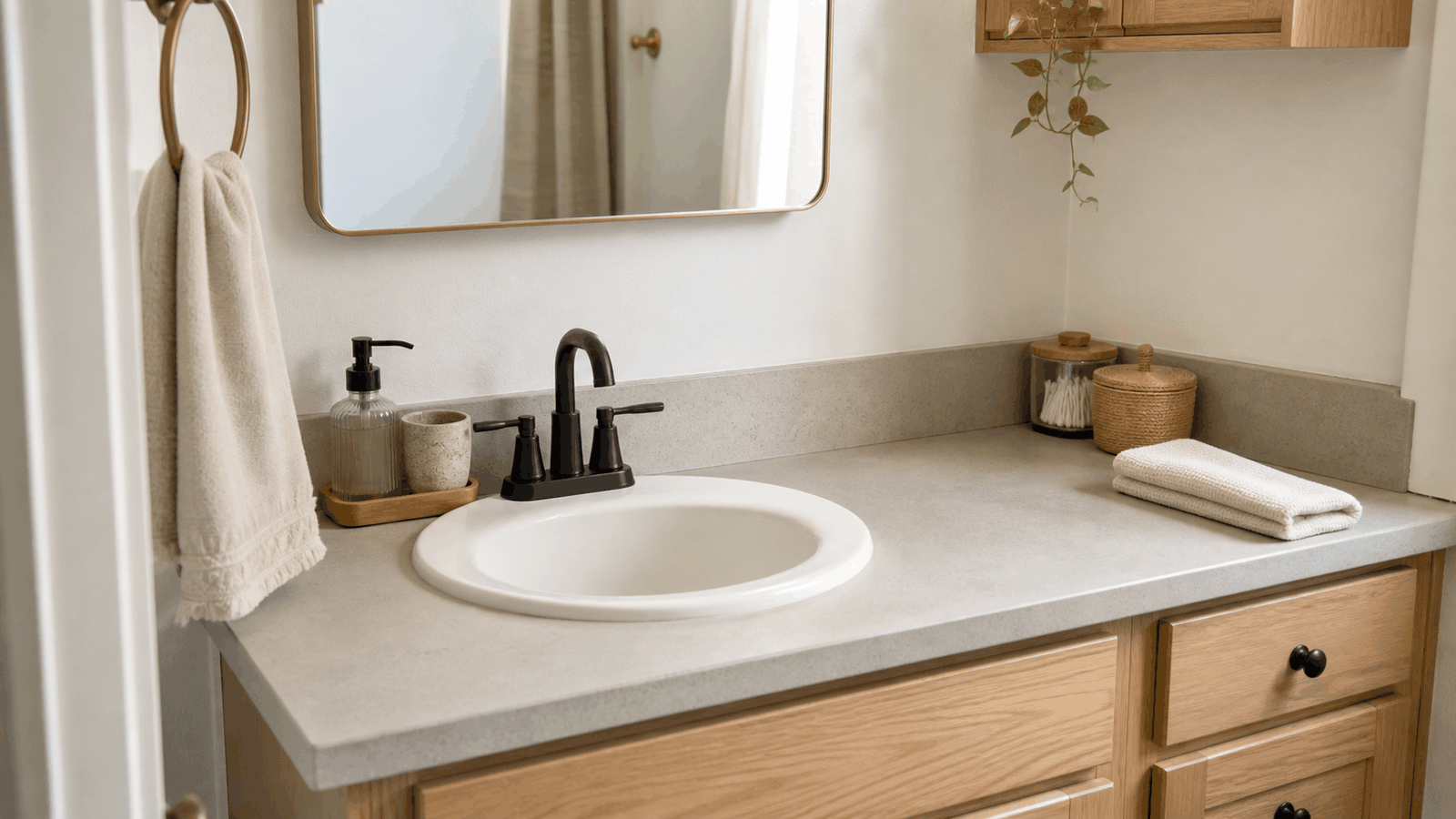
Small Bathroom Counter Organization Ideas That Still Leave Room to Get Ready
A small bathroom counter works better when the daily routine has a clear landing zone and everything else stops competing with the sink.