The Under-Sink Kitchen Setup That Bought Me Back Ten Minutes Every Night
The Nightly Kitchen Reset
The space beneath the kitchen sink is notoriously difficult to manage. It usually devolves into a dark, damp cavern where half-empty bottles of cleaner go to die, blocked by a precarious stack of spare sponges and garbage bags. For years, my post-dinner cleanup routine was stalled by simply trying to locate the right dish soap or dishwasher pod without knocking over a bottle of multi-surface spray.
The turning point wasn’t a sudden burst of motivation to clean, but rather a realization that friction was the enemy. If I had to move three things to reach the one thing I needed, the nightly kitchen reset felt like a chore rather than a simple habit. Fixing the under-sink setup was the only way out.
Clearing the Obstacle Course
The first step was pulling everything out and aggressively purging the duplicates and expired products. It turns out nobody needs three different brands of glass cleaner. I narrowed the inventory down to the essentials: dish soap, dishwasher pods, all-purpose cleaner, a scrub brush, and fresh sponges.
With the volume reduced, the next challenge was dealing with the plumbing. The pipes in most rental kitchens drop down right in the middle of the cabinet, making standard shelves impossible to use.
The Tiered Solution
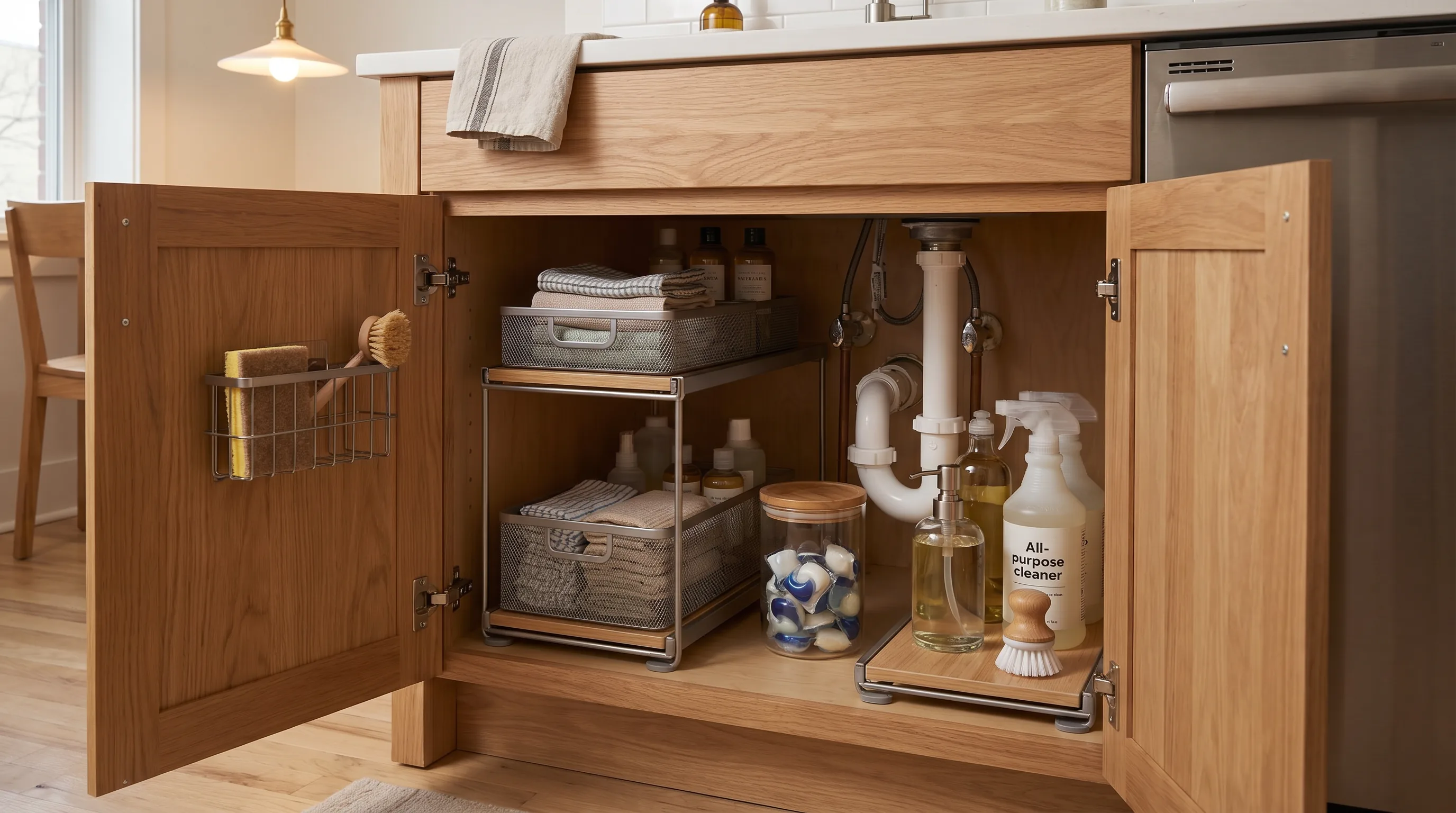
The breakthrough came from installing a two-tier pull-out organizer designed specifically to bypass the center pipe. I opted for a metal mesh version rather than solid plastic, which prevents moisture buildup and makes it easier to spot small leaks before they become disasters.
The bottom tier, which slides out fully, holds the daily necessities. Dishwasher pods sit in a clear acrylic canister at the very front, meaning I don’t even have to pull the drawer out to grab one. Behind the pods are the dish soap and the everyday surface spray.
The top tier is narrower, fitting perfectly alongside the garbage disposal unit. This is where the weekly or monthly items live—the heavy-duty degreaser, the stainless steel polish, and the spare scrub brushes.
Creating a Drop Zone
Even with the pull-out drawers, I noticed a recurring issue: damp sponges and wet brushes were still being tossed onto the cabinet floor, creating a mild mildew situation.
To solve this, I mounted a small, adhesive stainless steel caddy to the inside of the cabinet door. This created a dedicated drop zone for the sponge and brush I’m currently using. They can drip dry without cluttering the counter or ruining the base of the cabinet.
The Ten-Minute Return
The result of this hyper-specific organization is that the nightly reset now happens on autopilot. I grab the surface spray and sponge with one motion, wipe down the counters, toss a pod in the dishwasher, and put the sponge back in its door caddy.
There is no digging, no knocking over bottles, and no frustration. It might seem trivial, but reclaiming those ten minutes of mental energy at the end of a long day has completely shifted my relationship with kitchen cleanup. The sink area is no longer a source of dread, but a streamlined system that actually works.
Three Pieces Worth Looking At
If your cabinet has the same awkward plumbing layout mine did, these are the categories I would shop first:
- Two-tier under-sink organizers on Amazon
- Adhesive sponge caddies on Amazon
- Clear canisters for dishwasher pods on Amazon
You do not need a dozen bins. One pull-out organizer, one door caddy, and one container that keeps loose pods under control is usually enough.
You might also like

Curtain Ideas That Make a Rental Living Room Feel Taller
Rental living rooms often feel shorter because the curtain rod, fabric, and wall around the window are doing less work than they could.

Living Room Rug Size Mistakes That Make the Room Feel Smaller
A rug can make a living room feel grounded or oddly cramped. The difference is usually scale, placement, and whether the furniture actually belongs to it.
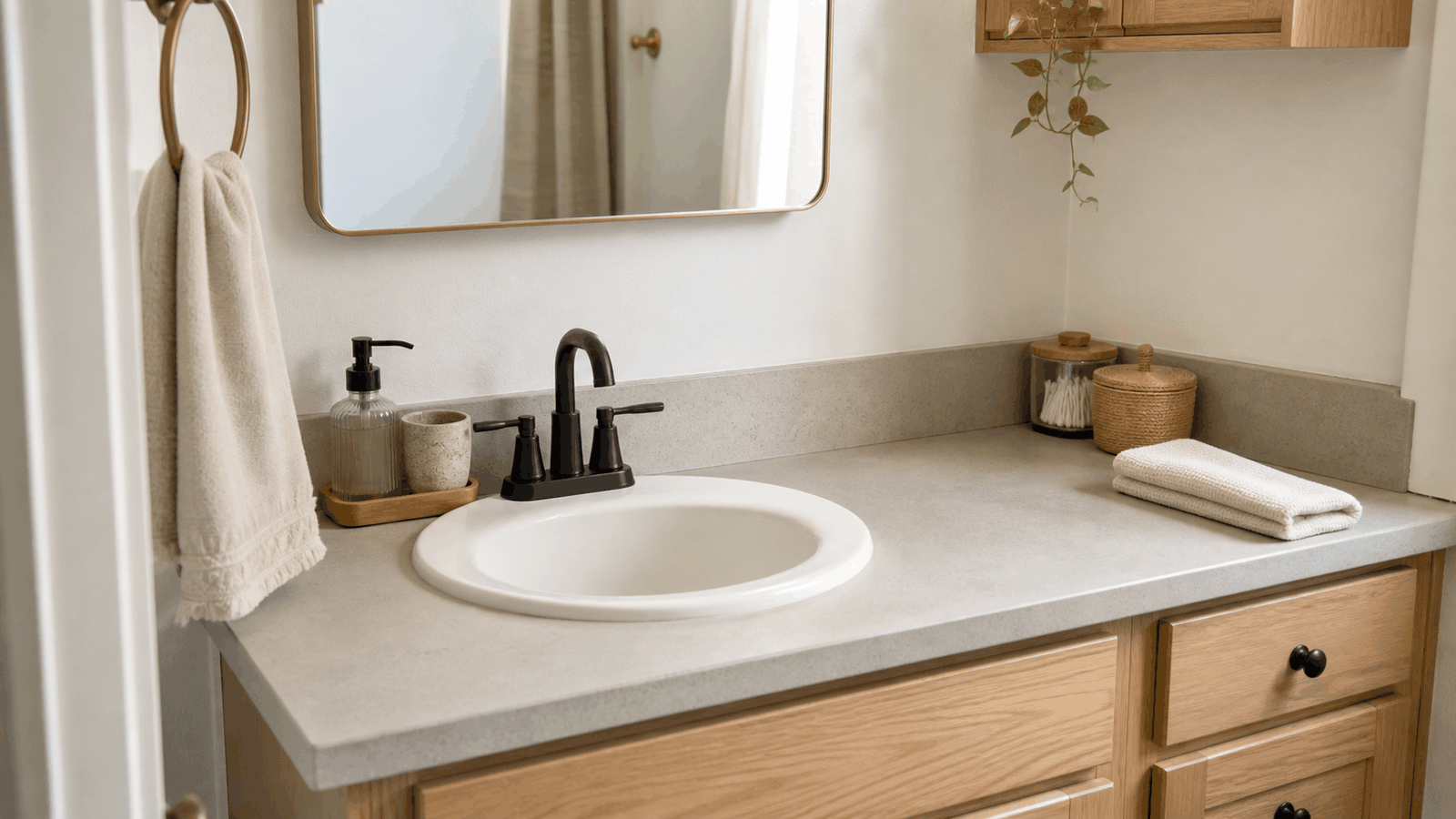
Small Bathroom Counter Organization Ideas That Still Leave Room to Get Ready
A small bathroom counter works better when the daily routine has a clear landing zone and everything else stops competing with the sink.