The Awkward Living Room Wall I Stopped Ignoring and Finally Turned Into Something Useful
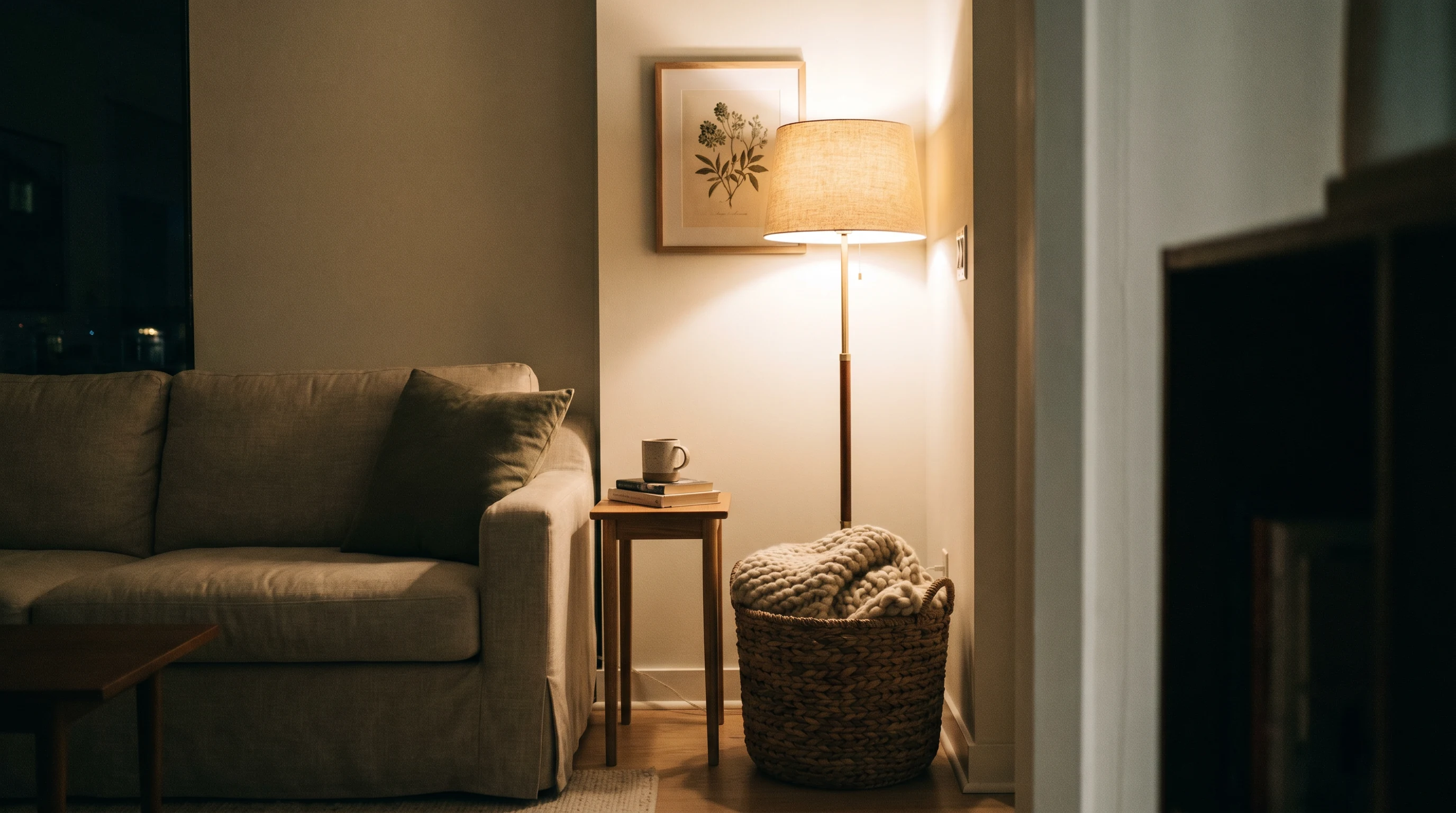
That Wall Was Too Small for Furniture and Too Visible to Ignore
There was a stretch of wall in my living room that had spent months in an awkward middle ground. It was not wide enough for a proper bookcase, not blank enough to disappear, and somehow always in view when I sat on the sofa. I kept trying to solve it with neglect, which of course solved nothing.
The wall became a holding area for objects that had not earned a better destination. A tote bag after work. A blanket I would fold later. Magazines I was either about to read or already done pretending I would. Because the space was narrow, none of this looked dramatic. It just looked faintly unresolved, which can be surprisingly draining when you see it every day.
What finally changed it was deciding the wall did not need to be impressive. It needed to be useful.
I Built the Corner Around What Happened There Anyway
That is the trick I come back to most often in small rooms. Instead of forcing an area to become a fantasy version of itself, pay attention to the habits already happening there. I was already setting down books beside the sofa. I was already reaching for a throw blanket in the evening. I already wanted better light in that corner, especially once the overhead fixture started to feel too harsh after dark.
So the wall became a small landing zone for exactly those habits. A narrow side table. A floor lamp with a warm shade. One basket low to the ground for throws and magazines. One framed print to make the wall feel finished, but not so much art that the corner started performing instead of helping.
A Narrow Table Did More Than a Bigger Piece Ever Could
I had spent too long assuming the wall’s problem was that it could not hold enough furniture. In reality, it improved the moment I stopped asking it to. A slim table was enough.
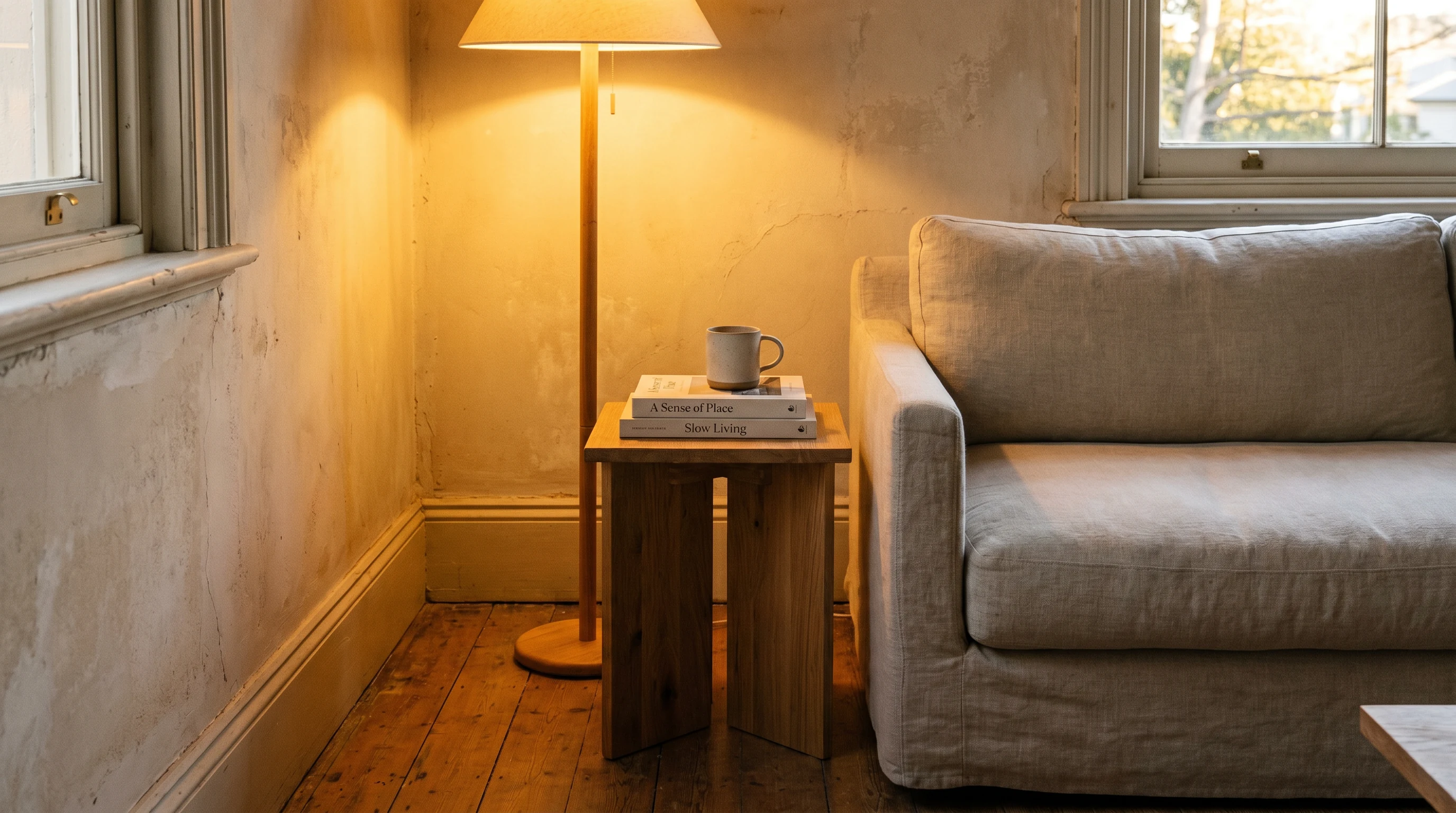
The best part of a narrow piece is that it respects the walkway. You still have somewhere for a drink, a book, and the remote, but you do not need to turn sideways every time you pass through the room. Mine also gave me a drawer shallow enough to keep the useful clutter nearby without letting it multiply. Chargers, a pen, coasters, and the scissors I somehow use in the living room more often than I would like to admit all finally had a place to disappear into.
Light Was What Made the Wall Feel Intentional
The second shift came from lighting. Before, the wall was the place where the overhead fixture faded out and the room felt slightly flat. A floor lamp changed that immediately.
Warm light gives a narrow corner a reason to exist. It lowers the visual temperature of the room and makes even a modest setup feel deliberate. The lamp also solved a practical problem I had been tolerating for too long: reading after dinner without feeling as if the whole room had to stay awake with me.
The Wall Needed One Visual Anchor, Not a Gallery
I am very susceptible to the idea that a blank wall must want a gallery arrangement. Sometimes that is true. More often, especially in a tight room, the wall wants a single confident decision and the grace to stop there.
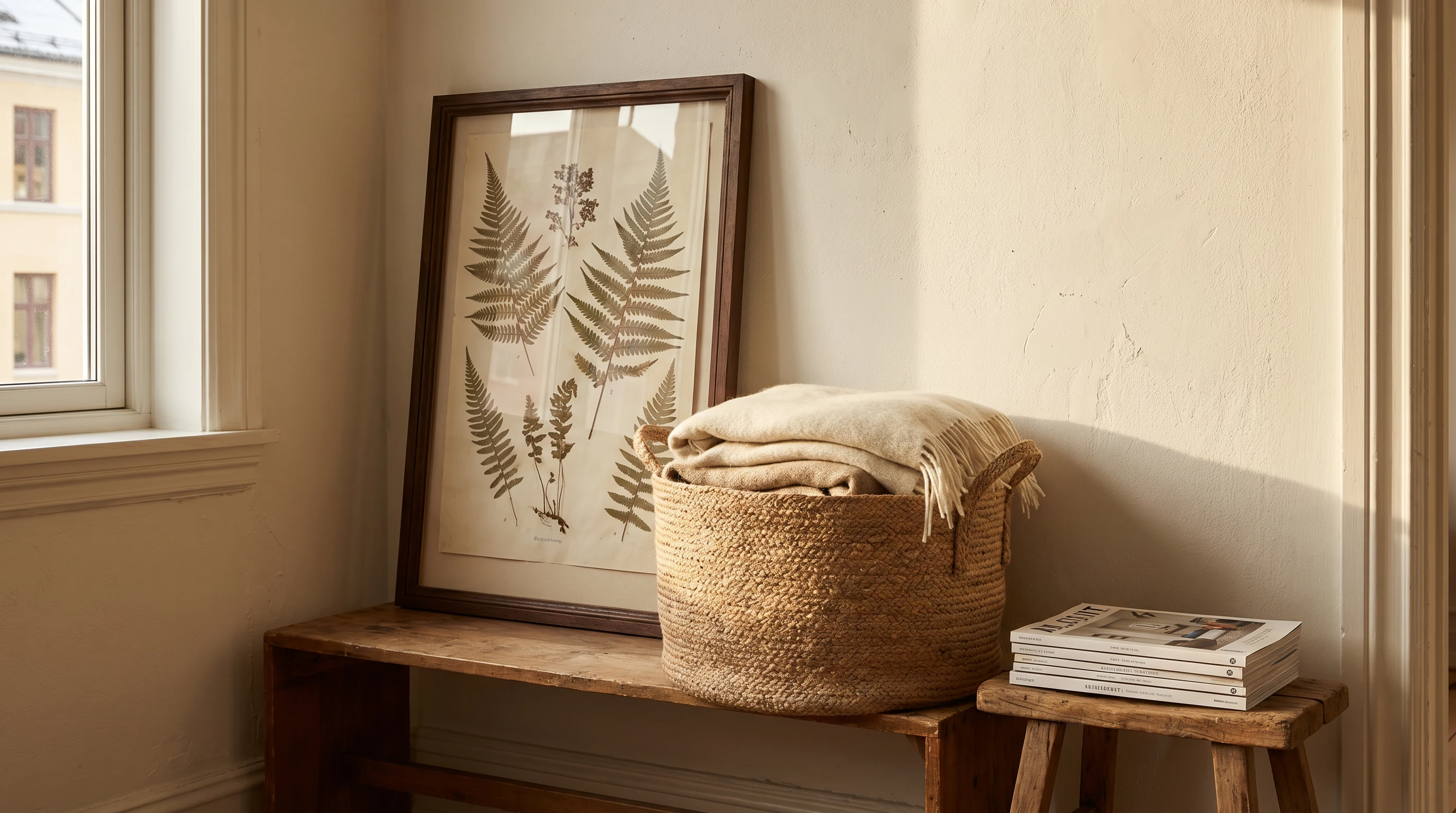
I chose one print large enough to register from across the room and let everything else stay quiet. The basket underneath handled the softer mess: throws, the magazine I was halfway through, and the extra cushion cover that seems to surface whenever the weather changes. Once the corner had that simple hierarchy, the wall stopped feeling like leftover footage.
What the Corner Changed
| Before | After |
|---|---|
| The wall collected objects without meaning to | The corner held the few things I actually use beside the sofa |
| The room felt dim and slightly unfinished at night | Layered lamp light gave that side of the room presence |
| Walkway space kept getting pinched by temporary piles | A slim table and low basket kept the path clear |
| The wall looked too empty or too messy, depending on the day | One framed piece gave it structure without overfilling it |
The difference was not dramatic in square footage, but it was dramatic in mood. The room felt less accidental.
Small Rooms Improve When Every Visible Area Has a Job
That sounds stricter than I mean it to. I do not think every corner needs a label. But in a small living room, the visible spaces do better when they are not constantly renegotiating their role. If a wall is where you read, let it support reading. If it is near the sofa, let it hold the things you reach for there. The more honestly a corner reflects actual life, the calmer it tends to look.
I also like that this kind of fix does not depend on architectural luck. You do not need built-ins or a wider footprint. You need proportion, decent light, and the nerve to stop before the corner gets overdesigned.
Now the Wall Helps the Room Instead of Interrupting It
That is probably the clearest way to describe the change. The wall used to interrupt the room. It caught stray objects, dimmed out after sunset, and asked to be solved every time I looked at it. Now it helps. It gives the sofa area a little structure. It keeps the practical things close. It makes the room feel finished from that angle, which matters more than I realized.
There are bigger makeovers than this. But if you have a living room wall you keep skirting around—too small for one thing, too awkward for another—I would not rush to fill it with more furniture than it wants. A better answer might be simpler: one slim surface, one good light source, one low place for the soft clutter, and enough restraint to let the corner become useful.
Sometimes that is all a room has been waiting for.
You might also like
How to Make a Windowless Room Feel Less Stuck
A windowless room needs more than a brighter bulb. It feels better when light has layers, surfaces have depth, and the layout stops apologizing for what the room lacks.
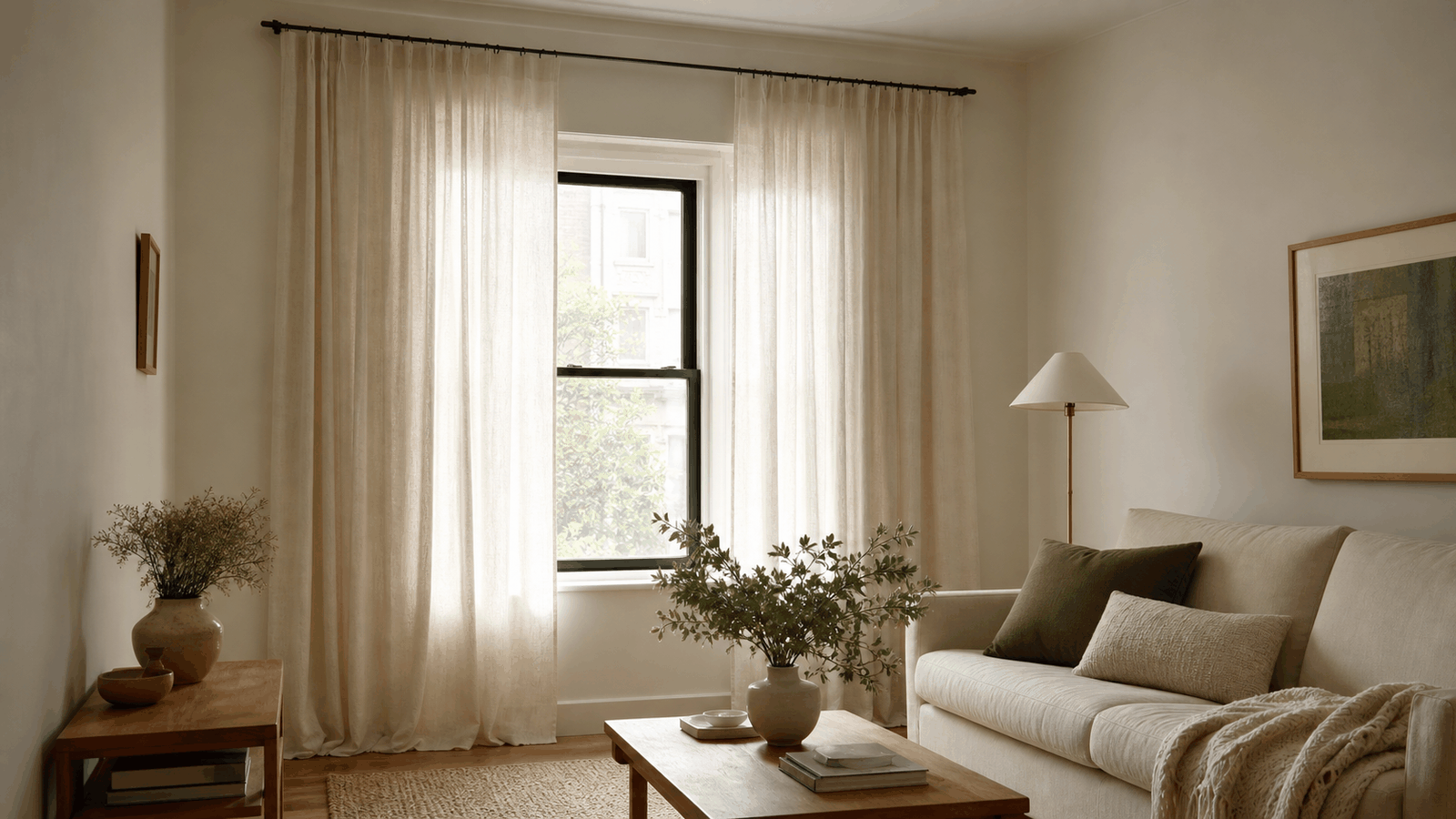
Curtain Ideas That Make a Rental Living Room Feel Taller
Rental living rooms often feel shorter because the curtain rod, fabric, and wall around the window are doing less work than they could.
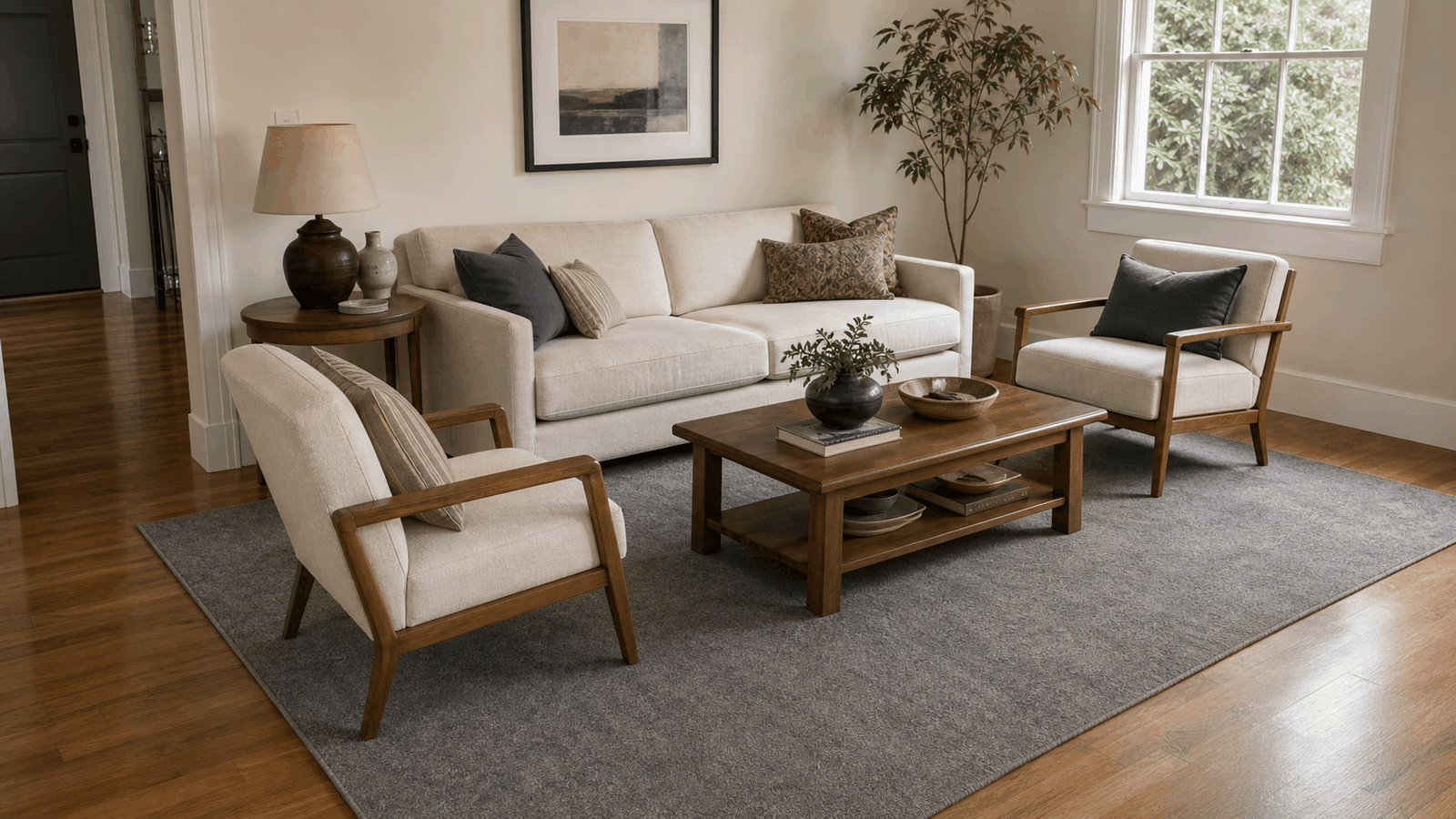
Living Room Rug Size Mistakes That Make the Room Feel Smaller
A rug can make a living room feel grounded or oddly cramped. The difference is usually scale, placement, and whether the furniture actually belongs to it.