How to Make a Windowless Room Feel Less Stuck
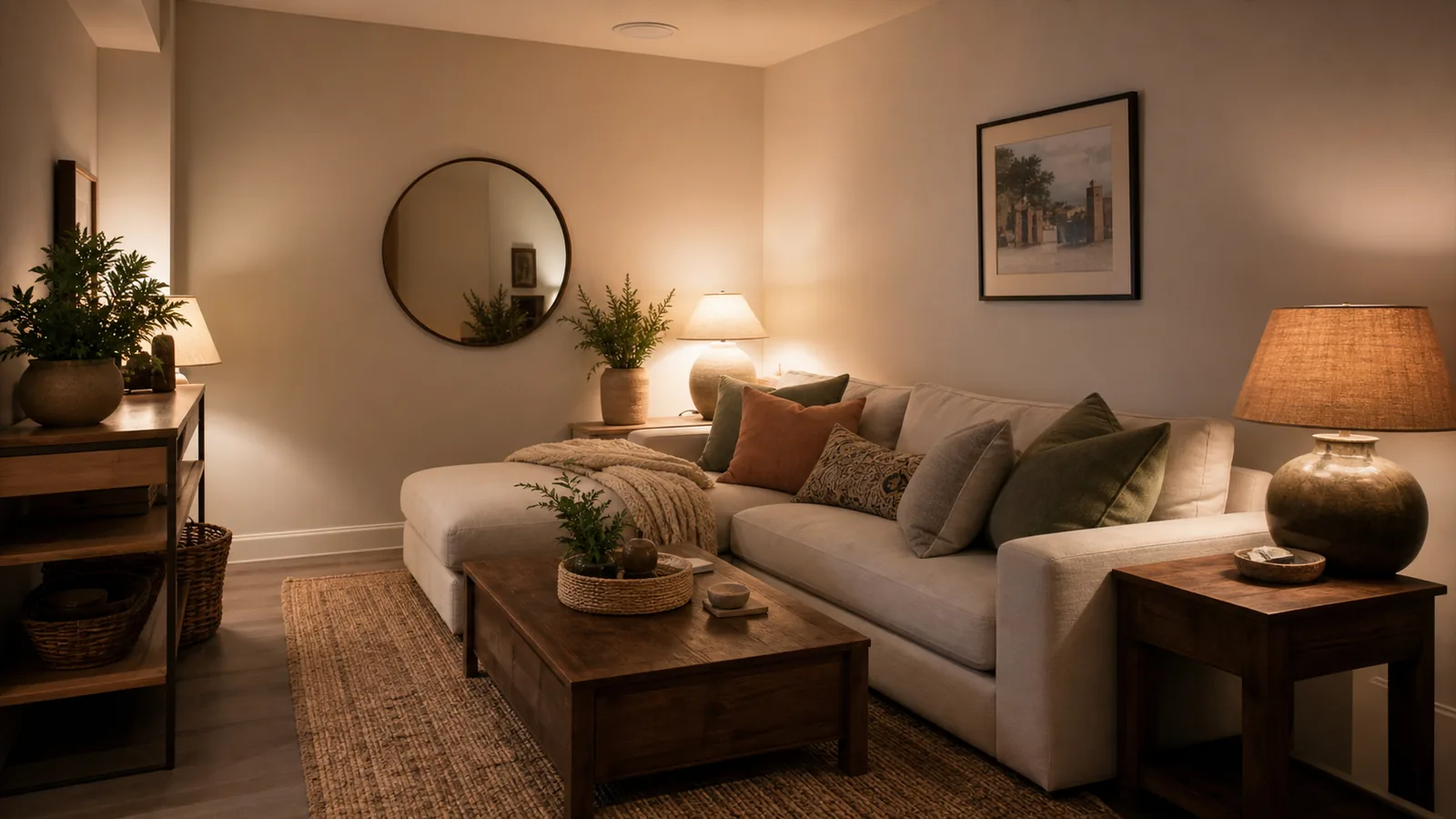
A Windowless Room Usually Feels Worse When It Tries to Pretend
The hardest part of a windowless room is not always the darkness. It is the strange flatness. The room can be clean, furnished, and technically bright enough, but still feel sealed off from the rest of the home.
The fix is not to make it look like a sunroom. That almost always backfires. Fake daylight bulbs, glossy white paint, and too many mirrors can make the room feel more clinical than comfortable.
A better goal is to make the room feel intentional. It can be a den, a reading room, a guest corner, a small office, or a quiet TV space. It just needs light that lands in more than one place, materials that catch shadow well, and a layout that gives the room a reason to exist.
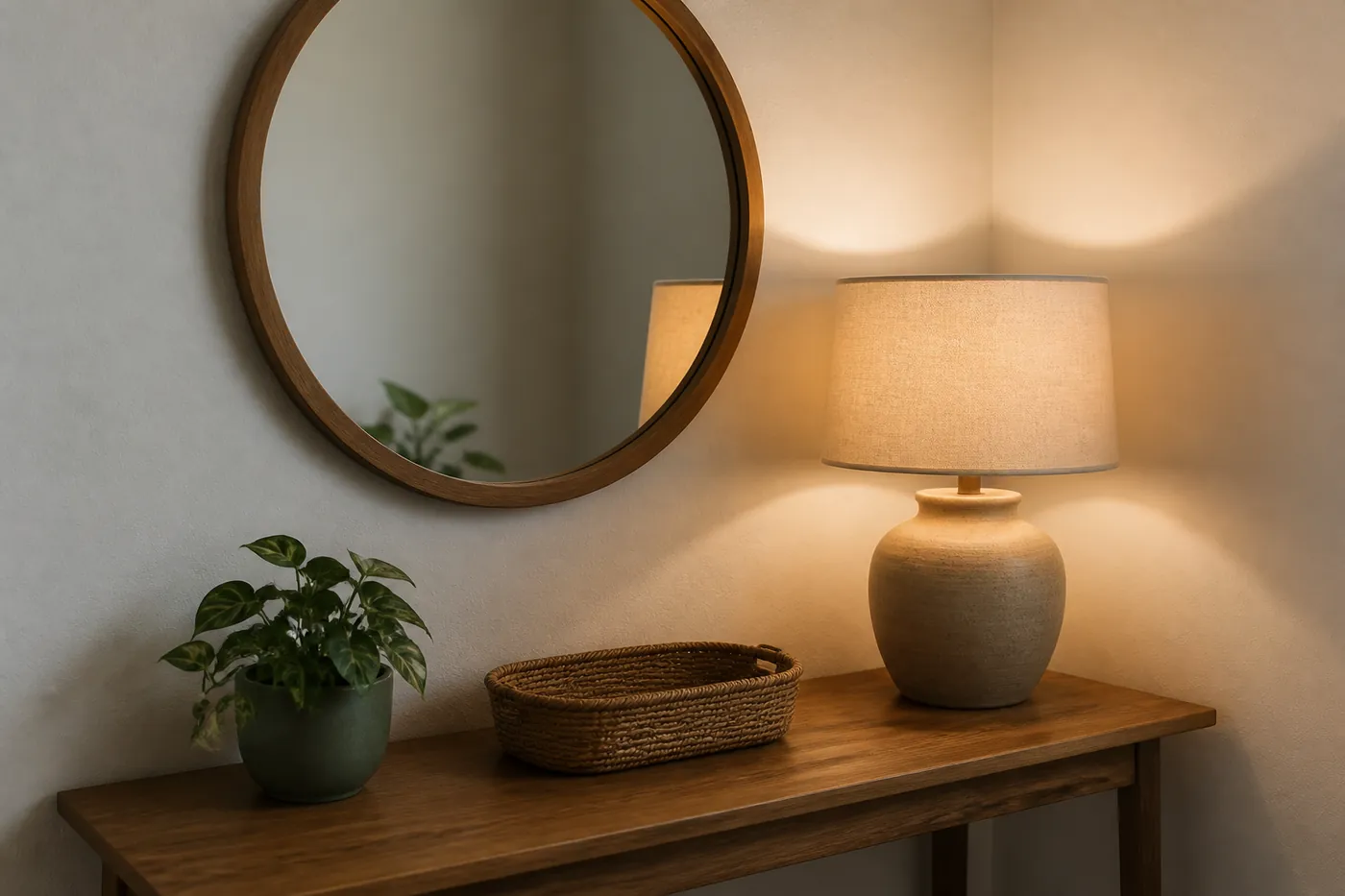
Start With Three Light Levels, Not One Bright Ceiling
One overhead fixture will show you the room. It will not usually make you want to stay in it.
Windowless rooms need at least three light levels: something high, something at table height, and something low or directional. That might mean a ceiling fixture, a lamp on a side table, and a small shaded lamp on a shelf. The point is not brightness everywhere. The point is giving the eye places to rest.
Warm bulbs help, but placement matters more. A lamp beside the sofa does more for the room than a stronger bulb in the ceiling. A shaded lamp near a mirror can stretch the glow without turning the space harsh.
Use Mirrors for Glow, Not Fake Windows
A mirror in a windowless room works best when it reflects something worth seeing. If it only reflects a blank wall or the back of a door, it can make the absence of a window feel louder.
Place the mirror where it can catch a lamp, a textured wall, a plant, or a framed print. A round mirror above a narrow table often works because it creates a small focal point without pretending to be architecture.
The mirror should feel like part of the room, not a trick. Once it reflects warmth instead of emptiness, the whole space starts to loosen up.
Bring in Texture That Looks Good in Shadow
Flat materials can make a windowless room feel airless. Texture gives the light something to do.
Linen, nubby wool, cane, matte ceramic, plaster-like paint, unfinished wood, and woven baskets all hold shadow in a softer way than glossy surfaces. They do not need daylight to be interesting.
This is where restraint helps. One textured rug, one linen shade, one warm wood piece, and one matte ceramic object can do more than a pile of accessories. A windowless room already has less visual relief, so every added object needs to earn its place.
Keep the Palette Warm, But Not Yellow
There is a difference between warm and yellow. Windowless rooms can go muddy fast when every surface is cream, tan, and amber.
Use warm neutrals as the base, then add one cooler or quieter note: muted olive, smoky blue, soft charcoal, or a gray-green. That small contrast keeps the room from feeling like it is wrapped in beige.
White can work, but stark white often looks dull without daylight. Off-white, chalky mushroom, pale clay, and warm gray usually give lamps more depth.
Give the Room a Real Job
A windowless room feels more stuck when it is treated like leftover space. If it has no clear purpose, every design choice feels temporary.
Choose one job and make the layout support it. If it is a reading room, the chair needs a lamp and a surface. If it is a guest room, the bed needs a real nightstand and a place for a bag. If it is an office, the desk needs a calm backdrop and storage that closes.
The room does not have to do everything. It has to do one thing clearly.
Leave the Doorway Lighter Than the Back Wall
One useful trick is to make the doorway feel open and the far wall feel anchored. Keep bulky storage away from the entrance. Let the first few feet stay simple, then build depth toward the back with art, shelving, a lamp, or a darker piece of furniture.
This helps the room feel like it is pulling you in instead of closing around you.
If the room is very small, a narrow table, wall shelf, or low cabinet on the back wall can create enough focus without stealing floor space.
Make Peace With Cozy
A windowless room does not need to become bright to become good. It can be calm, cocooned, and useful.
The most successful versions stop fighting the room’s nature. They soften the light, add texture, keep the palette alive, and give the space a purpose that makes sense without daylight.
That is when the room starts to feel less like a compromise and more like the quiet part of the home.
You might also like
Economy Home Decor That Still Makes a Room Feel Considered
Economy home decor works best when it edits the room first, then adds a few useful pieces with texture, scale, and purpose.
The Living Room Flow Audit I Do Before Buying Anything New
Before another basket, lamp, or side table comes home, this simple living room audit shows what is actually making the room feel awkward.
The Awkward Living Room Wall I Stopped Ignoring and Finally Turned Into Something Useful
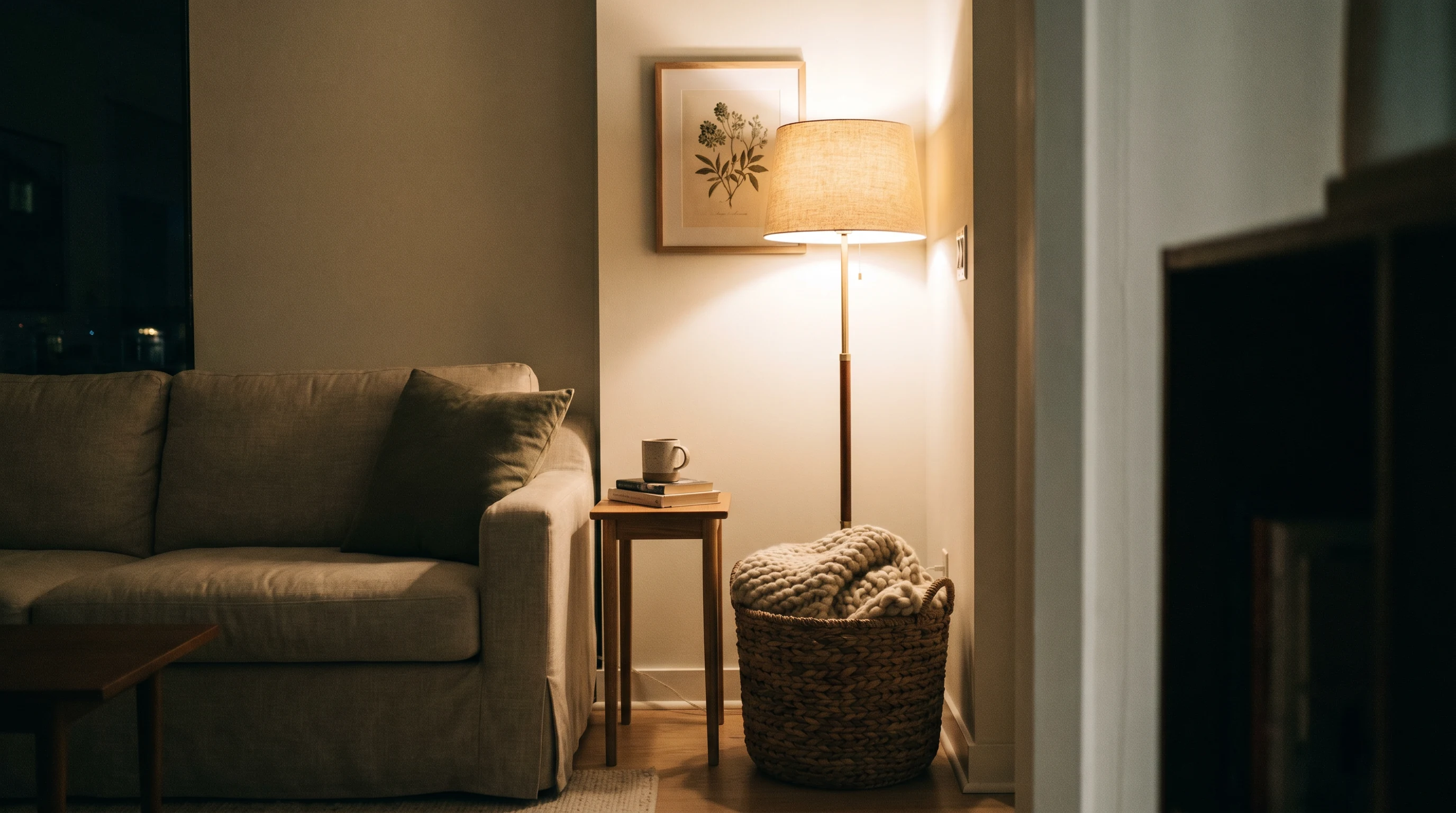
Every small living room seems to have one wall that never quite knows what it is doing. Here is how a narrow, overlooked stretch beside my sofa became a useful corner instead of a daily annoyance.