The Bookshelf Styling Reset That Made My Living Room Feel Quieter
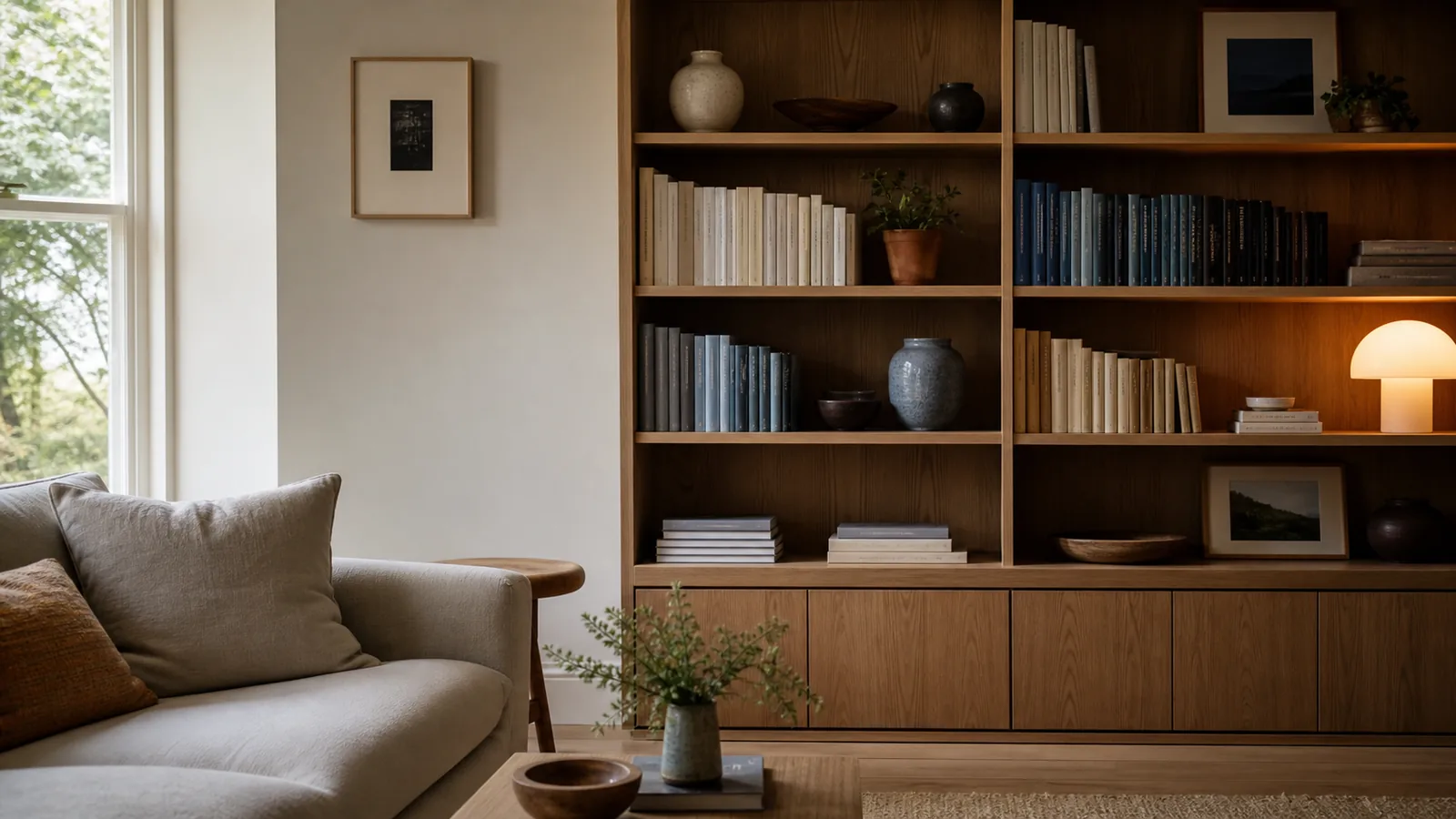
The Shelf Was Not Messy. It Was Just Too Loud.
Bookshelves have a way of becoming visually noisy before they become truly cluttered. Mine still held things I liked: books I meant to read again, ceramics picked up slowly, framed photos, a few bowls, a plant that was trying its best.
The problem was rhythm. Every shelf had the same amount of stuff. Every object was asking for the same amount of attention. The whole wall looked busy even though nothing on it felt wrong by itself.
The reset that helped most was not a new set of accessories. It was removing enough that the shelf could breathe, then putting back only what gave the room shape.

Take Everything Off Before You Decide What Stays
Editing one shelf at a time sounds efficient, but it usually keeps the old logic in place. The same objects just move around.
Taking everything off gives you a cleaner read on the wall. You can see which shelves are too dark, which zones need height, and where the room could use more emptiness. It also makes it easier to notice duplicates: three small bowls, too many frames, five stacks of similar books.
The goal is not to make the shelf sparse. It is to stop the room from feeling like every inch has been assigned a task.
Sort by Visual Weight, Not Category
Books, ceramics, baskets, frames, and small objects all carry different visual weight. A dark book stack reads heavier than a pale one. A round vase reads softer than a black picture frame. A basket can calm clutter, but two baskets side by side can look blocky.
Before styling, group objects by how heavy they look. Dark pieces together, pale pieces together, tall pieces together, small loose items together. This makes it easier to build balance across the whole shelf rather than arranging by type.
Most shelves feel calmer when the heavy pieces are spread out, not stacked in one corner.
Let Some Shelves Do Less
Not every shelf needs a moment. This was the part that changed the room most.
One shelf can hold mostly books. One can hold a low stack and a bowl. One can be almost empty except for a framed print and a vase. If every shelf has a stack, a leaning frame, a vase, and a small object, the pattern becomes predictable and busy.
Quiet shelves make the styled shelves look more intentional. Empty space is not wasted space here. It is the pause that lets the wall feel composed.
Turn Books Into Blocks of Color and Height
Books are useful because they can create structure, but only if they are not scattered randomly.
Try standing some upright in small groups, then laying a few horizontally where a shelf needs a lower shape. Remove dust jackets that are too glossy or loud if the book underneath is calmer. Keep favorite titles visible, but do not force every spine to face out if the color is fighting the room.
The point is not to make books decorative props. It is to arrange them so the shelf supports reading and still lets the living room settle.
Use Small Objects as Punctuation
Small objects can make a shelf personal, but too many of them create static. A tiny dish, a small candle, a souvenir, a framed photo, and a little vase can all be meaningful. Together, they can look like a shop counter.
Choose a few and give them space. A small object looks more deliberate when it sits beside a larger calm shape, like a stack of books or a ceramic bowl. It looks more anxious when it is surrounded by other small things.
If an object keeps disappearing visually, it may belong in a drawer, not on display.
Repeat Materials Lightly
A shelf feels more coherent when a few materials repeat: warm wood, cream ceramic, black frame, woven texture, green plant. The repetition should be loose enough to feel collected, not staged.
If the shelf looks scattered, pick two or three materials and let those lead. If it looks too matched, add one piece that breaks the rhythm a little: an old frame, a darker book, a handmade bowl, something with a slightly imperfect edge.
The best shelves usually have both order and a little evidence of time.
Stop Before It Looks Finished
Bookshelf styling can go wrong in the final ten percent. That is when you add one more object to fill a gap, then another to balance it, then a third to make the second one make sense.
Stop earlier. Walk away for a day. If the room feels quieter when you return, the shelf is doing its job.
A good bookshelf does not need to perform. It needs to hold what matters, hide what does not, and give the living room a calmer wall to live with.
You might also like
Common Home Decor Clutter Items I Would Edit Before Buying More
The decor that makes a room feel cluttered is often small, familiar, and easy to overlook. Editing these pieces can make a space calmer fast.
The Living Room Flow Audit I Do Before Buying Anything New
Before another basket, lamp, or side table comes home, this simple living room audit shows what is actually making the room feel awkward.
Curtain Ideas That Make a Rental Living Room Feel Taller
Rental living rooms often feel shorter because the curtain rod, fabric, and wall around the window are doing less work than they could.