The Living Room Flow Audit I Do Before Buying Anything New
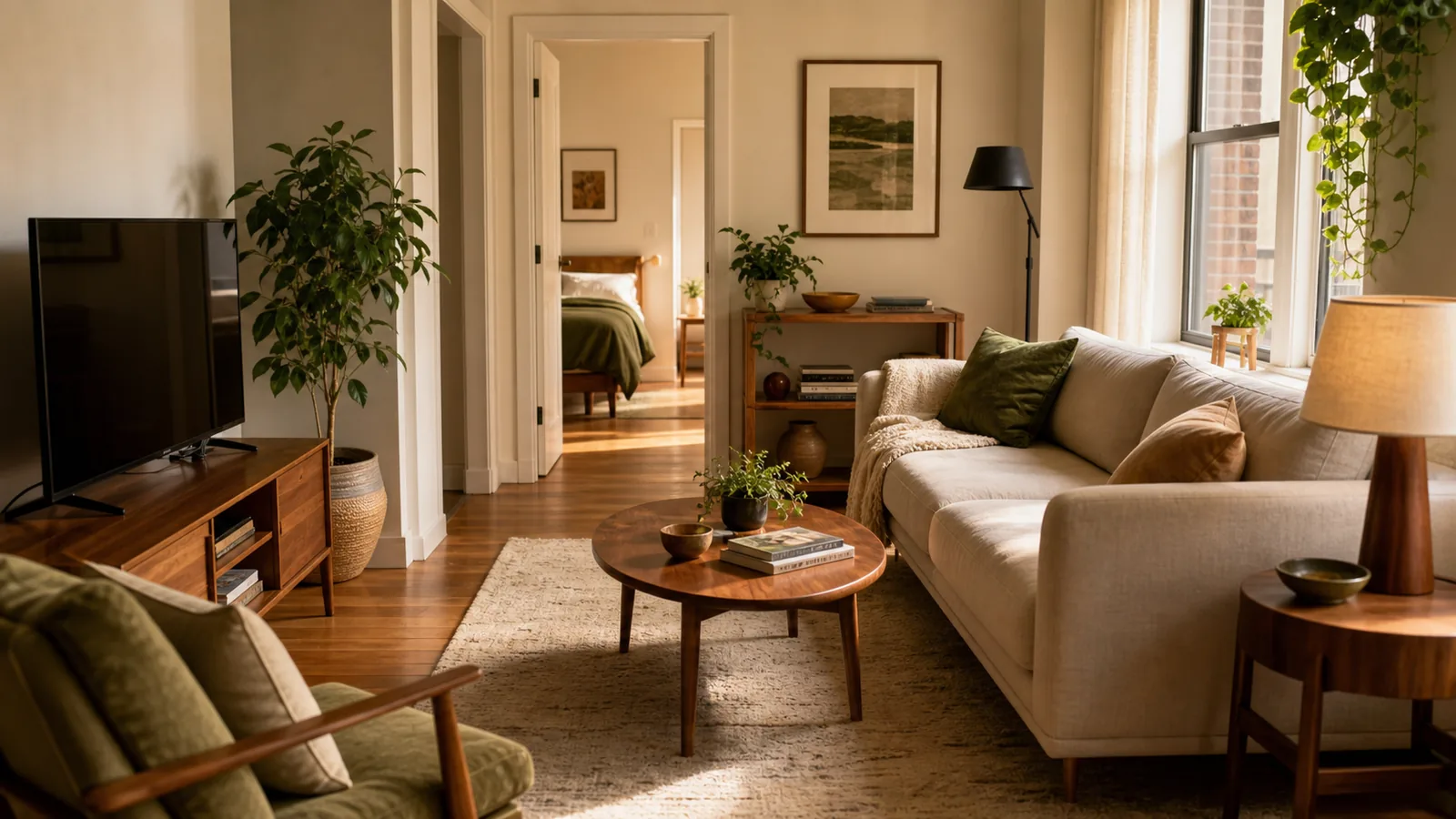
The Room Was Not Missing Another Cute Object
When a living room feels unfinished, shopping is the easiest answer to reach for. A new lamp might warm it up. A side table might solve the clutter. A bigger basket might make the blankets look intentional. Sometimes those things help. More often, they become attractive little apologies for a room that is not working underneath.
The better question is not “what should I buy?” It is “where does this room fight me?”
That is why I started doing a flow audit before buying anything new for the living room. It takes less than an hour, costs nothing, and usually reveals that the problem is not a missing decorative piece. It is a blocked walkway, a surface in the wrong place, lighting that only works from one chair, or furniture arranged for a version of life that no longer exists.
Start by Walking the Room Like a Guest
The first pass is simple: enter the room, move through it, sit down, stand up, reach for the remote, set down a drink, turn on a lamp, and leave again. Do it slowly enough to notice every tiny irritation.
In my own living room, this exposed three problems immediately. The coffee table was just a little too far from the sofa. The chair looked good in the corner but had no nearby light. The basket for throws sat where people naturally walked, so it was constantly nudged out of place.
None of those issues required a purchase. They required the room to stop pretending it was a photo and start acting like a place people use.
Map the Three Main Paths
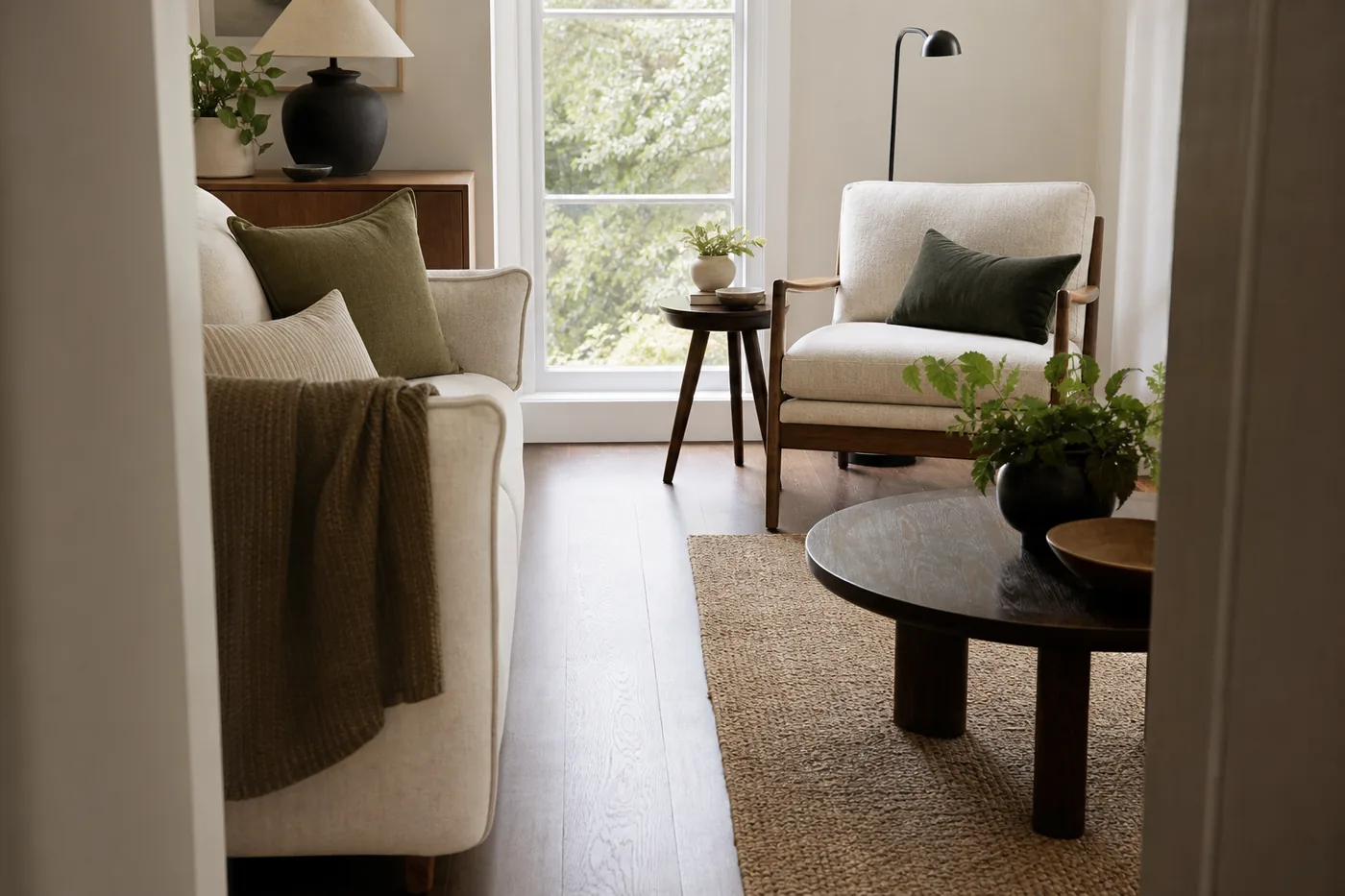
Most living rooms have more traffic than we think. There is the path from the entry to the sofa, the path from the sofa to the kitchen, and the path from the sofa to whatever storage, balcony door, desk, or hallway sits nearby.
If any of those paths bends around furniture in a strange way, the whole room feels less calm. You may not consciously notice it, but your body does. You start stepping sideways, sliding past chair arms, or moving a table every time someone sits down.
I like to leave at least a comfortable shoulder-width path through the main route. In a tiny apartment, that may mean choosing one generous path over three cramped ones. A room with one easy route usually feels better than a room where every route technically works but none of them feel natural.
Check Whether Every Seat Has a Job
A living room can look full and still be under-functioning. The fastest way to test this is to ask what each seat is for.
| Seat | It needs nearby | If it does not have it |
|---|---|---|
| Main sofa | Table surface, light, blanket storage | It becomes messy fast |
| Reading chair | Lamp, small surface, foot comfort | It turns into a clothes drop |
| Extra stool | Clear reason to exist | It becomes visual clutter |
The chair that looked beautiful in my corner was not a reading chair until I moved a lamp beside it. Before that, it was just an upholstered sculpture with laundry on it. Once the light and a small table were in place, the chair finally had a reason to stay.
Look for Surfaces That Attract the Wrong Things
Every living room has at least one surface that quietly tells the truth. It might be the coffee table, the media console, the arm of the sofa, or the windowsill. If that surface is always cluttered, the issue is usually not discipline. It is missing infrastructure.
Remote controls need a tray. Books need either a shelf or permission to be stacked beautifully. Glasses need a reachable table. Mail probably does not belong in the living room at all.
Before buying storage, I try to name the exact object that keeps landing in the wrong place. “Clutter” is too vague. “Three charging cables and the TV remote” is useful. Once the object is named, the fix gets much smaller.
Useful Amazon starting points if the audit reveals a real gap:
Test the Room at Night
Daytime can flatter a living room. Evening reveals the weak spots.
Turn off the overhead light and use the room the way you actually do after dinner. Can you read without squinting? Does the sofa feel cozy or dim in the wrong way? Is one corner glowing while another disappears? Is there a lamp that looks good but does not actually help anyone?
In my audit, the biggest night problem was not style. It was reach. The lamp switch was awkward from the sofa, so I kept using the overhead light and then wondering why the room felt harsh. Moving the lamp solved more than buying a prettier one would have.
Move First, Then Shop
The flow audit works because it separates movement problems from object problems. Once the room has easier paths, useful seats, honest storage, and livable light, shopping becomes more precise.
Instead of buying a vague “finishing touch,” you might realize you need a narrow side table, a smaller coffee table, a plug-in sconce, or nothing at all. That last result is underrated. Sometimes the room only needed fifteen inches of breathing room and one lamp moved to the chair that actually gets used.
Browse plug-in wall sconces on Amazon
The Best Makeover Starts Before the Cart
A good living room does not have to be large, expensive, or perfectly styled. It has to support the way people move through it at 7:30 on a weeknight with a drink in one hand and a half-finished task in the other.
Before buying anything new, walk the room. Follow the friction. Notice what gets bumped, ignored, or overused. The answers are usually already there, waiting in the layout.
You might also like
The Bookshelf Styling Reset That Made My Living Room Feel Quieter
A busy bookshelf can make a whole living room feel restless. The reset is less about styling tricks and more about editing rhythm, weight, and breathing room.
How to Make a Windowless Room Feel Less Stuck
A windowless room needs more than a brighter bulb. It feels better when light has layers, surfaces have depth, and the layout stops apologizing for what the room lacks.
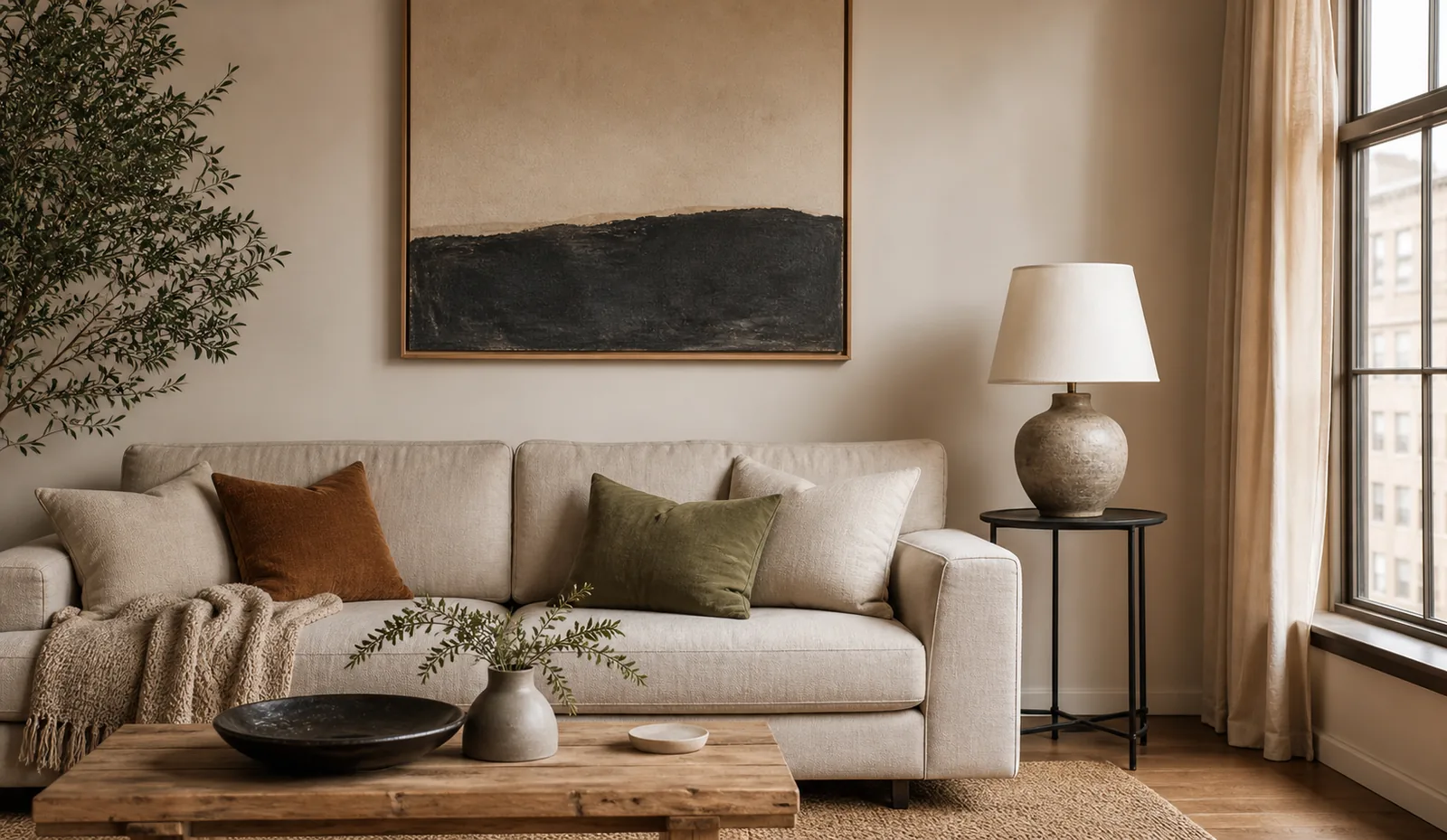
Economy Home Decor That Still Makes a Room Feel Considered
Economy home decor works best when it edits the room first, then adds a few useful pieces with texture, scale, and purpose.