The Dining Nook Layout Fix That Finally Made Weeknight Dinners Feel Separate from Work
The Blur Between Work and Rest
For months, the small round table in the corner of our apartment served as both a 9-to-5 workstation and our only spot for meals. By 6 PM, pushing a laptop aside to make room for a plate of pasta didn’t feel like a transition—it just felt like eating at the office. The psychological toll of never leaving the workspace was palpable.
We needed a hard boundary, but in a 600-square-foot apartment, adding another room wasn’t an option. The solution wasn’t buying a bigger table or a room divider; it was a fundamental shift in how the existing furniture was oriented.
The 90-Degree Shift
The breakthrough came when we stopped floating the table in the middle of the nook and instead anchored it against the window wall. This simple 90-degree rotation changed the entire flow of the space.
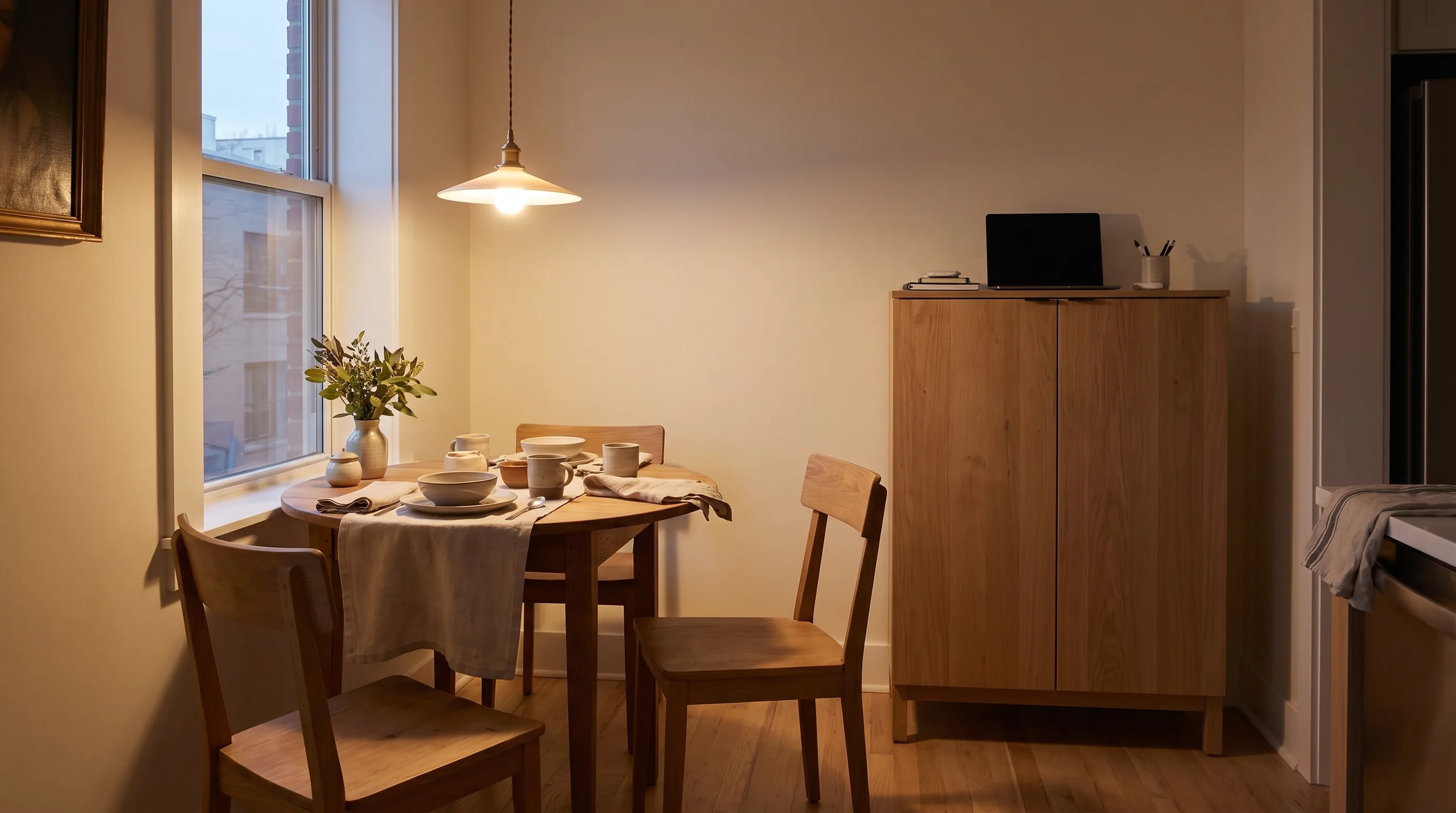
By pushing the table against the wall, we created a distinct ‘head’ of the table. During the day, the laptop sits facing the window—a dedicated work zone with natural light. At night, the laptop goes into a closed cabinet, and we sit on the opposite sides of the table, facing each other rather than the street.
Essential Pieces That Made It Work
The layout change was free, but making the transition stick required a few strategic additions.
The Concealment Cabinet
Leaving work visible is the fastest way to ruin a dinner vibe. We brought in a slim IKEA IVAR cabinet and painted it to match the walls. At 5:30 PM, the laptop, chargers, and notebooks go inside, and the doors shut. Out of sight, out of mind.
Directional Lighting
A single overhead light washes the whole space evenly, which feels very much like a breakroom. We installed a low-hanging pendant light specifically over the center of the table. When the work day ends, the harsh overheads go off, and the warm pendant goes on. It acts as a visual cue that the function of the room has changed.
Tactile Table Linens
To further separate the two modes, we introduced a heavy linen table runner. It stays folded in the cabinet during the day. Rolling it out before dinner takes ten seconds, but the tactile shift from a bare wood desk to a dressed dining table signals that it’s time to eat.
The Result
We didn’t gain any square footage, but we gained our evenings back. The physical act of packing away the work gear and changing the lighting created the boundary we were missing. If your dining table is also your desk, stop trying to make it do both at the same time. Force the transition.
You might also like
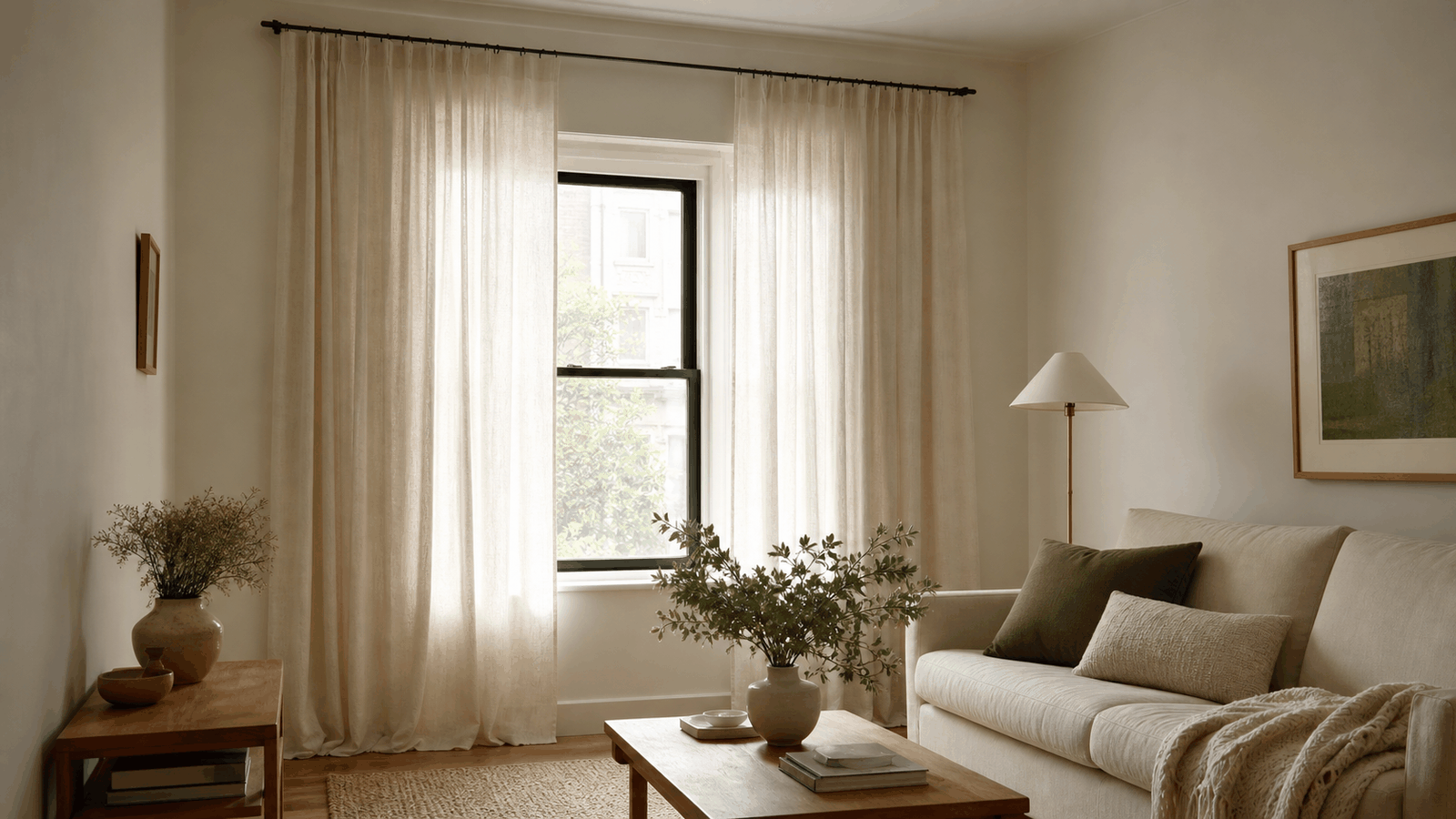
Curtain Ideas That Make a Rental Living Room Feel Taller
Rental living rooms often feel shorter because the curtain rod, fabric, and wall around the window are doing less work than they could.
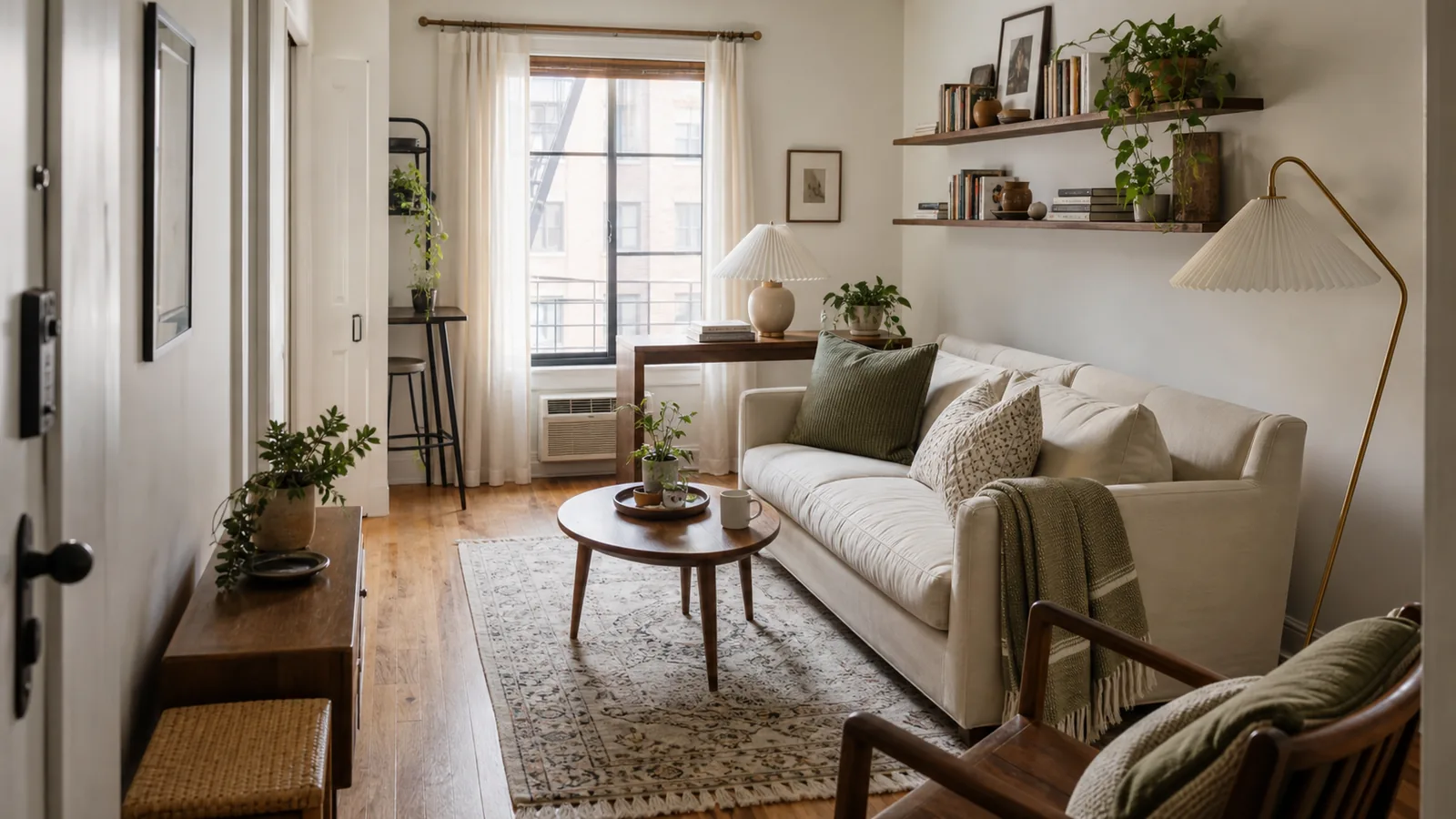
Small Living Room Layout Ideas That Actually Work
Small living room layout ideas work best when they protect walkways, choose fewer better-scaled pieces, and give every seat a real surface and light source.
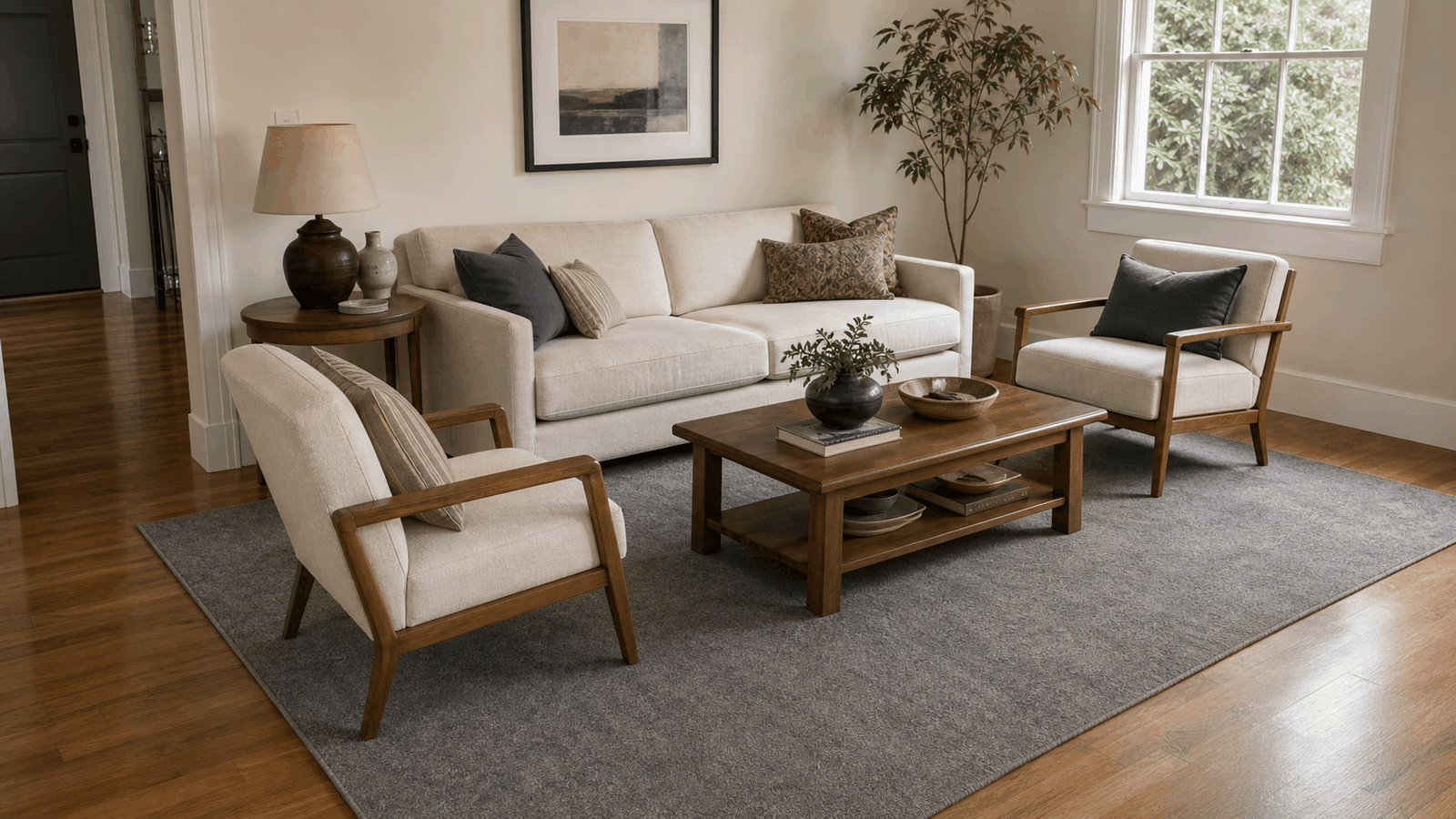
Living Room Rug Size Mistakes That Make the Room Feel Smaller
A rug can make a living room feel grounded or oddly cramped. The difference is usually scale, placement, and whether the furniture actually belongs to it.