Small Living Room Layout Ideas That Actually Work
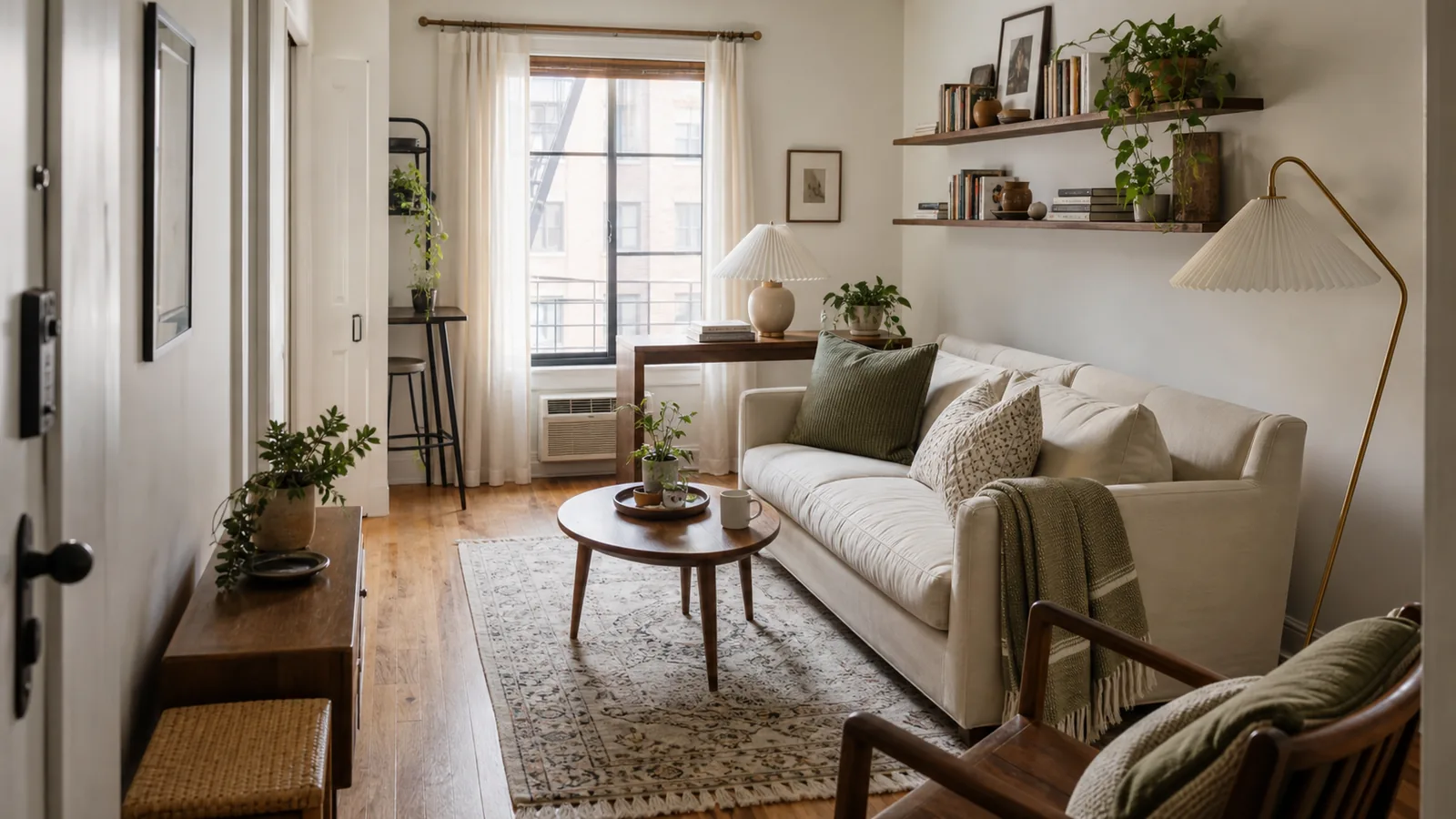
A Small Living Room Needs a Plan Before It Needs More Furniture
Small living rooms are easy to overfill because every missing function feels urgent. You need seating, storage, light, a place for drinks, a place for shoes or bags, maybe a desk corner, and somehow the room still has to feel like a living room.
The layout works when the room has clear paths and useful zones. It does not work just because the furniture technically fits.
Before buying another piece, look at how people move through the room. The best small living room layout ideas usually protect that movement first.
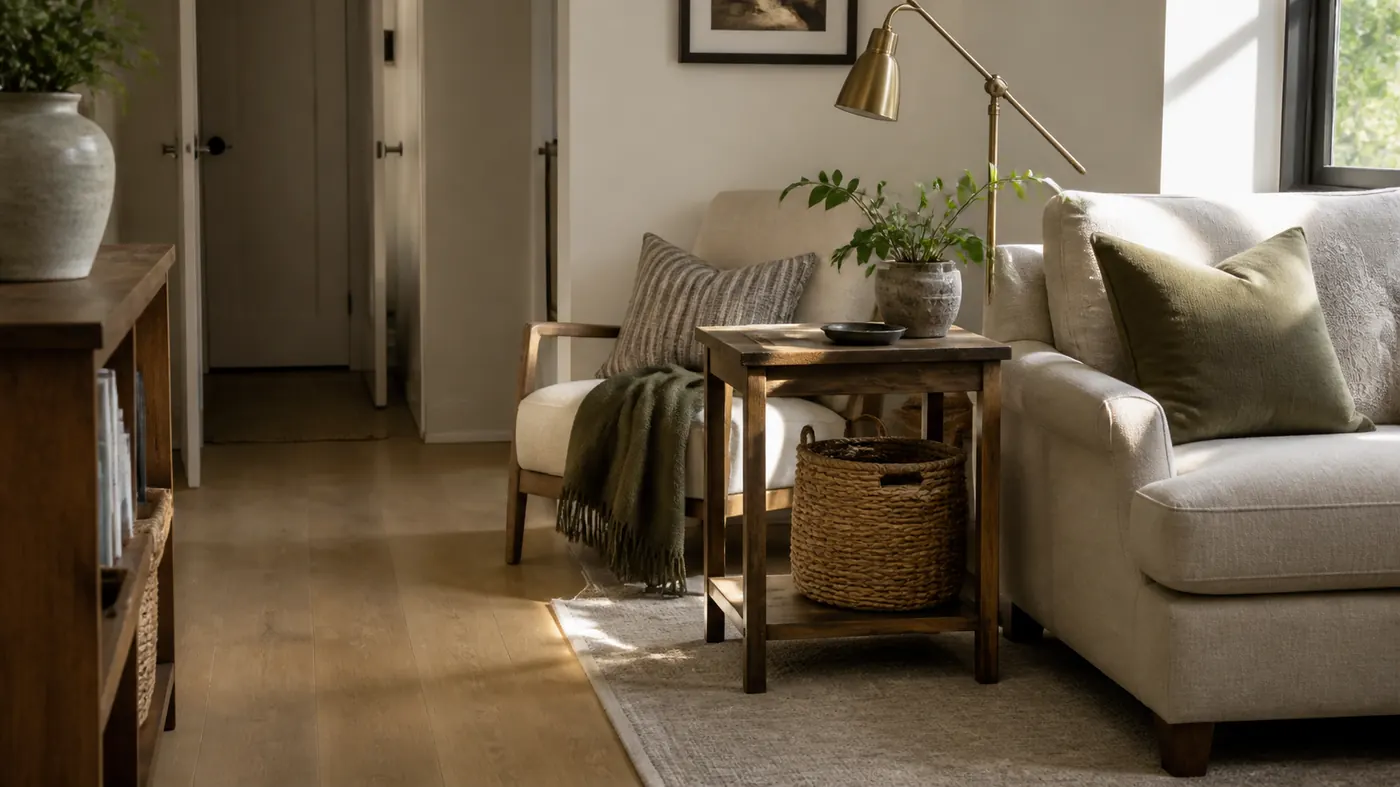
Keep One Walkway Honest
Every small living room needs one honest walkway. It might run from the entry to the window, from the kitchen to the sofa, or from the hallway to the balcony door. Wherever it is, keep it clear enough that no one has to turn sideways.
This single decision often solves more than styling ever can. A coffee table that is slightly too large, a chair floating in the wrong place, or a storage basket set in the path can make the whole room feel tense.
If the room feels crowded, measure the walkway before blaming the square footage.
Float Furniture Only When It Helps
Floating a sofa can make a small room look more intentional, but it is not automatically better. It works when the back of the sofa creates a useful boundary, such as a narrow entry zone or a tiny dining area.
If floating the sofa leaves a dead strip behind it, push it closer to the wall and use the saved space where it matters. A wall-hugging sofa with a better side table can be more comfortable than a magazine-style layout that steals the walkway.
The test is simple: does the floating piece create a useful zone, or just an awkward gap?
Choose One Main Surface
A small room rarely needs a coffee table, two side tables, a console, and a storage ottoman. It needs at least one surface that is easy to reach from the main seat.
For some rooms, that means a small round coffee table. For others, a C-table, nesting table, or narrow side table works better. Round shapes are helpful when knees and corners are always negotiating with each other.
The surface should support daily life, not just photos. It needs to hold a drink, book, remote, or bowl without forcing everything else onto the sofa.
Put Light Where People Actually Sit
Small living rooms often rely on one ceiling light because there is no obvious place for lamps. That makes the room feel flat and can make evenings feel harsher than they need to.
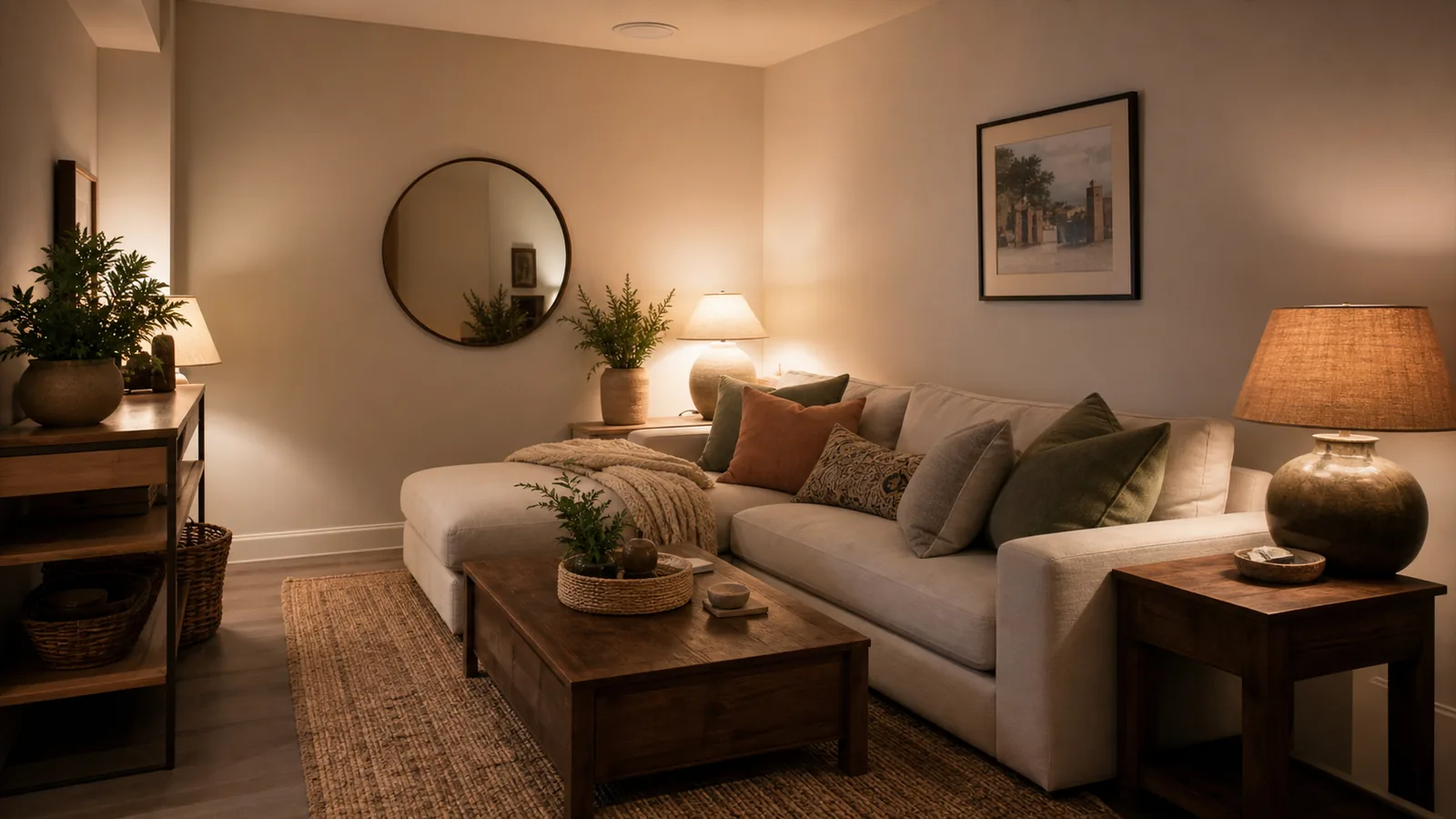
Add light at the seat. A floor lamp behind the sofa, a narrow lamp on a shelf, or a plug-in sconce near a reading corner can make the room feel more finished without taking much floor space.
Light is part of the layout. If a chair has no light and no surface, it is not really a seat yet.
Use Storage That Defines the Room
Storage is most useful when it also clarifies the layout. A slim console behind a sofa can create a landing zone. A low cabinet under a window can anchor the wall. A basket beside a chair can hold blankets without becoming a separate furniture problem.
Avoid scattering many small storage pieces around the room. They can make the space feel busier even when they are technically helpful.
One calm storage move is better than six little fixes.
Let the Rug Explain the Seating Area
A rug can make a small living room feel larger when it gathers the furniture into one clear zone. It should not be so tiny that it floats under only the coffee table. At least the front legs of the sofa should connect to it when possible.
If a large rug blocks doors or makes the room feel packed, choose a flatter weave or a shape that respects the walkway. The rug should explain the seating area, not fight the circulation.
The floor plan should still make sense when the room is being used.
Better Layout, Less Effort
A small living room does not need cleverness in every corner. It needs an honest walkway, reachable surfaces, useful lighting, and storage that supports the zones already there.
When those basics are working, the room feels calmer before any styling begins.
You might also like
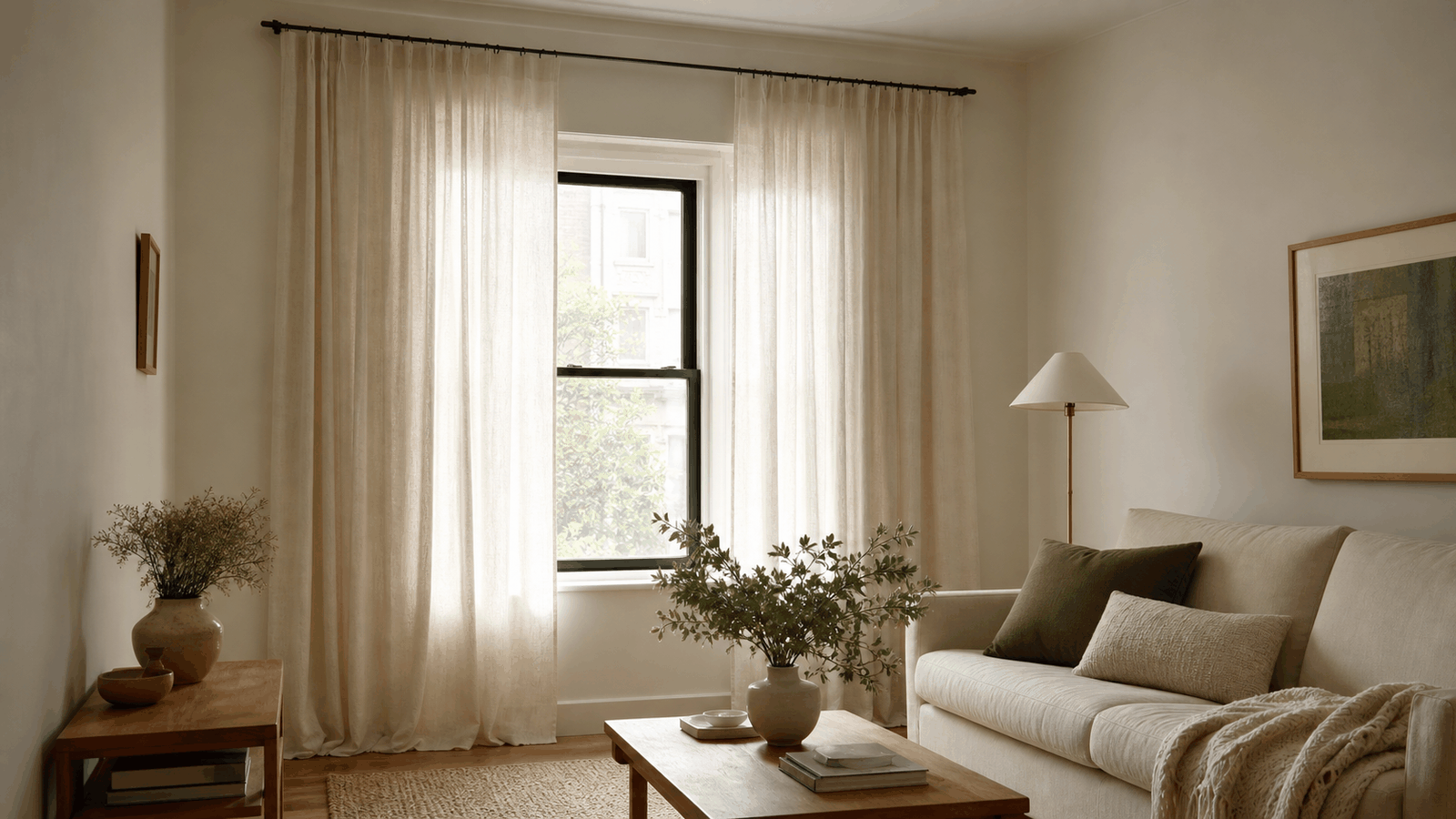
Curtain Ideas That Make a Rental Living Room Feel Taller
Rental living rooms often feel shorter because the curtain rod, fabric, and wall around the window are doing less work than they could.
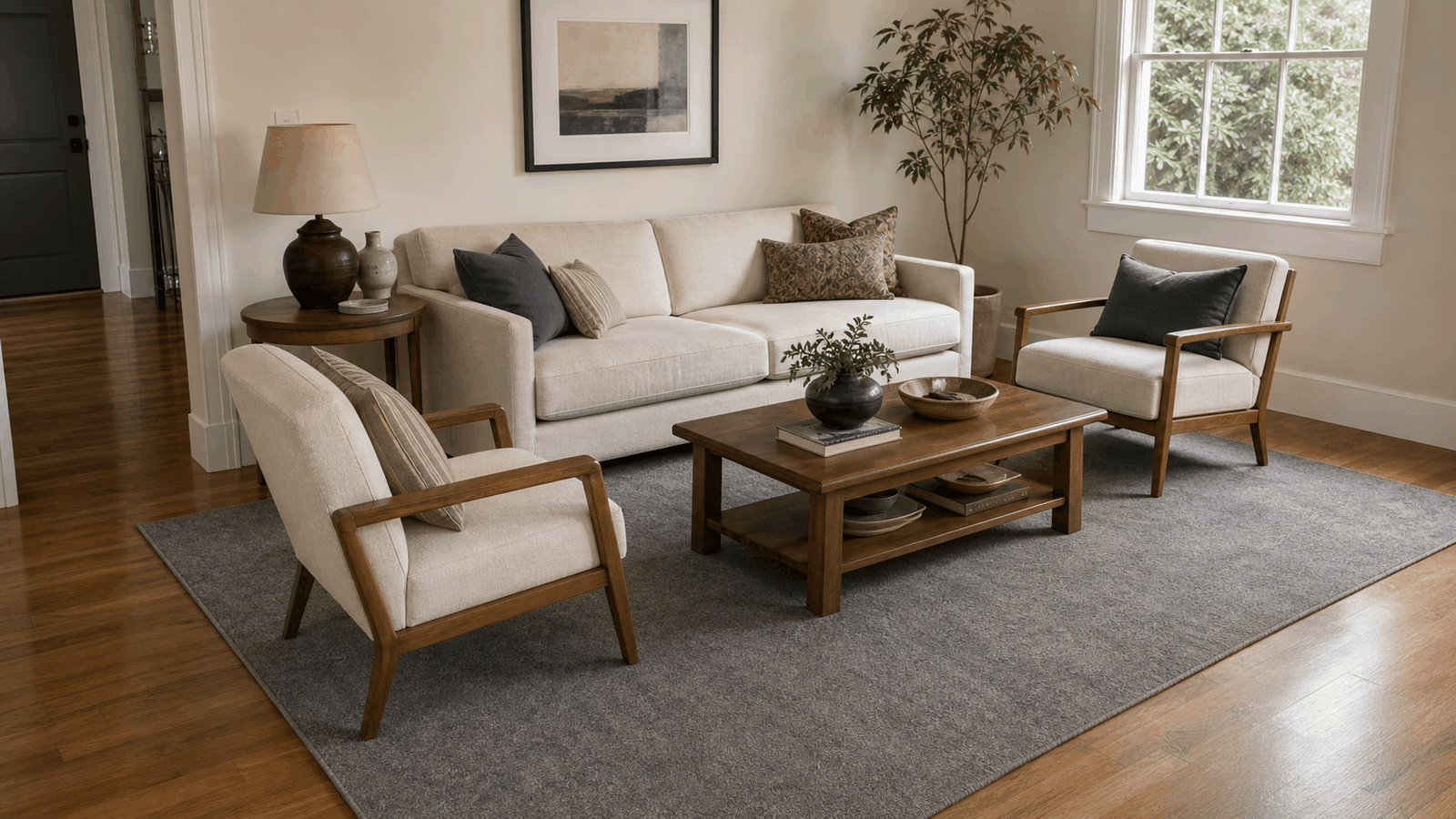
Living Room Rug Size Mistakes That Make the Room Feel Smaller
A rug can make a living room feel grounded or oddly cramped. The difference is usually scale, placement, and whether the furniture actually belongs to it.
How to Make a Windowless Room Feel Less Stuck
A windowless room needs more than a brighter bulb. It feels better when light has layers, surfaces have depth, and the layout stops apologizing for what the room lacks.